Masking threaded holes for powder coating is the process of sealing the internal threads of tapped holes — from M3 to M24 metric sizes and equivalent imperial UNF/UNC threads — with a removable plug, cap, or tape before electrostatic powder application, so that powder cannot build up on the thread crests or root during a cure cycle of 180-200°C for 15-30 minutes. The masking media must survive the full cure without melting, sticking, or outgassing. Silicone plugs and caps are the industry-standard solution because industrial silicone is rated for continuous service at 260°C, comfortably above the peak powder coating oven temperature. Thread masking matters because a single coating run deposits a hard, crosslinked polymer film on exposed threads; once that film bridges between crest and root, the tapped hole loses its dimensional tolerance, fasteners bind or cross-thread during assembly, and the only corrections are time-consuming thread chasing or re-tapping to a larger size.
Why Thread Masking Is Non-Negotiable
Powder coating is an electrostatic process. The workpiece is grounded, charged powder is sprayed onto it, and the assembly is then baked in an oven where the powder melts and crosslinks into a tough, abrasion-resistant film typically 60-120 microns thick. That durability is exactly why powder coating is the finish of choice for industrial racks, enclosures, brackets, and structural components — and exactly why an unmasked thread becomes a production problem.
When powder lands inside a tapped hole, it settles on the thread crests. During the 180-200°C cure, the particles melt, flow, and harden into the same tough film, effectively shrinking the pitch diameter of the hole. The consequences scale with fastener size:
- M3, M4, and M5 holes have clearance measured in tenths of a millimetre; even a thin film can make a screw bind partway in and snap under torque.
- M6-M12 holes often accept a bolt that feels "tight," passing the first assembly and then failing a torque verification or stripping on disassembly.
- M16-M24 holes tolerate the film on the first pass but retain contamination that complicates plating, rework, and future maintenance.
The cost of a contaminated thread is real: chasing with a hand tap, re-tapping to the next size and switching to a larger fastener, scrapping an otherwise perfect part, or shipping a defective assembly to a customer. A silicone plug that costs a few cents eliminates all of it. For a complete overview of how masking integrates into the wider process, see our powder coating application guide.
Method 1: Silicone Plugs for Threaded Holes
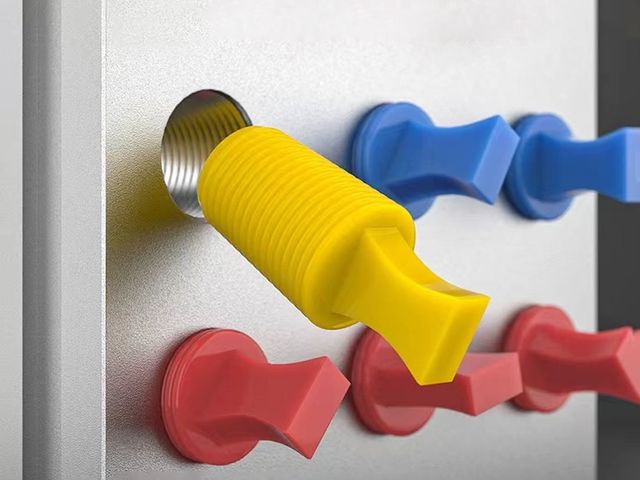
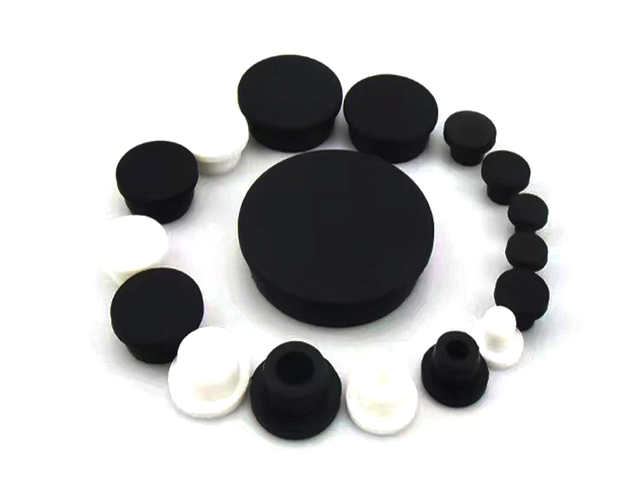
Silicone masking plugs are molded, tapered plugs inserted directly into the mouth of a tapped hole. The taper does the work: as the plug body is pressed in, its outer wall compresses against the threads near the opening, creating a positive interference fit that seals the hole and keeps powder out while the deeper threads stay clean and untouched.
Pros
- Rated for continuous 260°C service — safe through the full 180-200°C cure cycle with wide margin.
- Reusable: a well-maintained plug survives dozens of cycles before the surface begins to degrade.
- Fast to insert and remove by hand; no tools, no air, no cleanup.
- Available across the full M3-M24 range in tapered and step profiles, so one kit covers a shop's common sizes.
- Leaves no residue: silicone does not stick to the part or shed adhesive.
Cons
- A plug only protects the threads it physically contacts; in very deep holes, only the upper portion is shielded.
- An undersized plug body in an oversized hole lets powder creep past the seal line.
- Low-durometer plugs can tear at the rim after repeated use.
High-temperature silicone masking plugs are the default recommendation for any shop masking threaded holes on a regular basis because of their temperature margin and reuse economics.
Method 2: Silicone Caps for Threaded Holes
Silicone caps, sometimes called threaded-hole caps, work on the opposite principle: instead of pushing into the hole, they cover it. A cap seals the hole mouth — or fits over an external threaded stud, bolt, or screw — to shield threads from powder overspray.
For internal threaded holes, caps are used in two common ways: as a flush cover over the hole mouth when the critical first threads need protection, and as a shield over external studs and standoffs that protrude from the part being coated. A range of silicone caps and plugs for plain threaded holes is available in dome, tapered, and step profiles to match either job.
Pros
- Fast to place; a cap over a stud is the quickest way to protect exposed external threads.
- Seals the hole mouth completely, protecting the critical entry threads where the bolt starts.
- Reusable, with the same 260°C rating as plugs.
- Wide size range covering both internal and external thread configurations.
Cons
- A cap that only covers the mouth leaves deeper internal threads exposed if overspray enters around the edge.
- If the cap ID is too large, it seats loosely and powder migrates underneath.
- Caps over external threads add bulk; on closely spaced fasteners they can touch and trap powder between them.
Method 3: Thread Protection Caps for Bolts, Screws, and Studs
Thread protection caps are the external-thread counterpart to plugs. Where a silicone plug seals the internal threads of a tapped hole, a thread protection cap shields the external threads of the bolts, screws, and studs that belong to the same assembly. This matters on a powder coating line because many parts are coated with fasteners already installed — and a coated bolt thread is just as useless as a coated hole.
For assembly-critical hardware, dedicated rubber screw protection caps and rubber bolt protection caps slip over the threaded end and grip without scratching plated or machined surfaces.
Pros
- Protect external threads of bolts, screws, and studs from overspray, so hardware can be torqued in after coating without interference.
- Soft rubber and silicone variants grip firmly without marring the surface.
- Reusable and rated for typical cure temperatures.
- Available in screw-cap and bolt-cap variants sized directly to the fastener.
Cons
- They are an additional SKU to stock; a shop masking both holes and fasteners needs plugs and caps.
- Caps can work loose during part handling if not seated fully.
- A rubber cap without a positive seal can trap powder at the cap mouth, leaving a ring that needs wiping.
Method 4: Tape — When It Works and When It Doesn't
High-temperature masking tape is the universal fallback for thread masking, and for good reason: it is cheap, conformable, and covers shapes that molded plugs cannot. For large openings, blind holes, and irregular geometry, tape is often the only practical option.
Pros
- Very low material cost per hole.
- Conformable to irregular and recessed geometry.
- No minimum order or sizing inventory — one roll covers many sizes.
- Works for oversized or non-standard holes outside the plug range.
Cons
- Adhesive residue is the biggest risk: after a 200°C cure, tape adhesive can bake onto the part and require solvent cleaning.
- Slow to apply and remove per hole; labor cost quickly outweighs material savings at volume.
- Single-use — every hole needs a fresh piece.
- Tape edges lift in the oven, allowing powder to creep underneath and contaminate the first threads.
Use tape for the odd large or irregular hole, but for repeatable M3-M24 threaded-hole masking, molded silicone media is faster, cleaner, and more reliable per part.
Sizing Guidance: Getting the Fit Right
The single most common cause of thread contamination is not the wrong masking method — it is the wrong size. Three measurements govern the fit.
Plug body diameter vs hole diameter. Choose a plug whose widest body diameter is slightly larger than the nominal hole diameter — typically 0.5-1.5 mm larger across the M3-M24 range. That oversize is what creates the seal; a plug that is too small floats in the hole and lets powder in, while one that is too large is difficult to seat and can deform the plug body or the thread mouth.
Tapered plug interference fit. Tapered plugs seal by interference concentrated at a narrow band near the hole mouth. The taper angle means the plug self-centers as it is pushed in, and the seal improves as the plug is seated deeper. For blind tapped holes, seat the plug until it is flush with or slightly recessed below the part surface; for through-holes, the plug can be pushed through to seal from the back if the back side is also coated.
Cap ID vs thread OD. For caps over external threads, the cap's internal diameter should be a snug fit over the thread's outside diameter — not over the root diameter. A cap sized to the root diameter seats on the crests and leaves the flank exposed. When in doubt, size a screw cap to the nominal fastener size (M6, M8, 1/4-20 UNC, and so on) and confirm against the thread OD with a caliper.
If your hole sizes are unusual, measuring the actual hole diameter and the first-thread condition before ordering is the fastest way to avoid a poor fit.
Removal, Reuse, and Recoating
Silicone plugs and caps are designed for removal after the part cools. Wait until the part has dropped below roughly 60°C: pulling a plug out of a hot part can stretch and tear it, and it increases the risk of burns to the operator. At room temperature, plugs twist out cleanly in a fraction of a second with no tools.
Reuse depends on care. A plug that has been removed cleanly, has no tears at the rim, and shows no powder baked onto the sealing band can be returned to the bin and reused for many cycles. Establish a simple inspection habit: if the sealing band is glazed, cracked, or powdery, retire that plug. Contaminated plugs should be cleaned or discarded rather than reused, because a powder-coated plug will transfer contamination to the next clean hole.
For recoating work — where a part is powder coated twice, or a coated part needs its threads protected for a second pass — the same plugs and caps work identically, provided the plug body still seats squarely over the previous coating line.
Comparison Table
Mistakes to Avoid
- Sizing to the wrong diameter. Ordering plugs by the fastener size rather than the measured hole diameter is the most common error. An M8 plug for an M8 hole is usually correct, but after machining tolerances, always verify with the actual hole.
- Using low-temperature materials. Standard vinyl or rubber caps melt, smoke, and stick at 200°C. Every masking media used on the line must be rated above the oven's peak cure temperature — silicone at 260°C continuous is the safe floor.
- Over-tightening tapered plugs. Pushing a tapered plug in harder than needed distorts the seal band and can damage the first thread. Seat it snug and stop.
- Reusing contaminated plugs. A plug removed from a coated hole carries cured powder on its sealing band; reusing it transfers that contamination to the next part.
- Masking the wrong side. For through-holes, remember that both openings can receive powder. Seal both ends or powder will enter from the uncoated side.
- Forgetting fasteners. Masking every tapped hole while leaving the bolts, screws, and studs unprotected produces coated threads that are just as unusable.
- Leaving tape edges unburnished. A tape edge that lifts in the oven becomes a powder entry point. Press tape edges down firmly and consider an extra strip on large openings.
Frequently Asked Questions
What is the best way to mask threaded holes for powder coating? For M3-M24 tapped holes, a tapered silicone plug inserted into the hole mouth is the most reliable method. Silicone is rated for continuous 260°C service, survives the 180-200°C cure cycle with margin, seals by interference fit, and can be reused across dozens of cycles. Caps and tape remain useful for hole mouths, external fasteners, and oversized or irregular openings.
Can silicone plugs be reused through multiple cure cycles? Yes. A silicone plug that comes out clean, shows no tears, and has a sealing band free of cured powder can typically be reused for dozens of cycles. Inspect the sealing band before each reuse and retire any plug that is glazed, cracked, or contaminated.
Will silicone plugs survive a 200°C powder coating cure? Yes. Industrial silicone masking plugs are rated for continuous service at 260°C, so a 180-200°C cure for 15-30 minutes is well inside their operating envelope. The same cannot be said for vinyl, rubber, or paper masking, which degrade or stick at these temperatures.
What size silicone plug do I need for an M8 tapped hole? Start with a plug whose widest body diameter is roughly 0.5-1.5 mm larger than the M8 hole's nominal 8.0 mm, then verify against the actual drilled or tapped hole. The taper creates the interference fit, so the oversize — not the nominal thread size — determines whether the seal holds.
Can I use tape instead of plugs for threaded holes? Yes, but only as a fallback. High-temperature tape works for large, blind, or irregular holes where molded plugs are unavailable, but it is single-use, slow to apply per hole, and risks baked-on adhesive residue after cure. For production masking of standard threaded holes, silicone plugs are faster, cleaner, and more economical per part.
Request Free Samples for Your Thread Masking Process
Choosing between silicone plugs, caps, and tape comes down to your hole sizes, cure temperature, and production volume — and the fastest way to validate the choice is to test the actual parts. Request free samples of the plugs and caps that match your M3-M24 or UNF/UNC threads, run them through a real cure cycle, and confirm thread cleanliness before you commit to a full order. For a deeper walkthrough of media selection, cure behavior, and removal practice, read our full powder coating masking guide, then contact our team to get samples in your hands and your parts in the oven.