Technical
Peelable Maskants for Anodizing: What They Protect
Liquid peelable maskants shield threads, bores, and rack lines during anodizing. Compare latex vs solvent, film thickness, limits. Browse our peelable maskants.
Liquid peelable maskants shield threads, bores, and rack lines during anodizing. Compare latex vs solvent, film thickness, limits. Browse our peelable maskants.
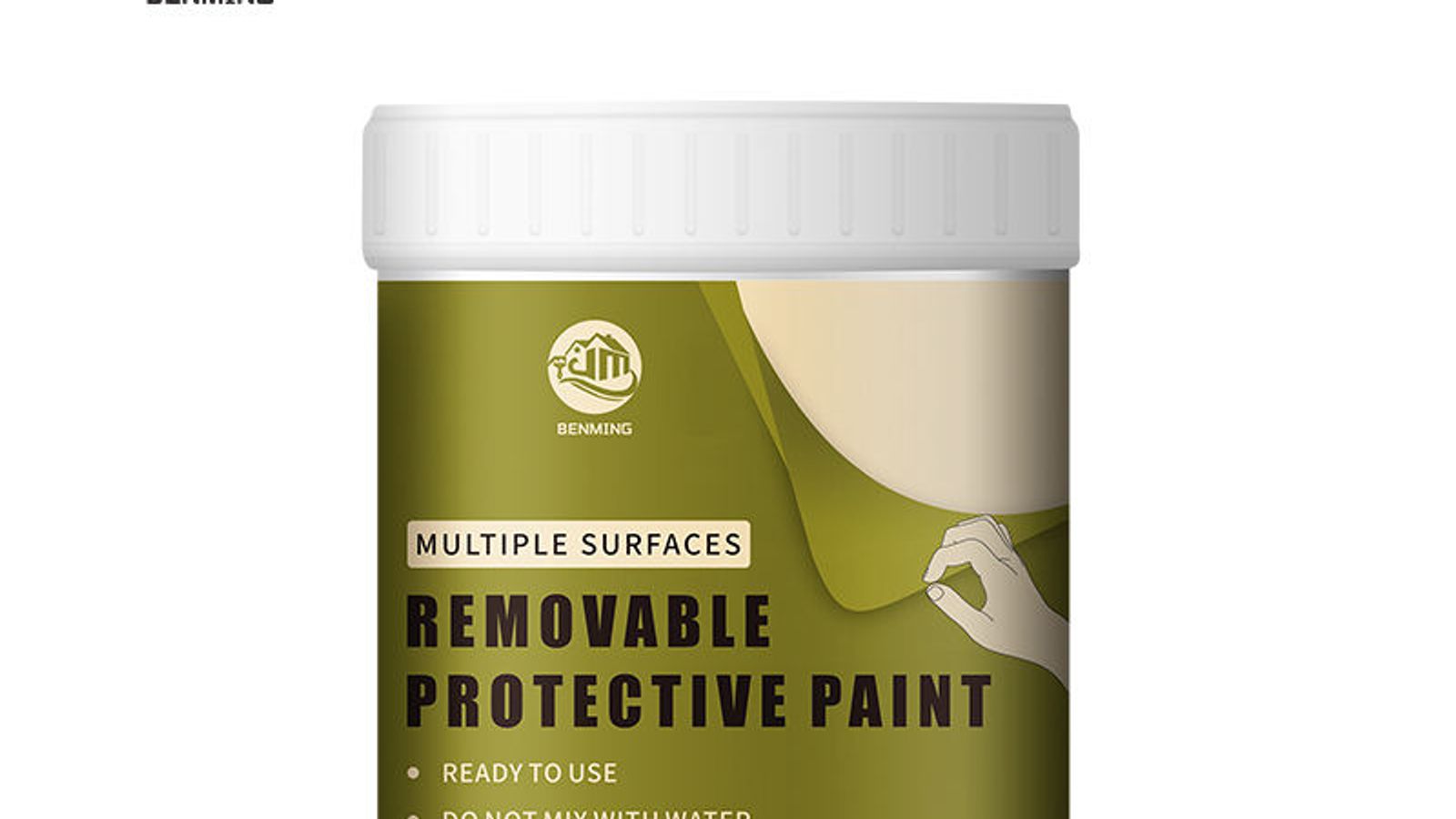
A peelable maskant for anodizing is a liquid-applied protective coating that is brushed, sprayed, or dipped onto aluminum surfaces, dried into a continuous film, and peeled off in one piece after the anodizing bath is complete. High-temperature formulations withstand continuous service up to 260 °C, dry to handling in 15 to 30 minutes at room temperature, and are typically applied to a dry-film thickness of 0.10 to 0.25 mm. Because a peelable coating conforms to every contour of the part, it delivers anodizing masking where tape cannot lie flat and where silicone plugs cannot fit.
To answer the question directly: a peelable maskant is a liquid polymer that dries into a removable protective skin over metal surfaces during surface finishing. It is also called a liquid maskant, a peelable coating, or a strippable coating. You apply it to the areas that must stay bare, let it flash dry, run the part through the bath, and then strip the film by hand.
The working ingredients are a film-forming polymer — typically a latex (water-based) or a solvent-based resin — plus additives that control viscosity, drying speed, and adhesion. A correctly formulated film has enough cohesive strength to pull off as a single sheet, yet adheres firmly enough to survive immersion in a sulfuric acid anodizing bath, cold and hot rinses, and sealing without lifting at the edges.
The peelable maskant product differs from masking tape because a liquid has no backing, no adhesive layer, and no seams. It flows into threads, internal bores, and blind holes that a flat tape cannot cover. It differs from silicone plugs because a liquid is not limited to round openings: it can coat irregular recesses, deep pockets, and large open surfaces that no plug is sized to fill. For the full scope of where this matters, see our anodizing applications overview.
A liquid maskant earns its place on five specific surface types.
Threads. Threaded holes, studs, and fasteners are the most common masking targets in anodizing. A brush-on or dip-applied maskant flows into the thread roots and covers the full flank profile, which tape cannot do without tearing and plugs cannot do when the thread is non-circular or oversized. One pass with a brush beats twenty minutes of fitting tape strips.
Internal bores. Blind holes, hydraulic passages, and bearing bores all trap electrolyte during the bath. Maskant drawn into a bore by dip application seals it completely, and the film is removed by peeling from the mouth of the bore after processing.
Press-fit diameters. Anodizing grows a conversion layer that changes part dimensions by the coating thickness. For a press-fit diameter that must hold a tolerance of a few hundredths of a millimeter, masking with a peelable coating keeps the surface at bare-machined dimension while the surrounding area is anodized. This is one of the few cases where the maskant's feathered edge is irrelevant, because the protected area is a closed band.
Rack contact lines. Where a part touches the titanium or aluminum rack, current concentrates and leaves a visible contact mark. Masking the contact zone before the bath produces a clean, uniform finish and prevents the etch or current-density artifacts that buyers reject. Rack-line masking is often done at the rack, just before loading.
Logos and part numbers. Engraved or laser-marked identification on visible faces must stay legible after finishing. A thin, precisely placed maskant coat protects the marking, and a transparent peelable maskant grade lets inspectors confirm coverage before the tank.
The limits matter as much as the capabilities when you are quoting tolerances.
Sharp line edges. A liquid dries to a feathered, tapered edge, not a crisp boundary. If the drawing requires a perfectly straight, square-edged mask line — for example, a hard anodize stop-off on a machined face — die-cut tape or a machined mask gives the sharper transition. Peelable maskants protect areas; they do not draw lines.
Very high build tolerances. Where a masked boundary must be controlled to within microns, the variable wet-film thickness of a hand-applied maskant is the wrong tool. Spray and dip application improve uniformity, but a part that demands dimensionally stable edges and repeatable stop-off positions is better served by a precision-cut tape or a reusable metal mask.
Aggressive chemistry. A standard peelable maskant is formulated for sulfuric acid anodizing at 15 to 20 percent concentration, chromic acid, and most e-coat and dip processes. It is not formulated for long caustic etch cycles, aggressive alkaline cleaners, or hardcoat runs at very high current density, where the bath chemistry can soften the film, raise its edges, or wick under it. Solvent-based grades extend the resistance window, but no peelable maskant replaces a metal mask or an engineered plating stop-off where chemistry is genuinely hostile.
Porosity and pitting. On a heavily pitted or porous surface, electrolyte can wick beneath the film at defect sites. Maskant hides contamination; it does not seal it.
The two chemistry families differ in heat resistance, drying behavior, and resistance to the bath.
| Property | Latex-based | Solvent-based |
|---|---|---|
| Carrier | Water | Organic solvent |
| Continuous heat resistance | Up to ~150–180 °C | Up to ~260 °C |
| Time to handling (room temp) | 20–30 minutes | 10–20 minutes |
| Odor and VOC | Low odor; low VOC | Higher VOC; ventilate |
| Resistance to anodizing chemistry | Good for standard sulfuric anodizing | Superior in aggressive baths |
| Film character | Soft; rubber-like; stretches | Stiffer; peels in clean sheets |
| Typical use | Threads; bores; general anodizing masking | Bake-oven parts; aggressive chemistry; thick film |
Temperature is the practical differentiator. The anodizing bath itself is cold — 15 to 25 °C for Type II sulfuric anodizing and near 0 °C for hard anodizing — so heat resistance rarely matters in the tank. It matters when the same masked part also passes through a curing oven: powder coating bakes at 180 to 200 °C and e-coat cures at 160 to 190 °C, temperatures a latex maskant survives but a solvent-based grade handles with more margin. If your line runs any oven step after masking, size the chemistry to the oven, not to the bath.
The carrier also changes shop logistics. Latex maskants clean up with water and emit little odor, which suits enclosed coating rooms. Solvent-based maskants flash off faster and build tougher films, but they need ventilation and solvent-safe brushes and tanks. Choose by heat requirement first, then by shop environment.
Application method decides labor cost and film uniformity.
Brush-on maskant is the default for localized masking: protecting a logo, a thread, or a rack contact point on a handful of parts. It gives the operator direct control over placement and film thickness, needs no capital equipment, and is the natural choice for rework and for masking parts already on the rack. The trade-off is throughput — brushing a complex part is slower than dipping it — and operator-dependent thickness.
Dip tank maskant is the high-volume option. The part is fully immersed, withdrawn, drained, and dried; the film thickness is governed by viscosity and withdrawal rate, so coverage is consistent across an entire batch. Dipping also fills internal bores and threaded holes that are tedious to brush. It requires a tank, viscosity control, solids management, and enough space to hang parts while they dry.
Brush-on is the right call when you mask a few parts, cover small or awkward areas, or work on parts already on the rack. Dip tank wins for repeating batches with complex interiors, where uniform coverage across many parts outweighs the setup cost of a tank. Many shops keep both in the masking room. The brush-on maskant line covers touch-up and detail work; the dip tank maskant line covers production dipping.
Timing changes what the maskant must survive.
Masking before anodizing happens in the masking room, before the part is racked. The maskant is applied to the surfaces that must remain bare, flash dried, and then the part is racked and loaded. Because the film is fully cured before it meets the bath, this is the safest route for threads, bores, and press-fit diameters, and it is the only practical route when the whole part must be dipped.
Rack line masking happens after racking, immediately before the tank — most often to protect rack contact lines or to touch up areas the pre-mask missed. It is also used for two-step sequences: anodize, stop off, then e-coat or a second color, where the second maskant is applied to an already-anodized surface and must adhere to the oxide layer rather than to bare aluminum.
Rule of thumb: if a surface must be absolutely bare after processing, mask it before the bath and give the film time to cure. If the goal is simply to prevent a contact artifact or to protect a spot from a downstream step, rack-line masking is faster and cheaper.
Removal is where a peelable coating earns its name. Lift a corner with a fingernail or a plastic scraper, then pull the film back at a low angle; a correctly built film comes off in one piece in seconds, leaving no residue on the substrate. Because there is no adhesive, there is no solvent wipe-down afterward.
Two conditions make removal harder, and both are preventable. First, a film that is too thin tears instead of peeling — one of the reasons film-thickness targets exist. Second, a film left on too long after the bath gradually dries and shrinks, becoming brittle and grabbing the surface; stripping a maskant that sat on a part for days is a different job than stripping one removed the same day. Strip promptly after sealing and drying.
Rework is straightforward when adhesion was good: maskant failure almost always traces back to a contaminated surface or an incomplete cure. When a film lifts or allows wicking, remove the part from the line, peel, clean the surface, and re-mask. Disposal is simple for latex films — they are dry, non-hazardous plastic waste in most jurisdictions — while solvent-based films should be handled according to the SDS for their residual solvent content.
The economic case for liquid masking is strongest on complex geometry and mixed runs.
A liquid maskant is consumed at a rate of roughly 4 to 10 square meters per liter, depending on the film thickness you build — a small footprint in material cost per part. There is no die-cutting charge, no backing waste, and no inventory of hundreds of plug sizes. Labor is the variable: brushing is hand-work, but dipping a batch moves many parts at once, and both are usually faster than cutting and fitting tape strips into threads.
For a job shop that masks dozens of part numbers a week, liquid maskant replaces a wall of tape rolls and plug bins with one tank and one shelf of pails.
Most maskant failures in anodizing are process errors, not product defects.
A peelable maskant for anodizing withstands continuous heat from roughly 150 °C for standard latex grades up to 260 °C for high-temperature solvent-based grades. The anodizing bath itself is cold, so the rating matters most when masked parts also pass through powder-coating or e-coat cure ovens.
Brush-on maskant dries to handling in 15 to 30 minutes at room temperature, depending on film thickness and humidity, and reaches full cure within 2 to 4 hours. Heavier films and humid conditions extend the window; forced air shortens it.
No. A peelable maskant is a single-use, sacrificial film — you peel it off, discard it, and re-apply for the next run. It cannot be peeled and re-adhered the way a silicone plug is reused across many cycles.
A fully cured maskant does not leach into the anodizing bath. The risk is carry-in from a film that has not completely flashed its carrier, so allow the full drying time before racking, and confirm that solvent-based films have evaporated before the tank.
Target 0.10 to 0.25 mm of dry film. Use the lower end for light masking such as logos and rack-contact points, and the upper end for aggressive baths, long dwell times, and surfaces that must stay absolutely bare.
Peelable maskants are the right anodizing masking when geometry is complex, tolerances matter, or the part must come out of the tank with threads, bores, and contact points exactly as machined. Explore the liquid peelable maskants category to compare brush-on, dip tank, and transparent grades, request free samples for your line, or contact the factory for a custom masking solution matched to your chemistry and your oven.
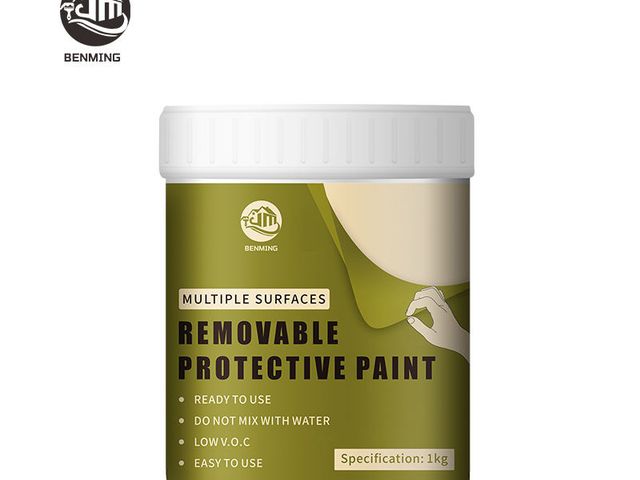
Liquid & Peelable Maskants
Peelable Maskant for Plating lines - send your drawing for a matched quote.
Liquid & Peelable Maskants
Brush-applied peelable coating for irregular shapes and touch-up masking.
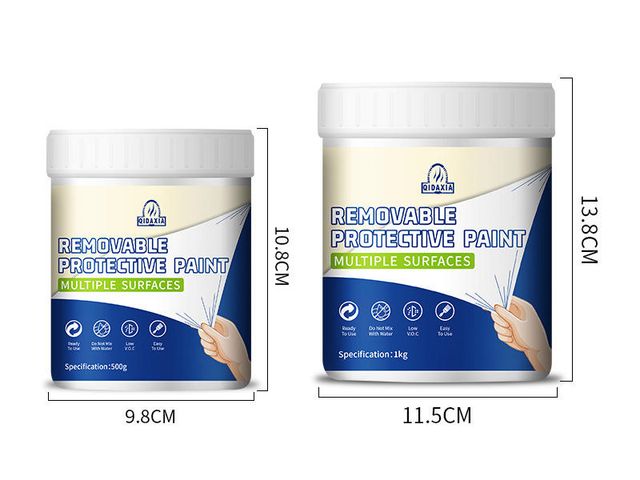
Liquid & Peelable Maskants
High-volume dip-applied maskant for consistent-geometry parts.
Send drawings, dimensions, material, environment or operating conditions, and we will help confirm the right specification.
Uploaded reference files are included with the inquiry. For larger CAD packages, reply to the confirmation email or send them here:
Our team typically replies within 24 business hours.