What Is PET Masking Tape?
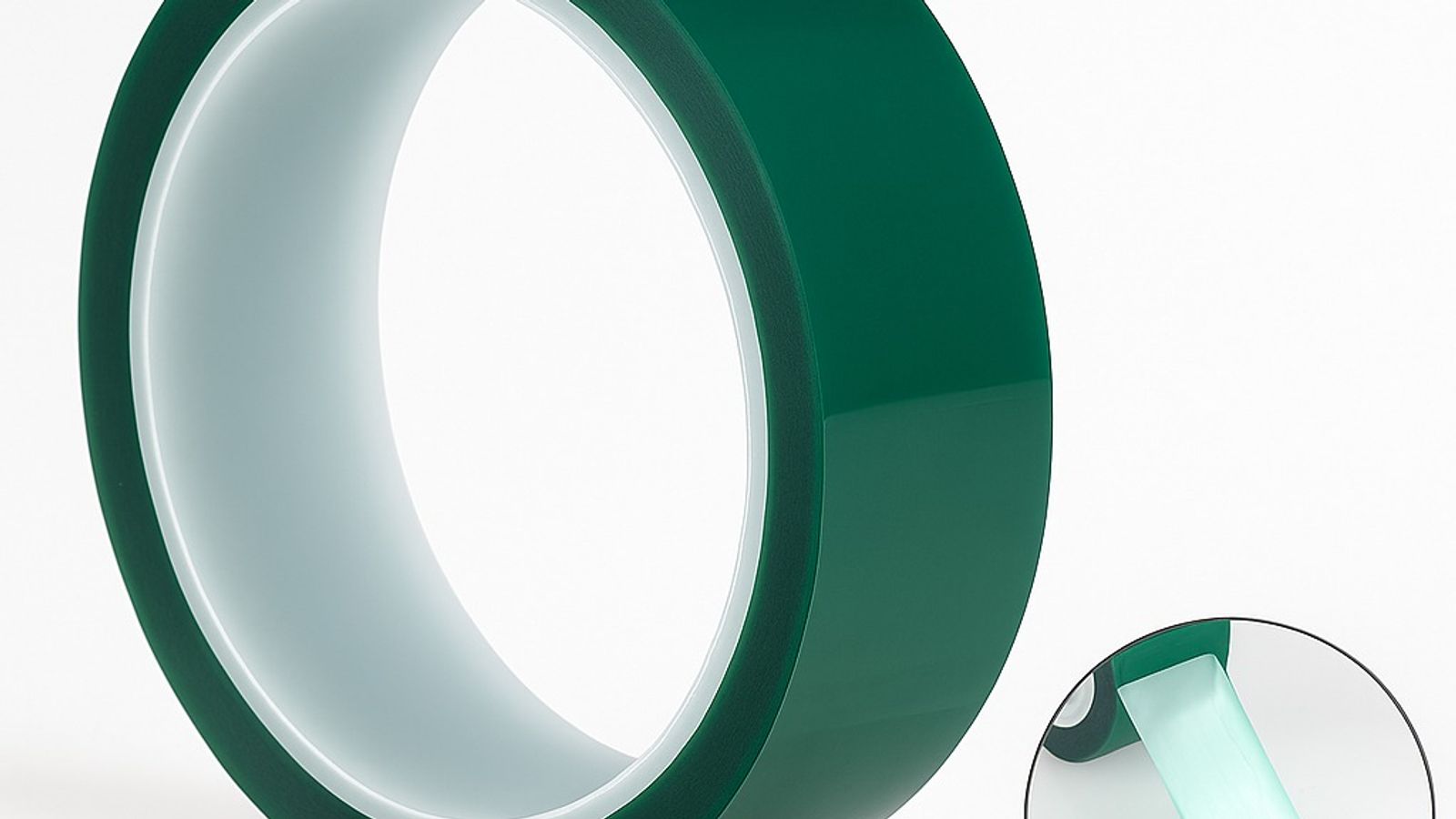
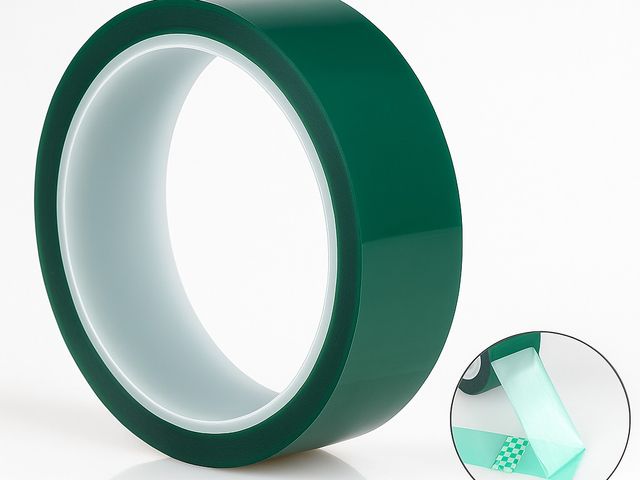
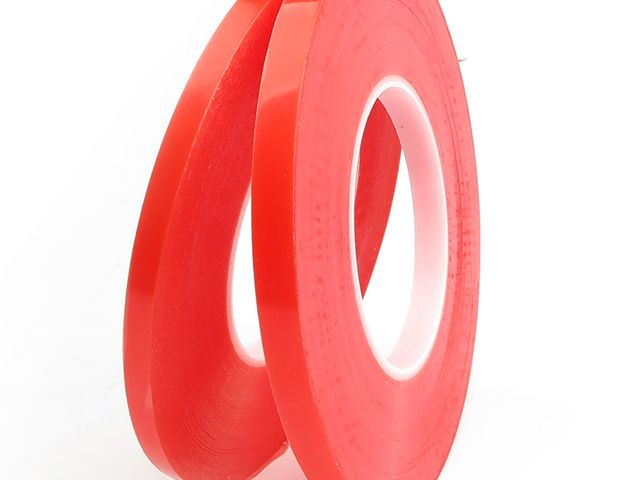
PET masking tape — also called polyester masking tape or simply "green tape" — is a pressure-sensitive masking tape built on a biaxially oriented PET (polyethylene terephthalate) film backing coated with a silicone adhesive engineered for heat resistance. Its temperature window is why it is the default masking material on powder coating and e-coating lines: most grades carry a continuous service rating of 150–180°C, and high-temperature green PET grades survive short peaks up to 200°C. That places it squarely between crepe paper tape (80–120°C) and polyimide tape (260°C+). This guide covers measured temperature performance, what happens at the limits, and how to select the right PET tape for a given bake schedule.
The Construction Behind the Rating
Every PET tape is a two-layer system, and both layers determine how much heat it can take. The backing is biaxially oriented PET film — the same engineering polymer used in flexible circuits and electrical insulation — typically 25 to 50 µm thick. Biaxial orientation gives the film tensile strength, dimensional stability at temperature, and a smooth surface that produces sharp, clean paint lines. It also resists the solvents and process chemicals found in coating lines, which is why polyester film performs where paper tapes curl and degrade. If you want the materials-level detail, our PET (polyester) film page explains the film properties behind the tape.
The adhesive is the second half of the system. Standard PET masking tape uses a solvent-borne silicone rubber adhesive that is coated onto the film and thermally cross-linked. Silicone adhesives hold their bond up to roughly 200°C because the silicone backbone resists the thermal degradation that breaks down natural-rubber or acrylic systems long before the film gives out. A polyester film with a weak adhesive would fail at half its rated temperature, so the adhesive is what makes PET tape a high-temperature product at all. Silicone-free acrylic versions exist for contamination-sensitive work, but they trade temperature performance — discussed in the selection section below.
The third property worth understanding is conformability. PET film is thinner and stiffer than crepe paper, so it does not stretch and wrap the way paper does — but with the correct thickness, it follows curves, threads, and recesses cleanly while keeping far sharper edge definition than paper tapes can hold.
Continuous Rating vs. Short Peak
Two numbers define every high-temperature masking tape, and reading them correctly is the difference between a clean job and a residue cleanup.
- Continuous rating is the temperature the tape can hold for its rated dwell time — usually 30 to 60 minutes in oven-bake applications, though long-duration exposure matters too — while still removing cleanly with no adhesive transfer.
- Short peak is a temperature excursion above the continuous rating that the tape tolerates for a limited window, typically 15 to 30 minutes, before you start accepting performance margin loss.
Typical ratings across PET tape grades look like this:
These are representative manufacturer ratings, and specific products vary by backing thickness and adhesive load. A powder coating line running at a true 200°C metal surface temperature sits at the very edge of green PET's peak window; a line running at 180°C sits comfortably inside the continuous envelope. Always confirm against the specific datasheet rather than assuming all PET tape is rated identically — our high-temperature green PET masking tape is documented at 180°C continuous / 200°C peak, which is the rating to spec for oven-cure work.
What Happens at the Limit
The failure sequence of PET tape is predictable, and knowing the stages helps you set process windows that stay well clear of them.
- Inside the rating: clean removal, zero residue, sharp edges, and the tape comes off in one piece.
- Slightly over the rating: the silicone adhesive begins to soften and flow. Edges lift or "creep," the tape wrinkles as the film relaxes, and you start seeing faint adhesive transfer on removal.
- Well over or sustained too long: the silicone adhesive carbonizes and the PET film embrittles and cracks. The tape becomes brittle, is hard to strip, and leaves stubborn residue that requires solvent or mechanical abrasion to remove.
The point to internalize is that failure is a function of temperature and time and substrate. A tape that survives 200°C for 10 minutes may fail at 200°C for 60 minutes, and a tape that removes cleanly from bare steel may leave adhesive on a rough, powder-coated surface because of surface area and anchor points. If you are fighting residue in production, our guide to preventing adhesive residue after cure walks through the root causes.
Test Conditions That Matter
Datasheet ratings are generated under controlled conditions, and production lines rarely match them exactly. When you compare PET tape ratings to your own process, normalize for these four variables:
- Oven air temperature vs. metal surface temperature (MST). A part sitting in a 200°C oven may spend only a few minutes above 180°C at the surface. Thin sheet metal tracks oven air temperature quickly; heavy castings and thick sections lag by minutes. Rating the tape against MST, not oven setpoint, is the correct comparison.
- Heat transfer mode. Hot-air circulating ovens heat evenly; infrared and radiant ovens can create localized surface spikes that exceed what the air temperature suggests.
- Dwell time and heat-up rate. A slow ramp gives the adhesive time to degrade proportionally to total heat exposure, not just peak temperature.
- Humidity at application. Applied to a cold, damp part, initial adhesion drops, and a tape with weak adhesion is more likely to lift at temperature before the adhesive ever reaches its thermal limit.
PET vs. Crepe vs. Polyimide: Where It Fits
PET tape occupies the middle of the masking-tape temperature spectrum, and that middle is exactly where powder coating and e-coating bake cycles live. The comparison below is the practical one buyers ask for:
Crepe paper tape is a process-cost choice, not a performance choice: it is cheap and conformable, but 120°C is fine for primer drying and low-temp assembly masking and simply not enough for powder cure or e-coat bake cycles. Polyimide tape, on the other hand, is over-specified for most coating lines — it earns its price for repeated high-heat cycles above 200°C such as reflow soldering, plasma coating, and hot-mask operations, where PET would fail and crepe would not even be considered. For the roughly 95% of masking jobs between 150 and 200°C, PET delivers the temperature headroom, clean removal, and cost profile that neither extreme provides. For the specific engineering comparison, our PET vs. polyimide tape temperature article covers the decision in detail.
Applications of PET Masking Tape
Powder Coating Masking (Oven Cure at 180–200°C)
Powder coating is PET tape's home application. Standard powder cure schedules run 180–200°C for 10 to 20 minutes at metal surface temperature, which sits inside the continuous rating of green PET and touches its peak window only on aggressive schedules. On a powder line, PET tape masks bolt threads, mounting holes, flanges, and ground points where powder must not adhere, and the tape's dimensional stability means it will not shrink or curl during the cure. For most shops this is a one-and-done choice: green PET is the classic powder coating masking tape. See how it fits a full powder coating masking workflow for threads, studs, and masked-off cavities.
E-Coating Masking (Bake at 160–190°C)
E-coating is the harder case, because the tape must survive two environments: the wet process and the oven. Parts travel through alkaline cleaners, phosphate conversion baths, and the e-coat bath itself before entering the bake oven at 160–190°C for 20 to 30 minutes. PET tape's polyester film resists those process chemistries, and its silicone adhesive holds through both the bath and the bake — a combination crepe tape cannot match and polyimide does not need for these temperatures. Confirm that your e-coat bake does not exceed the continuous rating for the full dwell; the e-coating masking application guide lists the specific process baths and bake windows PET tape is documented against.
PCB Plating and Electronics Masking
Green PET tape is widely used for selective plating on printed circuit boards — gold finger (hard gold) masking and other selective plating work — where the tape must resist plating chemistry at near-ambient temperature while holding a tight line under agitation. Here the temperature requirement is modest and the chemical resistance and edge definition carry the job. The tape masks the board surface so plating deposits only where it should, then strips cleanly without leaving silicone oils on the board surface.
Anodizing Masking
Anodizing itself runs at ambient to roughly 20–25°C, so temperature is rarely the constraint. The binding step is the sealing stage, typically hot water or nickel acetate at 96–100°C — trivial for PET tape — and the real challenge is acid resistance in the anodize bath. PET film holds up well to the sulfuric acid electrolytes used in Type II and Type III anodizing, and the tape masks logos, contact points, and racking areas cleanly. White and green PET are both common here depending on line visibility needs.
General High-Temperature Masking
Beyond coating lines, PET tape covers any process where masking must survive heat without residue: gasket surfaces during powder cure, keyways and ground surfaces in heat-treatment fixtures, thread protection during curing or bonding, and temporary masking during adhesive or sealant cure. For these jobs the tape is typically supplied in tissue-slit widths for tear-by-hand application, which is why most PET tape reels come in a range of narrow widths.
How to Choose the Right PET Tape
Green vs. Clear vs. White
The color of a PET tape is not cosmetic — it signals a rating and a purpose.
- Green PET is the high-temperature workhorse, rated 180°C continuous with 200°C peaks, and its opaque green color gives high visual contrast for line QC and easy removal confirmation. This is the grade to default to for powder coating and e-coating. Our high-temperature green PET masking tape is the specification most coating shops start from.
- Transparent (clear) PET is rated lower, typically 150°C continuous, and is chosen when you need to see through the tape to align it over fine features, printed marks, or component locations. Its see-through property beats color contrast when precision alignment matters more than temperature headroom. The transparent PET high-temperature masking tape line covers that niche.
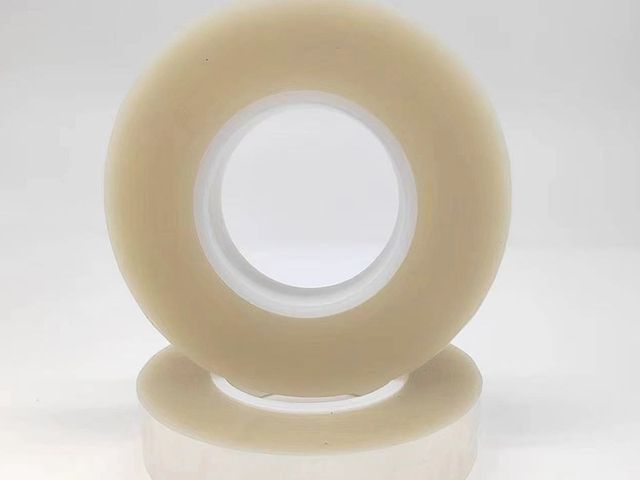
- White PET sits at 150–180°C and is preferred where a clean, bright appearance is desirable on the masked surface, or where the green tint could visually interfere with color inspection after cure.
Thickness
PET tape is commonly supplied in 0.05, 0.06, 0.08, 0.10, and 0.12 mm backings, and thickness is a real engineering decision:
- Thin tape (0.05–0.06 mm) gives the sharpest edge definition and conforms to fine detail, but it is harder to handle, snaps more easily, and offers less resistance to paint pull.
- Thick tape (0.10–0.12 mm) conforms over threads, radii, and irregular shapes, is easier to apply and remove, and holds a stronger mechanical barrier — at the cost of slightly softer edge lines.
The rule of thumb: fine, flat, precision edges call for thin; coverage over threads and curved geometry calls for thick. If a job demands both, two widths in one build is a normal answer.
Adhesive: Silicone vs. Silicone-Free
Standard PET masking tape uses silicone adhesive, which is exactly why it survives 180–200°C. The catch is that silicones can migrate to adjacent surfaces and compromise the adhesion of paint, adhesive, or potting compounds applied after the mask is removed. Where silicone contamination is unacceptable — certain electronics, some paint lines, and pre-bond surfaces — silicone-free (acrylic-based) PET tape is specified instead. The trade-off is explicit: silicone-free grades typically rate closer to 150°C, well below the 180–200°C of a silicone system. Specify silicone-free only when the contamination risk is real; otherwise you give up 30–50°C of headroom for a problem you may not have.
Storage and Handling Tips
A high-temperature tape that has been stored poorly will fail before its rating says it should. The silicone adhesive and PET film both age, and the practical shelf life is 6 to 12 months from manufacture.
- Store rolls flat (never standing on edge), in the original packaging, away from direct sunlight, UV sources, and heaters.
- Keep storage conditions at roughly 15–25°C and 50–60% relative humidity. High heat accelerates adhesive aging; high humidity can affect the paper cores and unwind tension.
- Apply to clean, dry, degreased surfaces. Fingerprint oils and release agents on the substrate cut initial adhesion, and low adhesion at application is the most common cause of edge lift in the oven.
- Use firm, even pressure when applying, and avoid stretching the tape onto the part — stretched tape relaxes at temperature and wrinkles.
- Remove the tape after the part cools, not while it is hot. Hot removal pulls softened adhesive and is the fastest route to residue on the masked surface.
- Check the manufacturer's shelf-life and lot date before large runs. If a roll has been sitting for a year, validate it on a scrap part before trusting it on production.
FAQ
Can PET masking tape withstand 200°C?
Yes, for short peaks. High-temperature green PET grades are rated to withstand 200°C for roughly 30 minutes, while their continuous rating stays at 180°C. For sustained operation above 200°C, move to polyimide tape, which is rated 260°C+.
Is PET masking tape silicone-free?
Standard PET masking tape uses a silicone adhesive; that is what gives it the 180–200°C rating. Silicone-free (acrylic-based) PET tape exists for contamination-sensitive applications but is rated lower, typically around 150°C. Confirm the adhesive type against your process chemistry before specifying.
How long can PET masking tape stay in a 180°C oven?
High-temperature green PET is typically rated for about one hour at 180°C. Thicker parts can extend the effective window because metal surface temperature lags oven air temperature, but the tape should be judged against actual surface temperature and total dwell, not oven setpoint.
Does PET masking tape leave residue?
Within its rated temperature and dwell time, PET tape removes cleanly with no residue. Over-run the bake schedule or exceed the rating and the adhesive softens or carbonizes, leaving residue that requires solvent or abrasion to remove. Our guide to preventing adhesive residue after cure covers the process fixes.
What is the difference between green and transparent PET tape?
Green PET is the higher-rated grade (180°C continuous, 200°C peaks) and offers strong visual contrast for QC. Transparent PET is rated lower (about 150°C) but lets you see through it for alignment over fine features. White PET splits the difference at 150–180°C for color-sensitive lines.
Choose the Right Tape for Your Bake Schedule
Masking tape selection is a temperature and chemistry decision, not a preference. For powder coating and e-coating bake cycles up to 180°C — with legitimate short peaks to 200°C — PET masking tape delivers the clean lines, clean removal, and cost profile that crepe cannot reach and polyimide does not need. Match the grade to your actual metal surface temperature, verify the continuous rating against the full dwell time, and confirm the adhesive type against your downstream process. If your bake schedule sits at the edge of the envelope, talk to LeaderMasking's engineers with your oven temperature, part mass, and cure time — the recommendation comes back with the data to justify it, and the full PET masking tape range is ready to ship in tissue-slit widths for your line.