Technical
What Temperature Can Silicone Masking Plugs Withstand? (260°C Data)
Silicone masking plugs withstand 260°C continuous heat and 315°C short-term peaks. Compare temperature ratings, reuse cycles, and select the right plug for your line.
Silicone masking plugs withstand 260°C continuous heat and 315°C short-term peaks. Compare temperature ratings, reuse cycles, and select the right plug for your line.

Silicone masking plugs withstand 260°C (500°F) of continuous heat exposure and 315°C (599°F) of short-term temperature peaks, which makes them the standard masking solution for powder coating ovens running 200°C cure cycles, e-coat bake lines operating around 180°C, and anodizing or plating tanks that never exceed 100°C. The maximum continuous service temperature of a food- or industrial-grade silicone masking plug is 260°C, meaning the plug can sit through repeated oven passes at that temperature without degrading, losing its shape, or transferring silicone residue to the masked surface. That 260°C rating gives buyers roughly 60°C of safety margin above a typical powder coat cure of 200°C and roughly 80°C above a typical e-coat bake of 180°C, which is exactly why silicone has displaced rubber, PVC, and nylon plugs across finishing lines that run hot. For engineering buyers, the practical answer is: silicone masking plugs are rated for 260°C continuous service with 315°C short-term peak tolerance, and they remain dimensionally stable through hundreds of reuse cycles when kept within those limits.
Silicone's temperature tolerance is published two ways, and mixing them up is the most common sourcing error in masking.
Continuous service rating (260°C). This is the temperature a plug can hold indefinitely — not for one bake, but across the life of the part. At 260°C, a well-formulated silicone compound retains its elasticity, does not stick to the substrate, and does not volatilize the low-molecular-weight oils that cause silicone contamination (the "fish-eye" or outgassing defects powder coaters see when a plug is run past its rating). The continuous rating is the number to use when you calculate how many cycles a plug will survive.
Short-term peak rating (315°C). This is a ceiling you can hit briefly — typically 10 to 20 minutes — without permanent damage. Peaks above 315°C, or sustained exposure in the 280–315°C band, begin to harden the silicone, causing the plug to lose its flexible seal and eventually crack. Some lines run convection ovens with hot spots 15–20°C above setpoint; knowing your plug's peak headroom tells you whether those hot spots are a problem. A plug rated 260°C continuous / 315°C peak tolerates the hot spots; a plug rated 200°C does not.
The table below gives the practical operating windows for the main silicone plug types used on finishing lines.
| Silicone plug type | Continuous rating | Short-term peak | Typical use |
|---|---|---|---|
| Standard silicone plug | 260°C | 315°C | Powder coat cure; e-coat bake; paint lines |
| High-temp reinforced silicone plug | 260°C+ | 315°C+ | Long convection ovens; repeated passes |
| Black conductive/antistatic silicone plug | 230–260°C | 280°C | E-coat lines requiring antistatic properties |
| Red/color-coded silicone plug | 260°C | 315°C | Visual QC separation of masked hole sizes |
| Silicone vent plug | 260°C | 315°C | Threaded holes needing trapped-air pressure relief |
The 200°C and 180°C anchors. A standard powder coat cure is 180–200°C for 10–20 minutes, and an e-coat bake is typically 160–180°C for 20–30 minutes. Both sit comfortably inside silicone's 260°C continuous envelope, which is why the material is the default: you are not operating at the edge of the material's capability, you are operating at roughly 75% of its rated maximum.
Rubber, PVC, and nylon plugs are cheaper per unit than silicone, which is why buyers often try them first. The temperature data explains why that cost saving usually evaporates on a hot line.
| Property | Silicone | Rubber (EPDM/NBR) | PVC | Nylon |
|---|---|---|---|---|
| Max continuous temperature | 260°C | 120–150°C | 60–70°C | 120–150°C |
| Short-term peak | 315°C | 170°C | 80°C | 180°C |
| Survives 200°C powder coat cure | Yes | No | No | Marginal |
| Survives 180°C e-coat bake | Yes | No | No | Marginal |
| Chemical resistance (anodize/plating baths) | Good | Good | Poor | Good |
| Residue/outgassing risk in oven | Low | High | High | Medium |
| Reuse cycles at rated temp | 200–500+ | 10–50 | Single use | 20–80 |
| Typical cost per unit | Highest | Low | Lowest | Low |
The pattern is clear. Rubber tops out around 120–150°C, which fails even before the oven reaches full cure temperature. PVC softens and releases chlorine-based degradation products above 60–70°C, making it unusable for any bake cycle and risky even near ovens. Nylon survives a single powder coat pass marginally but embrittles and chars over repeated use, and it tends to bind in threaded holes after the first bake. Only silicone holds both the 260°C continuous rating and the chemical resistance to survive the tank-based processes. That is why the 60–80°C of margin above your cure temperature is the deciding factor for any line running above 150°C.
No. A properly rated silicone masking plug does not melt in a powder coating oven, because the oven's 200°C cure temperature is 60°C below the plug's 260°C continuous rating and roughly 115°C below its 315°C peak rating. Melting is a phase change; silicone does not melt at oven temperatures the way PVC or nylon do. What actually happens when silicone is over-driven is progressive hardening, then cracking — the failure mode to plan around.
To put numbers on it: a typical 200°C convection cure cycle holds parts for 10–20 minutes. If you run two coats with two full oven passes, a plug spends roughly 40 minutes at 200°C per job. At that duty, a quality silicone plug tolerates 200–500 cycles before losing seal integrity — the equivalent of a year or more of production on a two-coat line. The failure that eventually ends a plug's life is not melting; it is the compression set that accumulates when the plug is squeezed into a threaded hole at temperature. As compression set increases, the plug's seal weakens, and powder begins to migrate under the plug edge. Track a plug's fit: the moment a 10 mm plug starts feeling loose in a 10 mm hole after the oven, retire it.
One caveat matters for powder coaters. If a line runs a high-temp bake above 220°C — some specialty powders and some heavy-gauge parts need 230–250°C cure — verify the plug's specific rating rather than assuming a generic 260°C figure. High-temp reinforced silicone plugs hold their 260°C rating through longer dwell times, but a cheap, thin-wall plug at the edge of its rating will harden faster.
Reuse economics are where silicone earns its higher unit price. At 260°C continuous exposure, a quality silicone masking plug delivers 200–500 reuse cycles, and the top end of that range is achieved when three variables are controlled: the plug stays at or below rated temperature, the plug is not over-stretched during insertion, and the plug is removed cleanly without tearing the sealing lip.
| Reuse variable | Impact on cycle life |
|---|---|
| Oven temperature held at 200°C (not 260°C) | Life moves toward 400–500 cycles |
| Sustained 260°C exposure every cycle | Life typically 200–300 cycles |
| Intermittent 315°C peaks | Life drops to 100–150 cycles; inspect often |
| Plugs stretched beyond spec during insertion | Tearing at lip; life cut by 50%+ |
| Clean removal; no knife or pry tool | Preserves lip; maximises cycle count |
The cost math is straightforward. A silicone plug at roughly 5–10x the unit price of a rubber plug, lasting 10x as long, reduces per-cycle masking cost by roughly half — and eliminates the downtime of re-masking between passes. For a powder coat shop masking 500 holes per job, plug replacement cost drops from a near-weekly rubber purchase to a quarterly silicone purchase.
Powder coating. Cure cycles of 180–200°C for 10–20 minutes, with some lines touching 220°C for heavy parts. Silicone plugs run comfortably inside their rating and are the standard for threaded holes, through-holes, and recessed features. See our powder coating masking guide for full masking strategy, or the powder coating application page for line-specific products.
E-coating. Bake cycles of 160–180°C for 20–30 minutes after the tank. Temperatures are lower than powder, but e-coat lines add two demands: antistatic properties to avoid attracting bath solids, and chemical resistance to the aqueous bath itself. Black conductive silicone plugs are the usual spec. The e-coating application page covers the plug selection logic for the tank and the bake stages.
Anodizing. Type II anodizing runs around 15–20°C in a sulfuric acid bath; Type III (hard coat) runs near 0–5°C. Neither approaches silicone's thermal limits — the constraint is chemical, not thermal. Silicone resists the acid baths and the 60–95°C hot-water sealing stage that follows. What anodizers must watch is plug life under repeated acid exposure, not oven temperature. Silicone vent plugs are the standard choice for blind and threaded holes here, because trapped air must escape during the seal stage.
Plating. Nickel, chrome, and zinc baths run 30–60°C. Temperature is a non-issue for silicone; racking hooks and chemical resistance drive the choice instead.
Across all four processes, the unifying data point is the same: silicone's 260°C continuous rating covers every thermal load these lines produce, leaving chemical resistance and dimensional fit as the actual selection criteria.
For high-volume threaded and through-hole masking, the high-temperature silicone masking plug series is the direct spec for 260°C lines, while the black silicone masking plug range covers antistatic e-coat requirements. Our high-temperature silicone caps guide walks through the cap-versus-plug decision for each feature type.
Yes. Silicone masking plugs are rated for 260°C continuous service, and most industrial-grade compounds tolerate 315°C short-term peaks of 10–20 minutes. Because a standard powder coat cure runs 180–200°C and an e-coat bake runs 160–180°C, silicone plugs carry a 60–80°C safety margin through normal bake cycles.
At 260°C continuous exposure, a quality silicone plug delivers 200–500 reuse cycles. Lines held at 200°C rather than 260°C push life toward the 400–500 cycle end; sustained 315°C peaks cut it to roughly 100–150 cycles. Retire a plug when it no longer seats snugly in the hole, since lost seal fit is the first sign of compression set.
No. Silicone does not melt at powder coat cure temperatures. The 200°C cure is well below the 260°C continuous rating, so the material does not soften, flow, or transfer residue. The real failure mode at end of life is hardening and cracking from accumulated heat history, not melting.
A plug fits inside a hole to mask threads, bores, and internal features; a cap covers the outside of a part, such as tube ends, fittings, and studs. Both use the same 260°C silicone compound, but plugs must withstand compression in threaded holes, while caps rely on edge grip around the part's outer diameter.
Yes, thermally and chemically. Anodizing and plating tanks run well below 100°C, far under silicone's rating, and silicone resists the sulfuric acid, nickel, and zinc electrolytes used in these baths. For anodizing, specify vent plugs on blind and threaded holes so trapped air escapes during the 60–95°C hot-water seal stage.
If your line bakes at 200°C, masks threaded holes, or runs repeated oven passes, spec silicone plugs rated 260°C continuous with verified reuse data rather than guessing. Browse the full silicone masking plugs range and the high-temperature silicone masking plug product page for dimensions, hardness options, and cycle-life data — or send your hole sizes and bake profile to the technical team for a plug recommendation matched to your oven's actual temperatures.
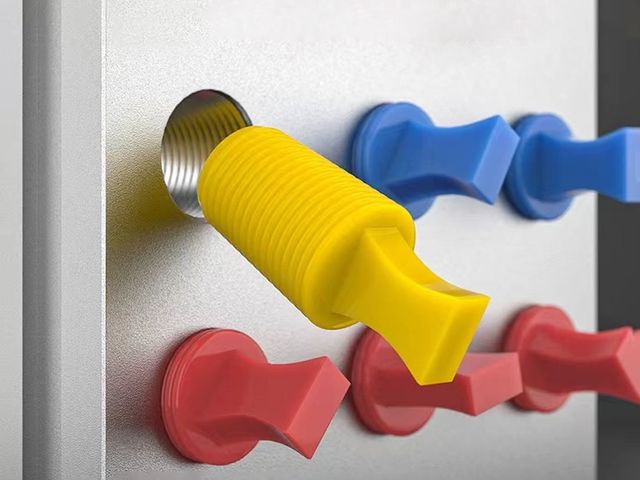
Silicone Masking Plugs
High-Temperature Silicone Masking Plug for Powder coating lines - send your drawing for a matched quote.
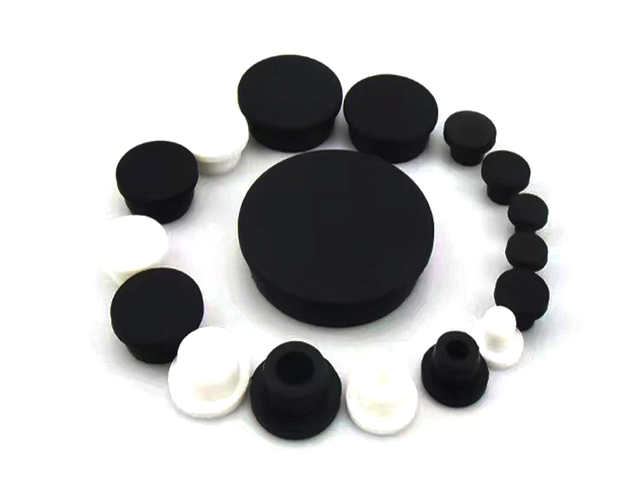
Silicone Masking Plugs
Black Silicone Masking Plug for Powder coating lines - send your drawing for a matched quote.
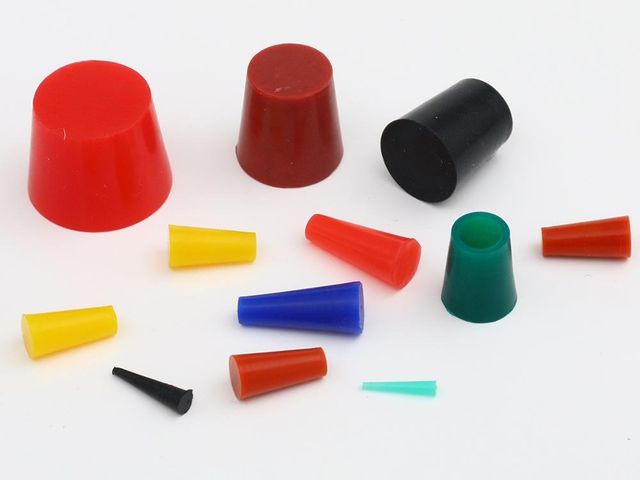
Silicone Masking Plugs
Standard Silicone Masking Plugs for plain hole masking and bore protection work, with straight profile and broad size range.
Send drawings, dimensions, material, environment or operating conditions, and we will help confirm the right specification.
Uploaded reference files are included with the inquiry. For larger CAD packages, reply to the confirmation email or send them here:
Our team typically replies within 24 business hours.