Selection Guide
Powder Coating Hooks and Racks: How to Maximize Parts Per Rack
Powder coating hooks and racks guide: compare hook types and materials to maximize parts per rack. Get a custom rack quote from LeaderMasking.
Powder coating hooks and racks guide: compare hook types and materials to maximize parts per rack. Get a custom rack quote from LeaderMasking.
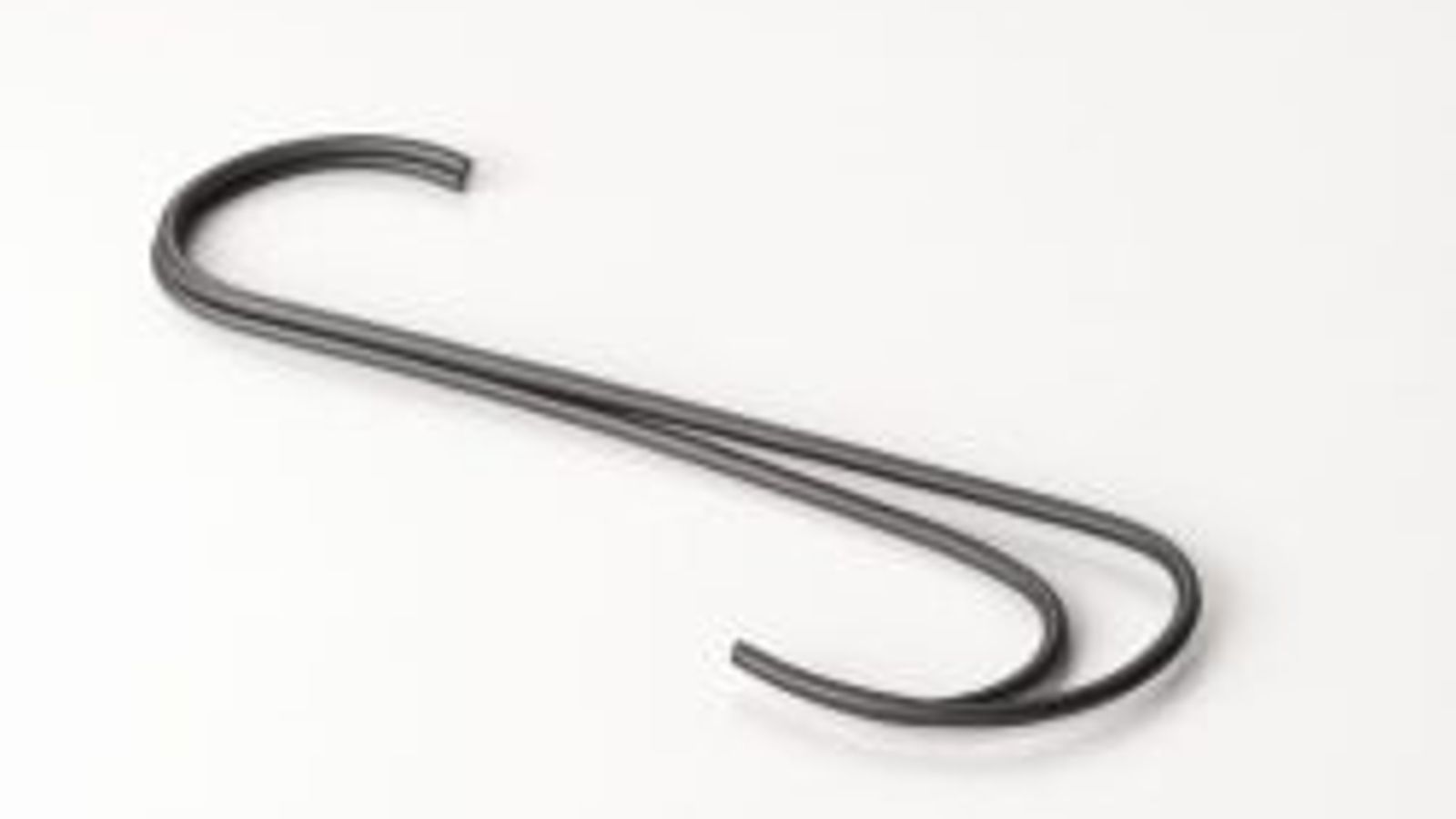
Powder coating hooks and racks are the reusable, conductive fixtures that carry workpieces through every stage of a coating line — hanging, electrostatic spraying, and oven curing at 180–200°C — while grounding each part so charged powder deposits evenly. A powder coating rack is not a passive hanger; it is the electrical, thermal, and mechanical link between your conveyor and your part, and its geometry directly controls how many parts you process per rack and what each rack costs per cycle. Job shops that treat the hooking system as an afterthought typically run 20–30% below their oven's theoretical capacity, while lines that engineer their powder coating hook rack reach 90% or more. This selection guide covers hook materials, hook types, grounding, packing density, and strip-and-reuse economics so you can specify the right rack for your line.
For a powder coating job shop, throughput is a fixed math problem: your oven cures a certain number of racks per hour, and every part on a rack is revenue. Parts per rack multiplies everything downstream — labor, energy, powder, floor space.
Three costs scale with racks, not with parts:
The upside is large: raising parts per rack from 30 to 45 is a 50% throughput gain with no new equipment.
The first decision is material, because it sets your temperature ceiling, load rating, and reuse economics. Nearly every commercial powder coating hook is made from steel wire; aluminum appears in special cases.
Mild steel wire is the default rack material: inexpensive, strong, and an excellent conductor. Most standard hooks ship zinc-plated to resist rust before first use. The zinc burns off during burn-off stripping at roughly 400°C, after which the bare steel flash-rusts quickly, so hooks should be re-plated or stored dry between cycles. In service, mild steel hooks carry the full 180–200°C oven cure with no loss of strength.
Spring hooks and snap hooks are made from hardened, tempered spring steel that snaps back after flexing. The tempering has a hard limit: spring steel begins to lose temper above roughly 300°C, well below the 400–450°C burn-off range. Strip spring hooks in a hot burn-off oven too often and the wire softens and loses its grip. Lines that run spring hardware should use chemical or low-temperature stripping, or plan to replace those hooks every 15–30 cycles.
Aluminum racks are light and non-rusting, but aluminum has one-third the strength of steel, anneals well below its 660°C melting point, and its surface oxide is a poor electrical contact. Reserve aluminum for lightweight parts and low-temperature lines; steel carries 90% of production.
For a general line, specify 3–5 mm spring steel wire hooks, 8–12 mm steel crossbars, and a rack frame rated for your heaviest load — most job-shop racks are engineered for 50–100 kg. Confirm the wire gauge against part weight: a 3 mm hook carries roughly 1–2 kg, a 4 mm hook 3–5 kg, and a 5 mm hook 6–10 kg before deflection changes your spacing.
Hook geometry determines how fast an operator can hang a part, how well the part grounds, and how many parts fit on a rack. There is no universal best hook — only the right hook for a given part shape.
| Hook Type | Material | Max Service Temp | Best For | Typical Reuse Cycles |
|---|---|---|---|---|
| S-hook | Zinc-plated or spring steel wire | 200°C (stripping ≤400°C) | Flat parts; through-holes; high-volume lines | 30–60 with stripping |
| Spring hook | Hardened spring steel | 200°C (stripping ≤300°C) | Round holes; tubes; fast hang/unhang | 15–30 |
| Snap hook | Hardened spring steel | 200°C (stripping ≤350°C) | Flanges; edges; parts with no holes | 15–25 |
| Swivel hook | Spring steel; zinc-plated | 200°C | Parts that must swing for coverage | 20–40 |
| Lock bar / lock hook | Steel bar + spring clips | 200°C | Heavy; flat; or high-value parts | 40–80 |
The workhorse of the industry. An S-hook drops into a through-hole or rack crossbar and holds parts at two points for stable grounding and predictable spacing. Because they are straight wire, they survive aggressive stripping better than sprung hooks and are cheap enough to treat as semi-consumable. For small brackets and punched parts, the general powder coating hooks range covers most job-shop needs.
A spring hook's closed loop flexes open to grip a part and snaps back, so operators hang parts in one motion without threading wire. The trade-off is spring fatigue: over many flexes, and especially after high-temperature stripping, the spring loses tension and parts start to swing or drop. See the spring hooks for coating lines range for spring tension options.
Snap hooks, or spring-clip hooks, clamp onto flanges, edges, and ribs — any part with no hole to hang from. The clip grips the metal edge while leaving a defined contact point. They excel at odd geometries that S-hooks cannot hold, but the clip wears first, so budget for replacement. Browsing snap hooks for powder coating helps match clip size to flange thickness.
Swivel, or wheel, hooks rotate around the rack crossbar so parts swing freely during spraying and curing. The motion exposes back faces to the powder cloud, improving wrap-around and reducing Faraday-cage voids in re-entrant corners. They cost more per position, so reserve them for parts that demonstrably need the motion. See swivel wheel hooks for swivel design options.
For heavy parts and high-value finishes, a lock bar holds several parts along a rigid steel bar with individual clips, distributing load and keeping every contact point in a known position. They are the highest-throughput, highest-investment option. The lock bars and lock hooks line is built for exactly this duty.
Electrostatic powder coating works because charged powder particles are attracted to the grounded workpiece. The rack is the electrical path from part to conveyor ground; resistance in that path shows up as thin film, poor wrap, and back-ionization.
The most common grounding failure is not a broken wire — it is accumulated cured powder on hook tips. Every cycle deposits a thin, insulating film on the contact area. After a few cycles the film acts as a dielectric, and parts on those hooks come out with uneven coverage or bare Faraday areas. That is why stripping is a quality operation, not housekeeping.
Three rules keep contact healthy:
Hook contact marks are a fact of physics — the shaded point cannot receive powder — but good design puts those marks in low-visibility areas. Combined with the right powder coating hooks for the part, contact marks drop below what customers notice.
Maximizing parts per rack is a layout engineering problem. Start with the part, then build the rack around it.
Draw the part, then the rack. The classic mistake is buying hooks first, then discovering your part geometry leaves half the rack empty. Use a simple rule: hook spacing must be at least the part width plus 20 mm, so parts do not collide when they swing during spraying and curing. Tilt parts 15–30° on their hooks so front faces angle toward the gun and back faces get wrap-around.
Most job shops underuse the vertical dimension. A 1.2 m rack with six crossbars and hooks spaced 100 mm along each bar gives 60 hook positions; with double-hung S-hooks, where each hook carries two small brackets, the same rack carries 120 parts — at zero change to oven time or conveyor speed.
Load rating is a packing constraint. A 3 mm wire hook is rated for roughly 1–2 kg; exceed it and the hook deflects, spacing collapses, and contact points shift. Weigh the part, then pick the smallest hook that carries it — thin hooks take less rack space and leave smaller marks.
Put heavy parts low and light parts high to keep the rack stable. For visible faces, hang parts so the contact point lands on an inner surface, a weld, or an edge hidden in final assembly.
A concrete target: most job shops can raise parts per rack by 40–60% by switching from random hooking to a planned layout with fixed spacing and double-hung hooks. On a 20-rack-per-hour line, 40 more parts per rack is 800 extra parts per hour.
Powder builds on hooks every cycle, so every hook needs a strip-and-reuse cycle. The method you choose sets both hook life and rack cost.
The fastest, cheapest method is a burn-off oven, which oxidizes the organic powder to ash at 400–450°C; hooks are then quenched and wire-brushed to bare metal. The limitation is temperature: zinc burns off and spring steel loses temper above roughly 300–350°C, so a burn-off cycle is effectively a wear event for spring hooks. Hard-wire S-hooks and lock bars survive many more.
Hot caustic solutions and solvent strippers remove powder below 100°C, preserving zinc plating and spring temper. Chemical stripping costs more and requires PPE and waste handling, but it is the only method that keeps spring hooks near their original performance. Lines that run a lot of spring hardware often use burn-off for bars and chemical stripping for springs.
Wire brushes, abrasive wheels, and media blasting clean hook tips between cycles. Media blasting is aggressive on zinc, so it is best reserved for heavy build-up before a burn-off.
A hook is done when its tip is pitted, its wire is bent or nicked, or a spring hook no longer snaps back. With good stripping discipline, S-hooks last 30–60 cycles, lock bars 40–80, and spring hooks 15–30 before replacement. Track retirement in your stripping log; a worn hook that costs cents can scrap a part worth dollars.
The hook itself is nearly free; the economics are in utilization and quality. A spring hook that costs $0.80 and survives 25 cycles adds about $0.03 per cycle in hook cost — usually under 1% of the value of the parts it carries. The real costs sit in three places:
Because these costs scale with racks, the highest-leverage purchase is a rack system engineered around your parts. LeaderMasking designs hooks, bars, and racks and application-specific powder coating line setups around customer part geometry and line speed.
It depends on rack size, hook spacing, and part geometry. A standard 1.2 m rack with six crossbars and 100 mm hook spacing holds about 60 hooks; double-hung S-hooks on small brackets push the same rack past 120 parts.
Hooks must survive oven cure at 180–200°C in service. During burn-off stripping at 400–450°C, zinc plating burns off and spring steel hooks lose temper above roughly 300–350°C, so spring hooks have shorter service lives than straight-wire hooks.
Those are hook contact marks: the hook tip shades a tiny area from the powder cloud, so no coating deposits there. Use thin wire tips, hang parts in hidden areas, and keep hook tips clean to minimize them.
Strip when coating build-up starts to insulate the hook — visible thick film, erratic film build, or new coating defects — typically every 10–30 cycles depending on film thickness and stripping method.
Steel for the vast majority of applications: it is cheaper, stronger, more conductive, and survives burn-off. Aluminum suits only light, corrosion-sensitive parts, and its oxide film is a poor conductor, so contact points must be scuffed before hanging.
Parts per rack is the cheapest throughput lever in powder coating: planned layouts, matched hook types, and clean contact points routinely add 40–60% capacity with no new ovens and no new conveyors. LeaderMasking manufactures powder coating hooks, snap hooks, spring hooks, swivel hooks, lock bars, and custom racks in steel, spring steel, and aluminum, and engineers each layout around your part drawings and line speed. Send your parts and your current rack to request a quote — or ask for a custom rack consultation and we will return a layout with the parts-per-rack count before you buy.
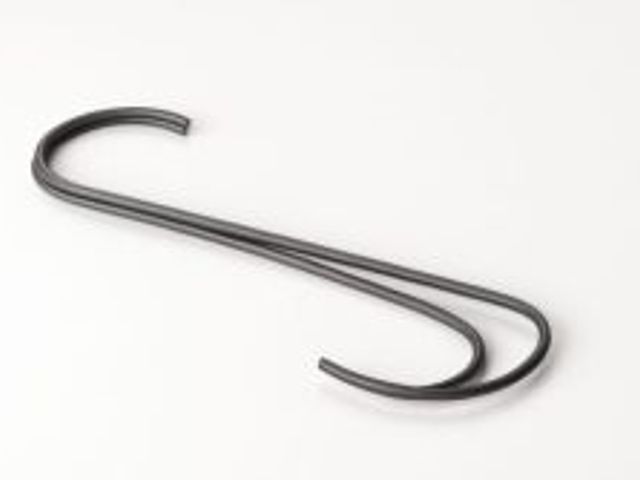
Hooks, Bars & Racks
General Powder Coating Hooks combine the mainstream C, V, CV, S and other wire-formed hanging styles used across most coating lines.
Hooks, Bars & Racks
Snap Hooks for Powder Coating clip onto rods or bars to create a more secure hanging point during coating and oven cure cycles.
Hooks, Bars & Racks
Spring Hooks for Coating Lines add spring-assisted retention for parts that need a more secure hang point during transport and cure.
Send drawings, dimensions, material, environment or operating conditions, and we will help confirm the right specification.
Uploaded reference files are included with the inquiry. For larger CAD packages, reply to the confirmation email or send them here:
Our team typically replies within 24 business hours.