Selection Guide
Die-Cut Masking Shapes vs Hand-Applied Tape: Labor Costs
Die-cut shapes vs hand-applied tape: labor cost per part, temperature limits, and payback math for coating lines. Request free samples and a tooling quote.
Die-cut shapes vs hand-applied tape: labor cost per part, temperature limits, and payback math for coating lines. Request free samples and a tooling quote.
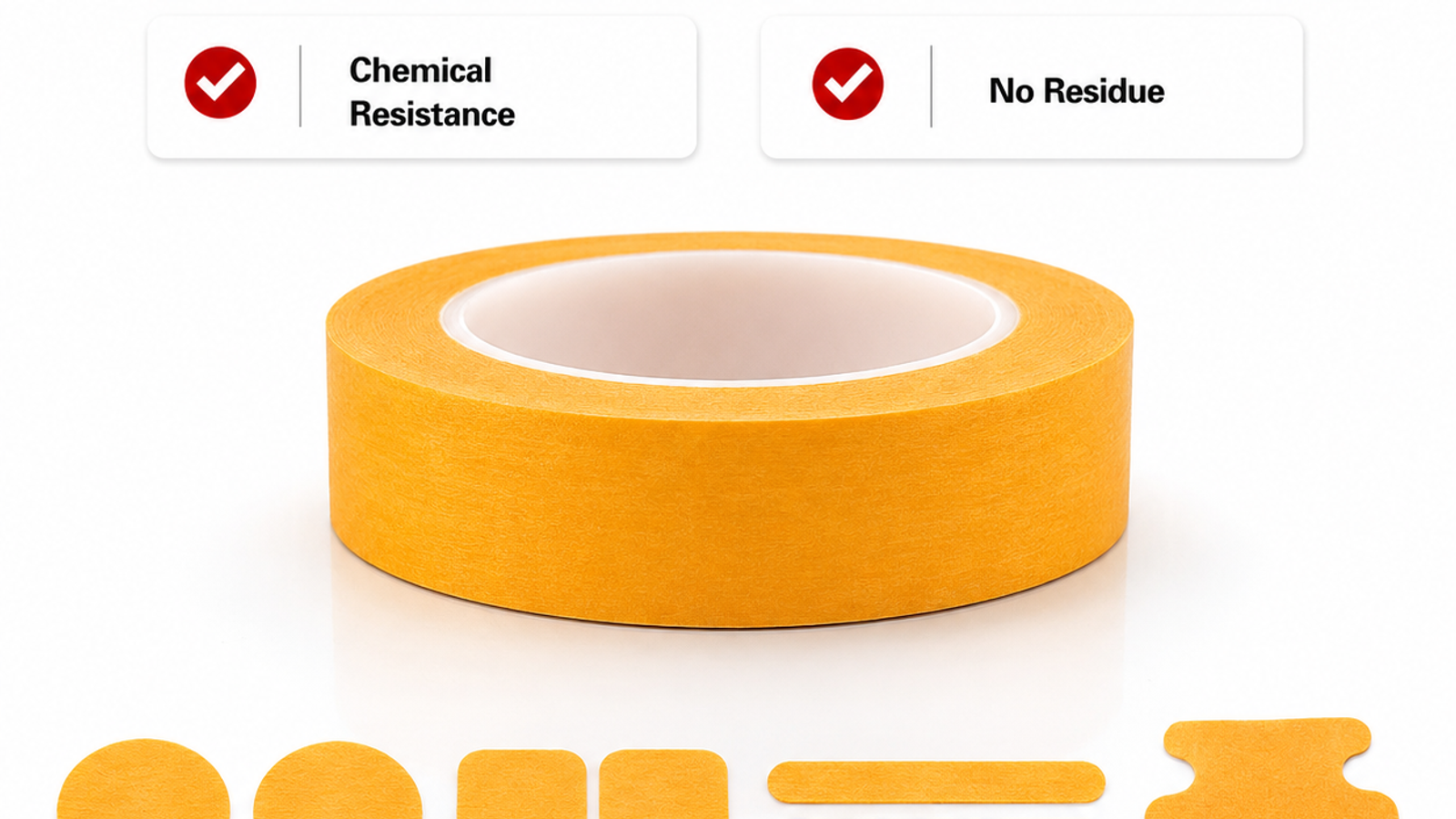
Die-cut masking shapes are pre-cut masking components — dots, ovals, squares, custom logos, thread and sensor-port covers — stamped or kiss-cut from heat-resistant materials such as silicone, polyimide, and PET, and supplied on a release liner so an operator can peel and place them in seconds. They do the same job as masking tape cut by hand on the line, but they remove the measuring, cutting, and aligning steps from the production cycle. Thermal ratings match the base materials: die-cut silicone shapes handle 260°C continuous service and up to 315°C for short exposure; die-cut polyimide holds 260°C continuous with a 400°C peak; PET die-cuts are rated for 150-180°C. Those limits comfortably cover the temperatures a mask must survive in finishing processes — powder coat oven cure at 180-200°C for 15-30 minutes, wave solder at 260°C, and PCB reflow at roughly 250°C. The productivity difference is the headline: with shop labor at $25-45 per hour, hand-cutting and placing a tape mask takes 15-60 seconds per part, while peeling and placing a die-cut shape takes 2-8 seconds. Across a batch of thousands, that is not a few seconds per part — it is a full-time operator's wage.
Most shops budget masking by what they spend on tape, not by what they spend applying it. That is the wrong way to look at it. Tape is cheap; an operator's hour is not. When a line worker stops to measure a length of tape, cut it with a knife or scissors, trim it to shape, and press it onto a part, that whole sequence is billable labor. Repeat it across 10,000 parts a month and the masking step quietly becomes one of the most expensive operations on the floor — not because of the material, but because of the 15-60 seconds spent on every single part.
Die-cut masking shapes attack exactly that cost. They arrive already the right shape, already the right size, already on a liner. The operator's job shrinks to two motions: peel and place. For a job shop quoting against a competitor, or a coating line trying to push more parts through the same oven, the seconds-per-part comparison is the one that decides whether die-cut shapes are worth the switch.
Before looking at the math, it helps to put the three options side by side. "Die-cut" is sometimes used loosely, so the distinction matters: standard die-cut shapes are pre-made geometries you order off the shelf, while custom die-cut shapes are tooled to your exact part geometry.
| Criterion | Hand-cut tape | Standard die-cut shapes | Custom die-cut shapes |
|---|---|---|---|
| Labor per part | 15-60 sec (measure; cut; place) | 2-8 sec (peel; place) | 2-8 sec (peel; place) |
| Material cost per part | Low ($0.01-0.03) | Moderate ($0.02-0.05) | Higher ($0.05-0.15) |
| Edge consistency | Varies by operator; drift over a shift | Precise and repeatable | Precise and repeatable |
| Batch repeatability | Every part slightly different | Identical from part to part | Identical from part to part |
| Material utilization | High waste from offcuts | Nested on the sheet; low waste | Nested to the shape; minimal waste |
| Setup / tooling cost | None | None (standard tooling exists) | One-time die charge; roughly $200-1;500 |
| Minimum order quantity | None | Low (per roll or sheet) | Typically 500-5;000 pieces |
| Lead time | Immediate | 1-3 days | 1-3 weeks |
| Automation compatibility | Manual only | Reel feed; dispensers; pick-and-place | Reel feed; dispensers; pick-and-place |
The table shows the trade clearly: hand-cut tape wins on setup cost and lead time; die-cut shapes win on everything that happens after the first part. The decision is not about material — it is about volume and geometry, which is exactly what the break-even math below captures.
Here is a worked example using numbers a production coating line or job shop can plug in directly.
Assume 10,000 parts per month, labor at $35/hour (midpoint of the $25-45 range), and an average part where a hand-cut tape mask takes 45 seconds to measure, cut, and apply — within the realistic 15-60 second band. The same mask as a die-cut shape takes 5 seconds to peel and place.
| Metric | Hand-cut tape | Die-cut shape |
|---|---|---|
| Time per part | 45 sec | 5 sec |
| Labor hours per month (10;000 parts) | 125 hrs | 13.9 hrs |
| Monthly labor cost at $35/hr | $4;375 | $486 |
| Material cost per part | ~$0.02 | $0.06 (midpoint of $0.02-0.10 premium band) |
| Monthly material cost | ~$200 | ~$600 |
| Total monthly masking cost | ~$4;575 | ~$1;086 |
| Monthly savings vs hand-cut | — | ~$3;489 |
The labor saving alone is 111 hours a month — roughly three full-time operator weeks — worth about $3,889 at $35/hour. Against that, the added material cost of die-cut shapes runs $200-1,000 per month depending on the shape and material (the $0.02-0.10 per-part premium in the spec above). Net savings land between roughly $2,889 and $3,689 per month at 10,000 parts.
That makes the payback on custom tooling almost trivial. A one-off die charge of $500-1,500 for a custom shape pays back in a few working days: at net savings of ~$3,500/month, a $1,000 die is recovered in under a week of production. Even at a $0.10-per-part material premium, the die pays for itself in about a month. If you are running 10,000 parts a month with repeatable geometry, the question is not whether custom die-cut shapes pay for themselves, but why the switch took this long.
Understanding a little of the manufacturing side helps when ordering, because two terms get used interchangeably and they mean different things.
Kiss-cut shapes are cut partway through the material — the blade scores the masking material but leaves the release liner intact. The shapes stay on the liner, exactly spaced, and peel off one at a time. This is the right choice for most die-cut labels, dots, and complex geometries because the liner keeps the shape flat and protected until application.
Through-cut (sometimes called fully die-cut) cuts all the way through both the material and the liner. The shapes are loose, which makes them suitable for large shapes, for pick-and-place equipment, or for shapes that will be transferred off a carrier in a different way.
For most masking applications, kiss-cut is the default: it is the format that makes "peel and place in 2-8 seconds" possible.
Die-cut shapes ship either as continuous rolls or as sheets. Rolls are the automation-friendly format: a dispenser or a pick-and-place head can advance the liner, index to the next shape, and feed the line at machine speed. Sheets are simpler and cheaper for lower volumes and manual application, but they reintroduce a small amount of handling time. If the goal is to minimize labor, rolls with a dispenser are the format that gets closest to the 2-second number.
The material determines the temperature ceiling and the chemical resistance. All three are available as die-cut shapes:
Die-cut shapes are not the answer to every masking question. Hand-applied tape remains the right tool in three situations:
There is also the case where the geometry changes every batch. If no two jobs share a shape, the die stays idle between runs and hand cutting is the pragmatic choice.
The rule of thumb is simple: die-cut shapes win when the geometry repeats. The more times a shape runs, the more the seconds-per-part saving compounds and the faster the tooling pays back. The clearest wins show up in four kinds of work:
Custom die-cut shapes earn their tooling cost fastest on the geometries that are hardest to do by hand. A logo or badge outline cannot be cut accurately with scissors; a threaded stud needs a shape that hugs the thread without wrapping; a sensor port or mounting hole needs a clean edge that never lets coating bleed through. Each of these is a "when die-cuts win" case in miniature: the geometry is fixed, the volume is high, and the cost of a bad mask is a scrap part.
For a fully masked part, shapes rarely work alone. A threaded hole might take a plug; a port takes a cap; a flat face takes a die-cut dot. Buying them as one kit rather than five separate line items simplifies inventory and guarantees the pieces are matched to the part. Die-cut-plus-plug combo kits combine pre-cut shapes with plugs and caps for exactly this reason — one SKU, one workflow, no guesswork about which plug goes with which shape.
The labor saving is the headline, but consistency is the quieter payoff — and often the one that matters more for reject rates. A hand-cut tape mask depends on the operator's hands: tape wrinkles, a slightly angled edge, a corner that lifts, or adhesive that weeps past the cut. Those small variations produce bleed-through, "shadow" lines, and coating that creeps under the mask. Die-cut shapes remove the human variable:
Silicone-based die-cut shapes can often be reused for several cycles when the adhesive is a dry, high-temperature type and the shape is removed cleanly at the recommended temperature. Polyimide and PET shapes are usually single-use because their adhesives degrade during cure. If reuse is a priority, ask for a dry silicone adhesive formulation designed for multiple cycles.
Die-cut silicone shapes are rated for 260°C continuous service and up to 315°C for short-term exposure. That covers powder coat oven cure at 180-200°C for 15-30 minutes with a comfortable margin, and most other finishing-line temperatures short of extreme sintering or brazing profiles.
Custom die-cut shapes typically require a one-time die charge (roughly $200-1,500 depending on complexity) and a minimum order in the range of 500-5,000 pieces. Standard shapes are available off the shelf with much lower minimums and a 1-3 day lead time, so it is often worth starting with standards before investing in custom tooling.
High-temperature masking adhesives are formulated to release cleanly when the mask is removed at the recommended temperature, so residue is uncommon. For sensitive surfaces — polished aluminum, glass, or bare copper on PCBs — silicone adhesives are available that leave essentially no residue and are a good reason to choose silicone over a harsher acrylic.
A hand-cut tape mask typically takes 15-60 seconds to measure, cut, and place. A die-cut shape takes 2-8 seconds. That is a saving of roughly 70-90% of the handling time per part — in the worked example above, about 40 seconds per part, or 111 labor hours a month at 10,000 parts.
If your line runs the same part geometry more than a few hundred times a month, the math is probably already in favor of die-cut shapes. Browse the die-cut shapes and labels category to see standard silicone, polyimide, and PET shapes, explore custom masking kits for combined shape-and-plug coverage, and contact the team for free die-cut samples and a tooling quote — most custom shapes can be sampled before you commit to the die charge.
Die-Cut Shapes & Labels
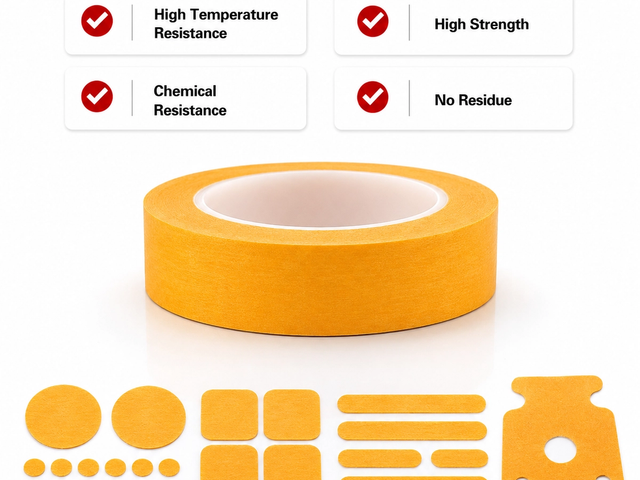
High-Temperature Silicone Die-Cut Masking Shape for PCB & electronics masking lines - send your drawing for a matched quote.
Die-Cut Shapes & Labels
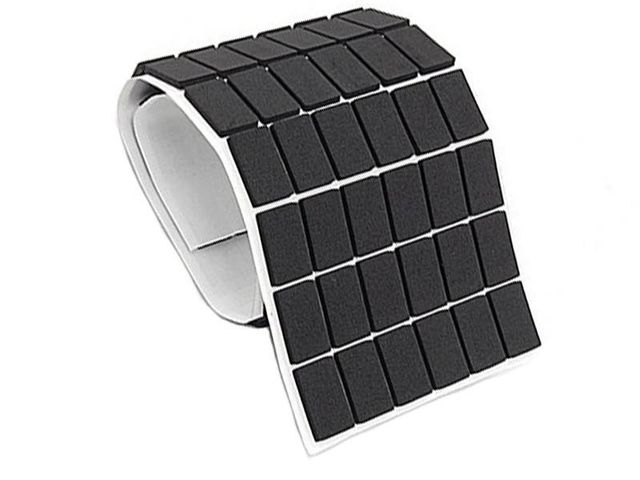
Silicone Die-Cut Masking Shape for PCB & electronics masking lines - send your drawing for a matched quote.
Die-Cut Shapes & Labels
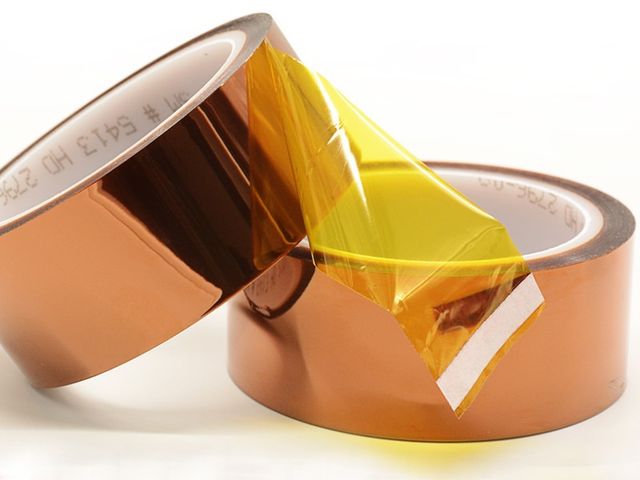
Die-Cut Polyimide Masking Shapes for small-area high-heat masking and PCB masking work, with custom shape conversion and very high heat…
Send drawings, dimensions, material, environment or operating conditions, and we will help confirm the right specification.
Uploaded reference files are included with the inquiry. For larger CAD packages, reply to the confirmation email or send them here:
Our team typically replies within 24 business hours.