Silicone contamination is one of the most common and expensive causes of paint film defects in liquid coating lines, and it is almost always traced back to a masking material or a shop process rather than the paint itself. Silicone — most often polydimethylsiloxane (PDMS) or another siloxane compound — is extraordinarily surface-active: a contamination level measured in parts per billion, not percent, is enough to lower the local surface tension of a wet paint film and trigger the classic "fish-eye" or crater defect in which a circular, bowl-shaped depression forms in the coating and survives the full bake cycle. Because silicones are thermally stable and vaporize and migrate readily at shop temperatures far below the bake range of even low-temperature refinish systems (automotive refinish clears typically cure at 60–80°C, while industrial liquid paint lines bake at 150–180°C or higher), a single silicone-contaminated tape, release liner, mold-release spray, or lubricant can contaminate an entire booth. The practical, repeatable defense is to exclude every silicone-containing material from the masked area and to specify silicone-free masking tape — polyester (PET), crepe paper, washi/rice paper, polyimide with a non-silicone adhesive, and PTFE film — rated for the actual bake temperature and solvent load of the line.
Why Silicone Is Banned in Paint Shops (and What Fish-Eyes Really Are)
Silicone is not banned by regulation in most regions, but it is "banned" as a matter of process discipline in every professional paint shop, and for good reason: no other contaminant produces defects at such tiny concentrations. The defect mechanism is a wetting failure. When a siloxane molecule lands on a substrate or floats on the surface of a freshly applied liquid paint film, it locally lowers the surface tension of the film in a small circular zone. The surrounding higher-tension paint then flows away from that point, thinning the film at the center and building a raised rim around it. What you see after cure is a fish-eye — a crater that is typically 1–10 mm across — which cannot be leveled by sanding without exposing the substrate, and which therefore sends the part to rework or scrap.
The same mechanism causes adhesion failure. A molecular-thickness silicone layer between the substrate and the paint creates a low-surface-energy boundary that prevents proper wetting and blocks the chemical and mechanical bonding the coating needs. Over time — or immediately, on impact or under solvent attack — the paint lifts and delaminates. In practice, shops report fish-eyes at contamination levels of roughly 1–10 parts per million, and detectable wetting changes at parts-per-billion levels, which is why a visible defect is never the first sign of a problem. Because silicones do not decompose at ordinary bake temperatures, curing the paint does not destroy the contaminant; it only locks the defect into the finished part. In an automotive refinish booth or an industrial liquid paint line, this is why the sourcing rule is absolute: no silicone adhesives, no silicone release coatings, and no silicone rubber masking parts anywhere near the spray zone.
Where Silicone Hides in a Paint Shop
Silicone contamination is insidious because most sources are invisible. The most common hidden sources in a liquid paint environment include:
- Release liners. The paper or film backing that protects the adhesive on many tapes and labels is frequently coated with a silicone release coat so the roll unwinds easily. That coating can transfer silicone to the tape edges, your hands, or the part.
- Mold-release agents. Injection-molded plugs, caps, and composite parts are almost always demolded with silicone-based release spray. Residual release agent on the part surface is a classic fish-eye trigger in subsequent painting.
- Silicone adhesive on masking products. Standard high-temperature tapes — including many polyimide (Kapton-type) tapes and PTFE tapes — use silicone pressure-sensitive adhesive because it holds up to extreme heat. In a liquid paint environment, that adhesive is a contamination source, not a benefit.
- Silicone rubber masking parts. Silicone plugs, caps, and mats outgas and migrate siloxanes into a wet film and contaminate the surrounding area. They belong in powder coating applications where their heat resistance earns its keep — not in a liquid paint line where fish-eye risk dominates.
- Lubricants and maintenance products. Conveyor chains, robot wrists, air tools, and general-purpose "penetrating" sprays are frequent silicone carriers, and airborne droplets travel further than most shops assume.
- Personal-care products. Hand creams, sunscreens, and hair products used by operators are common, hard-to-trace silicone sources transferred by touch.
- Polishes and compounding waxes. Buffing compounds containing silicone leave residues that migrate and reappear weeks later on the next part.
The takeaway is that silicone can enter the booth from the tape itself, from the part, from tooling, from the operator, or from the air. A silicone-free masking program that only changes the tape — but not the release liner, the adhesive chemistry, the gloves, or the storage area — leaves most of the risk in place.
Silicone-Free Masking Options Compared
Five masking families are genuinely silicone-free when specified correctly. The table below compares them so you can match construction, temperature capability, solvent resistance, and edge quality to your specific line.
Two notes on this table are worth calling out. First, polyimide and PTFE are not automatically silicone-free: the films themselves are siloxane-free, but the standard high-temperature adhesive used on both is a silicone PSA. If your line requires silicone-free masking at 200°C or higher, specify an acrylic-adhesive polyimide grade and verify the adhesive chemistry on the datasheet — the adhesive, not the film, is the constraint. Second, for the vast majority of liquid paint work, PET tape is the workhorse because it covers both the 80°C refinish bake and the 150–180°C industrial bake, offers the sharpest edges, and is engineered without silicone in the film, adhesive, or release system. For a deeper side-by-side of the paper and film families, our comparison of washi vs. crepe vs. PET tape breaks down when each is the right call.
Selecting a Silicone-Free Masking Tape by Bake Temperature
The single most reliable way to select a silicone-free tape is to work backward from your line's thermal and chemical profile. Use this workflow:
Step 1 — Confirm the full bake profile. Do not design around the oven set point alone. Measure the part's peak metal temperature (PMT), the dwell time above 60°C, and any post-bake operations like force-cooling or touch-up. A tape that survives the average temperature but embrittles at the peak will leave adhesive residue on the part.
Step 2 — Match the temperature band.
- 80°C automotive refinish: a flat crepe automotive refinish tape is the correct, cost-effective choice for most panels, since it is rated for 80–120°C, removes cleanly, and leaves a crisp line. Save film tapes for areas that see higher localized heat, such as exhaust-side panels and underhood components.
- 120–150°C: washi/rice paper bridges the gap between refinish and full industrial cure. It is conformable enough for curved two-tone work and tolerant enough for the lower end of the industrial bake range.
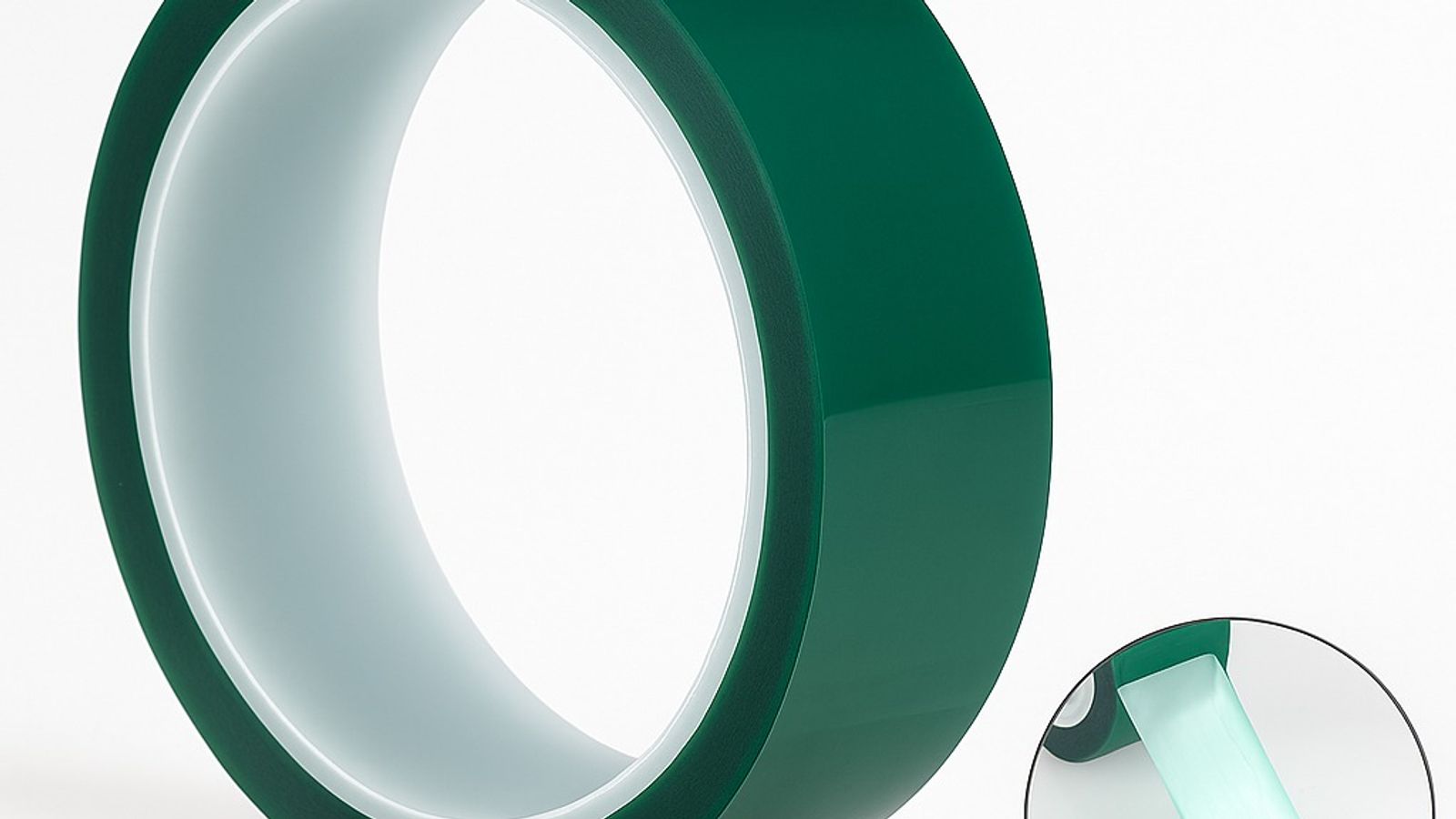
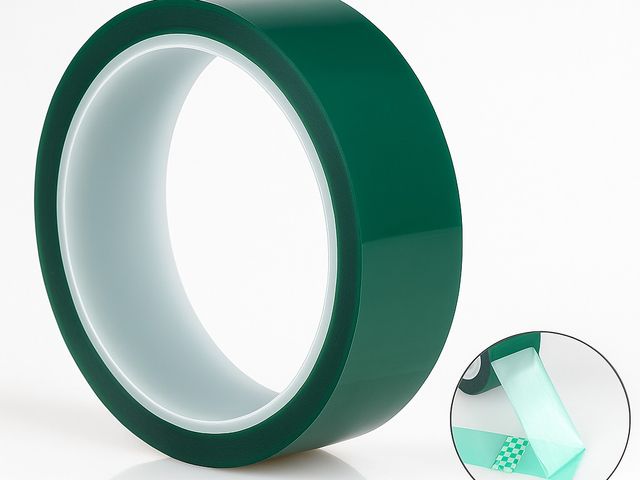
- 150–180°C industrial liquid paint: a green or transparent PET high-temperature tape is the standard answer. Our high-temperature PET masking tape handles this band without baking onto the part, and the green PET high-temperature masking tape adds easy visual confirmation of coverage during line audits.
- 200°C and above: move to acrylic-adhesive polyimide or PTFE, and verify the adhesive is non-silicone before it touches a liquid paint part.
Step 3 — Check solvent resistance against your actual solvent load. Reducers, thinners, and hardeners vary widely. A tape with excellent heat resistance can still fail if its adhesive softens and bleeds under a strong solvent. Confirm the tape holds its edge through your flash time and that the adhesive does not ghost after removal.
Step 4 — Match edge quality to the line you need. For a straight threshold line, PET gives the sharpest result. For compound curves and two-tone work, a washi or PVC fine-line tape conforms without lifting. Our automotive PVC fine-line masking tape is a strong choice where tight, radius-following lines matter more than pure temperature headroom.
Step 5 — Verify silicone-free status before you buy. Ask the supplier for a datasheet that states the adhesive chemistry and confirms no silicone release coating, and run a practical verification: apply the tape to a clean test panel, paint a small area, cure it, and inspect for fish-eyes. That single test — done once per tape lot — tells you more than any datasheet about whether the tape is safe for your line.
Application Tips for Silicone-Free Masking
The best silicone-free tape still fails if it is applied over a contaminated substrate or with poor technique. Apply these rules on every masked part:
- Clean the substrate first. Wipe with a silicone-free cleaner or degreaser, then a tack cloth, immediately before masking. Do not mask over mold-release residue, buffing compound, or operator-hand transfer.
- Press edges down firmly. Use a tape squeegee or thumb pressure along the entire edge so paint cannot wick under the line. A lifted edge is a wicking channel, not a paint barrier.
- Do not stretch PET film around tight radii. Film tapes hold a straight line better than they hold a curve. For concave or convex geometry, switch to a conformable washi or fine-line tape rather than forcing the film.
- Match flash time to the tape. Make sure the tape survives the solvent load through your full flash, then the bake, then removal. If adhesive bleeds at the edges after flash, the solvent load exceeds the tape's rating.
- Remove at the right time. For liquid paint, remove masking after the part has cooled enough to handle but before the film fully hardens into a brittle state, unless the product spec says otherwise. Remove at a low angle, pulling back over itself to avoid lifting paint.
Storage and Handling: Keeping Silicone Out
Silicone contamination is often reintroduced by the shop environment after the tape has been sourced correctly. Protect the investment with simple logistics:
- Physically separate silicone-free inventory. Store silicone-free tapes in sealed packaging, away from mold-release spray, lubricant stations, and general-purpose penetrants. A single shared shelf or cart can contaminate an entire stock.
- Label and quarantine. Mark rolls with the adhesive chemistry and silicone-free status. Never assume a roll is silicone-free based on brand or color — read the label, and quarantine any roll that arrives without a clear adhesive spec.
- Keep tape off the shop floor. Dust, overspray, and airborne siloxanes settle on open rolls. Store rolls upright in closed cabinets and use them from the box.
- Control the operator. Nitrile gloves, no silicone hand creams, and dedicated clean rags for masked parts. Touch is the hardest contamination vector to trace and the easiest to prevent.
- Never reuse contaminated rolls. A roll that has touched a mold-release area, a lubricated fixture, or the floor is no longer silicone-free. Treat it as scrap for the liquid paint program.
FAQ: Silicone-Free Masking for Liquid Paint
What causes fish-eyes in liquid paint, and how do I know silicone is to blame? Fish-eyes are caused by a local lowering of surface tension in the wet film, usually from a surface-active contaminant such as silicone. If craters appear consistently in the same masked zones, or after a new tape or mold-release product was introduced, silicone contamination is the most probable cause — and it is worth a wetting test (contact angle or dyne pen) to confirm before rework.
Is all polyimide tape silicone-free? No. The polyimide film itself contains no silicone, but standard high-temperature polyimide tape uses a silicone pressure-sensitive adhesive. For silicone-free masking, you must specify an acrylic-adhesive grade and verify the adhesive chemistry on the datasheet; the film's 260°C continuous rating only applies when the adhesive is matched to the requirement.
Can the same PET tape serve both an 80°C refinish shop and a 150–180°C industrial line? Yes. PET tape is engineered for roughly 150–180°C continuous, which covers the refinish bake with wide margin and the industrial bake at its rating. That dual coverage, combined with sharp edges and solvent resistance, is why PET is the default silicone-free masking film across both environments.
Why does crepe paper tape work in refinish but fail on an industrial line? Crepe paper is rated for roughly 80–120°C. At an industrial 150–180°C bake it embrittles, can bake onto the substrate, and leaves adhesive residue. It is a refinish product, not an industrial one — match the paper family to the temperature band rather than forcing one tape everywhere.
Does PTFE film contain silicone? No. PTFE is a fluoropolymer and contains no silicon atoms. The contamination risk with PTFE tape comes from its adhesive, which is frequently silicone-based; for silicone-free use, specify a PTFE skived film with an acrylic or otherwise non-silicone adhesive.
Get a Silicone-Free Masking Recommendation for Your Line
Eliminating fish-eyes and adhesion failures rarely requires a change of paint — it requires removing silicone from the process, and the masking material is the fastest, most controllable place to start. Whether you run an 80°C automotive refinish operation or a 150–180°C industrial liquid paint line, our team can map your bake profile to the correct silicone-free PET, crepe, washi, polyimide, or PTFE solution, verify adhesive chemistry, and supply samples for your own contamination test. Send us your part geometry, bake schedule, and solvent system, and request a free quote and consultation today — we will recommend the silicone-free masking package that keeps your first-pass yield up and your rework down.