Masking tape is graded by its backing material, and the three most common paper- and film-based tiers are washi (rice paper), crepe paper, and PET (polyester). Each tier carries a different temperature ceiling: washi and rice-paper tapes are rated for 120–150°C, crepe paper tapes for 80–120°C, and PET film tapes for 150–180°C. Typical powder coating cure ovens run at 180–200°C, while e-coat cure cycles usually land between 160–200°C, which means most paper-backed tapes sit at or below the edge of a full oven cycle and must be selected with a deliberate safety margin. Choosing the wrong temperature tier is the single most common cause of baked-on adhesive residue, brittle tape that cracks mid-cure, edge bleed-through, and expensive rework on a coating line. This guide compares washi vs crepe tape side by side, positions PET as the next tier up, and gives you a practical masking tape temperature chart you can hand to the line.
The Backing Determines the Tier: What Each Material Is
Before comparing ratings, it helps to understand what the tape is actually made of, because the backing dictates not just heat resistance but conformability, edge sharpness, solvent behavior, and price. The three tiers in this article differ in construction, and that construction is why they behave so differently in the oven.
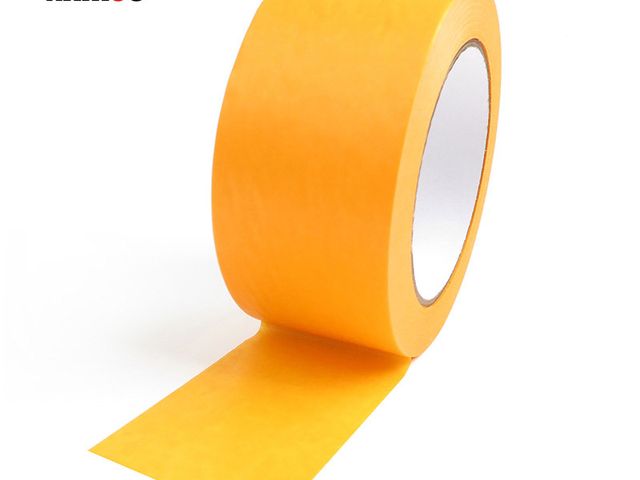
Washi (rice-paper backing). Washi tape uses a non-creped rice-paper (also called mulberry or linen) backing. The fibers are laid down in a smooth, dense sheet rather than being mechanically creped, which gives the tape two defining characteristics: it tears in a clean, straight line, and it holds a sharp paint edge. Washi is thin, so it steps over the surface with minimal edge build-up, and it is the standard choice for fine-line two-tone work and masking where a crisp boundary matters more than aggressive stretch. Our rice-paper washi masking tape is the reference product for this tier, and the blue 120°C variant adds a slightly higher rating for oven work at the top of the washi range.
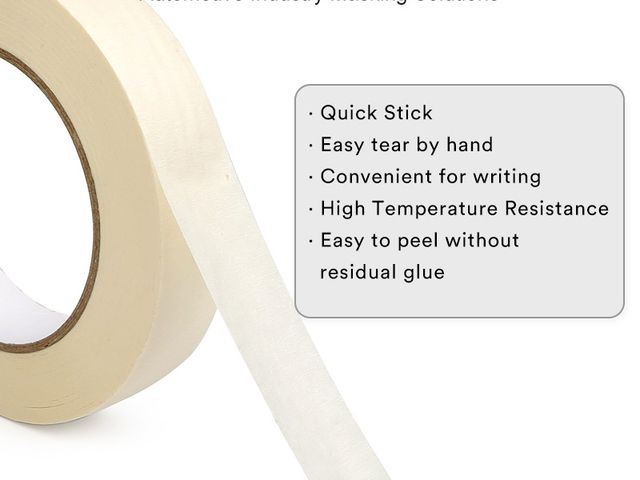
Crepe paper backing. Crepe tape is paper that has been mechanically creped — crinkled and stretched — so the sheet gains elasticity. That stretch is the whole point: crepe tape drapes over curves, wraps radii, and conforms to contoured parts better than any flat-sheet paper tape. The trade-off is that the creped surface is more porous and less dimensionally stable, so it generally carries a lower temperature rating than washi and can absorb solvents and moisture more readily. Crepe is the everyday workhorse of the paint shop and the most economical tier. See the crepe-paper washi masking tape line for the standard options, or the blue crepe for a step up in adhesion.
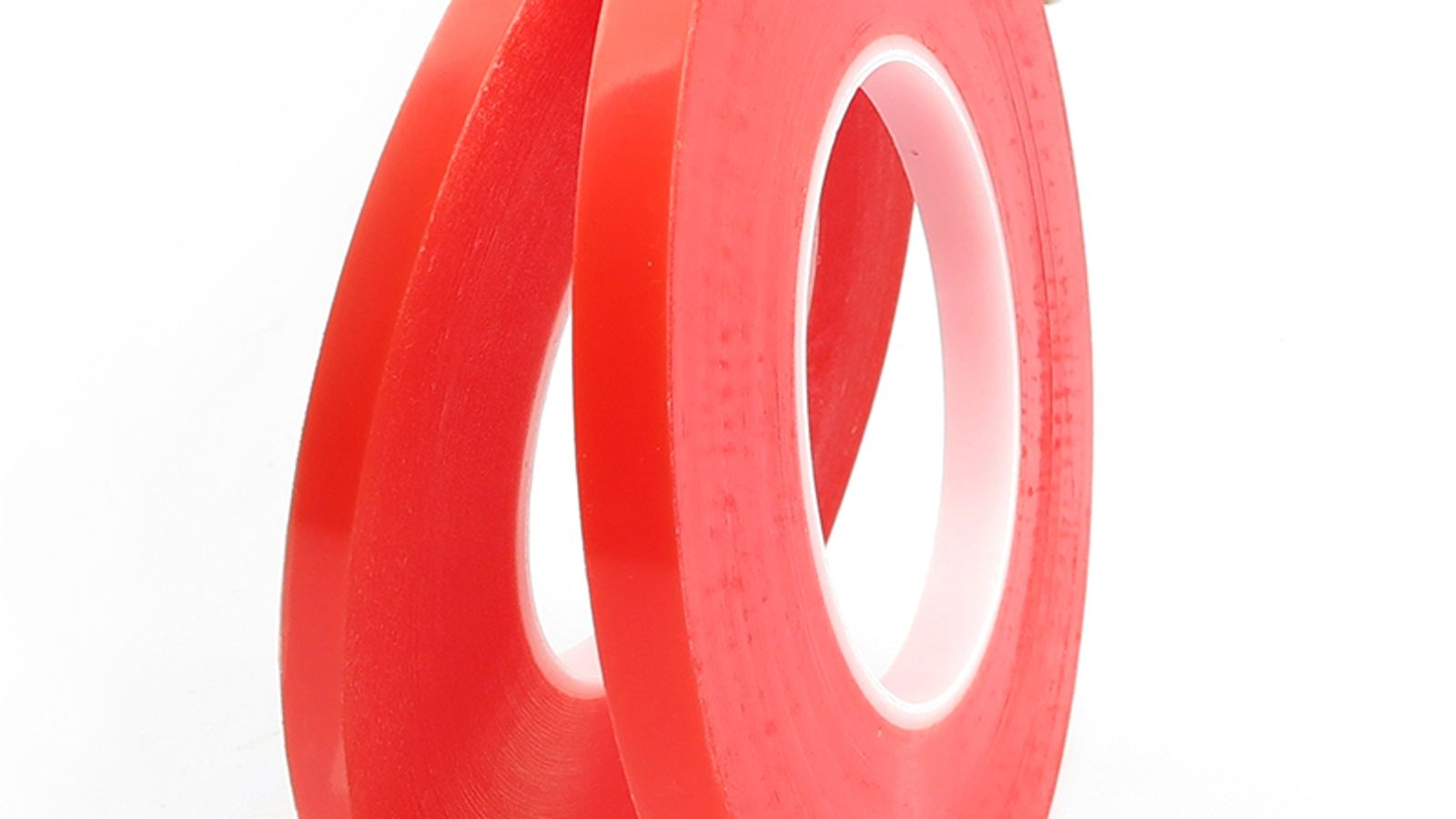
PET (polyester film) backing. PET masking tape replaces paper entirely with a biaxially oriented polyester film. The film is non-porous, so it resists solvents, moisture, and the aggressive chemistries found in an e-coat bath; it also has a higher melting point than paper, which is why the PET temperature tier runs at 150–180°C. PET is stiffer and less conformable than crepe or washi, so it excels at straight-line masking, thread wrapping, plugging, and large flat areas rather than tight compound curves. Our high-temperature PET masking tape is the mainstay of this tier for powder and e-coat lines.
Polyimide (the tier above). For context, the tier above PET is polyimide film tape, rated 260–400°C, used for PCB solder masking and other extreme-heat applications. It is the right answer when even PET hits its ceiling — we cover it in the high-temperature polyimide tape rolls range.
Temperature Tier System: The Masking Tape Temperature Chart
The fastest way to specify tape is to read the temperature tier against your oven. The chart below summarizes the four tiers, their backing, their rating, their best use, and their typical price point.
Two rules govern how you read this masking tape temperature chart. First, the rating is the ceiling, not the cruise speed: a tape rated 120°C should not be run at 120°C all day. Bake temperature, cycle time, and oven dwell all push the effective limit down, so experienced lines spec a tape at least 20–30°C above their actual oven set point when the tape must survive the full cycle. Second, the rating assumes the adhesive is matched to the backing. A cheap crepe tape with a general-purpose rubber adhesive will fail well before its paper backing does, which is why the washi vs crepe tape decision is really a backing-plus-adhesive system decision.
Temperature is only half the selection. The other half is how the tape behaves on the part — whether it wraps the geometry and whether it leaves the edge you need.
Crepe stretches around curves. The creping process is what makes crepe tape the go-to for contoured parts. It can be pulled and wrapped around radii, flanges, and curved flutes without lifting, because the crepe structure absorbs the strain. If your part is a series of curves and you need a tape that follows them without wrinkles, crepe wins. The cost is edge quality: the same stretchy construction makes crepe more prone to fuzzy or irregular tears, and it can be harder to cut a dead-straight fine line with a bare edge.
Washi tears clean for fine lines. Because washi is a smooth, dense sheet, it tears in a controlled, straight line and lays flat with minimal edge build-up. That is why fine-line washi is the default for two-tone automotive paint, pinstripe boundaries, and any mask where a hard, sharp edge is the deliverable. It does not stretch like crepe, so for tight compound curves you either accept a slightly less conformable fit or use narrower widths. If fine-line quality is the priority, this is the core of the washi vs crepe tape comparison: washi for the line, crepe for the curve.
PET resists solvents and moisture. PET film is non-porous, so it does not wick solvent, absorb water, or soften in chemical exposure the way paper backings can. On an e-coat line, where the part passes through a chemical bath before cure, or on a powder line with aggressive pretreatment, PET holds its edge and its adhesion where paper would swell or bleed. The trade-off is rigidity: PET is the least conformable of the three, so it is best deployed on straight edges, flat panels, threaded studs, and areas where a thin, solvent-proof barrier is more important than deep draw conformability.
Adhesive Behavior and Residue Risk After Oven Cure
Residue after cure is the failure mode coating lines fear most, and it is almost always an adhesive problem triggered by a temperature mismatch. Understanding which adhesive family each tier uses explains why.
Most crepe tapes use natural-rubber or rubber-resin adhesives. These are aggressive, grab well at room temperature, and conform with the crepe backing — but rubber adhesives soften and bake onto the substrate when they are pushed past their rated temperature. Run a crepe tape rated 80–120°C through a powder cure oven at 190°C and the adhesive will flow into the surface profile, cross-link, and leave a brown, hard residue that requires chemical stripping. The same is true of any paper tape pushed past its ceiling, which is why reading the crepe paper masking tape temperature rating against your actual oven set point is non-negotiable.
Washi and PET tapes in this family typically use acrylic adhesive systems. Acrylics behave differently: rather than melting, they gradually lose grip as temperature climbs and, within their rating, tend to release cleanly at the end of the cure cycle. That cleaner release is one of the reasons washi and PET are preferred whenever tape must survive the oven and be removed after cure. Silicone adhesives offer the highest heat resistance of all — they are used on high-temperature washi and on polyimide — but silicone can migrate onto the surface and contaminate adhesion of the coating itself, so silicone tapes need a qualification step before they go on a painted or coated part.
A few practical residue-reduction habits belong on every line: remove tape as soon as the part is cool enough to handle rather than letting it sit for hours, never exceed the rated temperature even for "just a few minutes," and keep cure time in mind because dwell time attacks the adhesive even at moderate temperatures. For a deeper treatment of the mechanics, our guide on how to prevent adhesive residue after cure walks through the failure sequence in detail.
When Each Tier Is the Right Choice
Matching the tier to the process — and to the economics of your shop — is where the washi vs crepe tape decision actually gets made.
Crepe for low-temperature bake and general masking. If your line runs air-dry coatings, low-bake enamels at 60–80°C, or short bake cycles under 100°C, crepe tape is the sensible default. It is the cheapest tier, it conforms to contoured parts, and at those temperatures the rubber adhesive is comfortably inside its window. Job shops that mask high volumes of mixed small parts on a daily basis usually keep crepe as the baseline tape because it balances cost, tack, and conformability for the majority of jobs.
Washi for fine lines and powder-coat prep. Choose washi when the deliverable is a crisp, clean edge. That means two-tone and multi-color work, automotive refinishing, and decorative lines where bleed would be visible. Washi's 120–150°C rating also covers it for e-coat prep masking and for powder work where the tape is removed before the cure cycle rather than baked through it — a common technique on powder lines, since powder does not adhere to the tape and it can be peeled before the part enters the oven. For automotive refinishing applications specifically, the automotive PVC fine-line masking tape is an alternative to paper when you need both fine lines and slightly more durability.
PET for powder coating and e-coating ovens. When the tape has to survive the full oven cycle, PET is the tier to reach for. Powder coating cure ovens typically run 180–200°C, which is at or above the 150–180°C PET rating — so PET covers the low end of powder cure and many e-coat cycles, and it handles the solvent and moisture exposure of the e-coat bath that paper cannot. On powder-coating lines, PET tape is used for masking threads, edge protection, and areas that must stay bare through a complete bake. On e-coating lines, PET's chemical resistance in the immersion tank is the decisive advantage.
Polyimide for PCB and extreme heat. When temperatures exceed PET's ceiling, polyimide is the answer. Solder masking, wave soldering, and reflow profiles run hot enough that only the 260–400°C polyimide tier survives, and it is the standard for PCB and electronics masking as well as any niche oven work above 200°C.
Low-temp bake vs. high-volume considerations. Economics matter as much as temperature. A job shop running one-off and short-run work can afford to stock two or three tiers and select per job. A high-volume OEM line running thousands of identical parts should standardize on a single tier, buy it in volume, and build the cost into the part — which usually argues for the highest tier the process actually needs, because the cost delta of a premium tape is trivial compared with the cost of stripping residue off a scrapped part.
Upgrading Within the Tier System: When 80–120°C Is Not Enough
Most lines find out they have outgrown a tier the same way: a change in cure temperature, a new powder formulation, or a shift from air-dry to oven-cure, and suddenly the tape that used to peel clean is leaving residue and cracking. The upgrade path is a ladder, and you can climb it one rung at a time without re-qualifying your whole masking system.
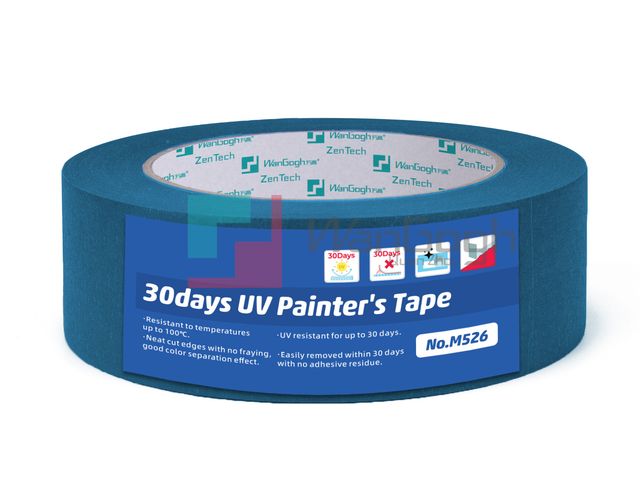
If your crepe tape is failing — residue in the oven, tape lifting off curved surfaces, or bleed under the edge — the first upgrade is to washi at the 120–150°C tier. The rice-paper backing runs cooler and cleaner at bake temperatures, and the acrylic adhesive releases more reliably. For fine-line work, the upgrade is even more direct: a 120°C blue rice-paper washi masking tape gives you the clean-tear edge of washi with a rating that clears a wider range of bake cycles than standard washi.
If washi is still at its limit, or if solvents and moisture are the problem rather than heat, step up to PET at the 150–180°C tier. This is the rung most powder and e-coat lines eventually land on, because it covers both the temperature and the chemical exposure. For the top end of the powder range, green PET with a higher-rated adhesive handles the hotter formulations while keeping the thin, non-porous edge that paper cannot match. And when even PET is marginal — sustained temperatures above 180°C, long dwell times, or exotic cure profiles — the last step is polyimide at 260–400°C.
A practical rule of thumb for the upgrade: if a tape is being removed while it is still brittle, if the adhesive transfers to the part, or if you are seeing edge bleed on masked features, do not just buy the same tape from a different supplier — move up a tier. The extra few cents per roll is cheap insurance against a scrap bin full of parts that would have cost nothing to mask correctly.
FAQ
What temperature can washi tape withstand? Standard washi and rice-paper tapes are rated for 120–150°C. Within that window, and with an acrylic adhesive system, they release cleanly after a bake; the 120°C blue rice-paper washi variant is rated for the top of that range.
Is crepe tape or washi tape better for fine lines? Washi is better for fine lines. Its smooth, non-creped backing tears in a straight line and lays flat with minimal edge build-up, which is why it is the standard for two-tone and fine-line masking. Crepe stretches better around curves but produces fuzzier tears and less crisp edges.
Can PET tape go in a powder coating oven? Yes, PET masking tape is rated for 150–180°C and is commonly used in powder coating ovens that run in the low-to-mid cure range. For powder formulations curing at 180–200°C, verify your actual set point against the rating and allow a safety margin — or consider removing the tape before cure, or stepping up to polyimide for sustained high heat.
What is the difference between washi and crepe tape? The difference is backing construction. Washi uses a smooth, non-creped rice-paper sheet that tears cleanly and holds sharp edges but does not stretch much. Crepe paper is mechanically creped so it stretches and conforms around curves, at the cost of lower temperature rating, more porosity, and less crisp edges.
When should I switch from paper tape to PET tape? Switch when your process exceeds what paper can handle: sustained temperatures above roughly 150°C, exposure to solvents or moisture (such as an e-coat bath), or masking work that needs a thin, non-porous barrier. If you are seeing residue, cracking, or bleed on a paper tape at your current oven settings, PET is the next tier to qualify.
Get the Right Tier for Your Oven — Free Samples from LeaderMasking
Selecting between washi vs crepe tape is easy on paper, but the only way to know a tape will survive your oven, your pretreatment, and your cure time is to test it on your actual line. LeaderMasking is an experienced masking manufacturer offering free samples to coating lines, job shops, and OEM plants, with a full range spanning crepe paper, rice-paper washi, high-temperature PET, and polyimide. We can help you read the masking tape temperature chart against your process, and our OEM/ODM capability means we can build a tape to your spec — including custom adhesive systems, custom slitting to your exact widths, and die-cutting for gaskets, plugs, and pre-shaped masks. Send us your substrate, your oven temperature, and your cure cycle, and we will send you the tapes to prove it on your parts. Contact LeaderMasking today to request free samples and find the temperature tier that eliminates residue, rework, and wasted parts.