Technical
Polyimide Tape Temperature Guide: 260°C to 400°C
Polyimide tape withstands 260°C continuous and 400°C peak. Compare Kapton tape adhesives, thicknesses, masking uses. Browse our polyimide tapes.
Polyimide tape withstands 260°C continuous and 400°C peak. Compare Kapton tape adhesives, thicknesses, masking uses. Browse our polyimide tapes.
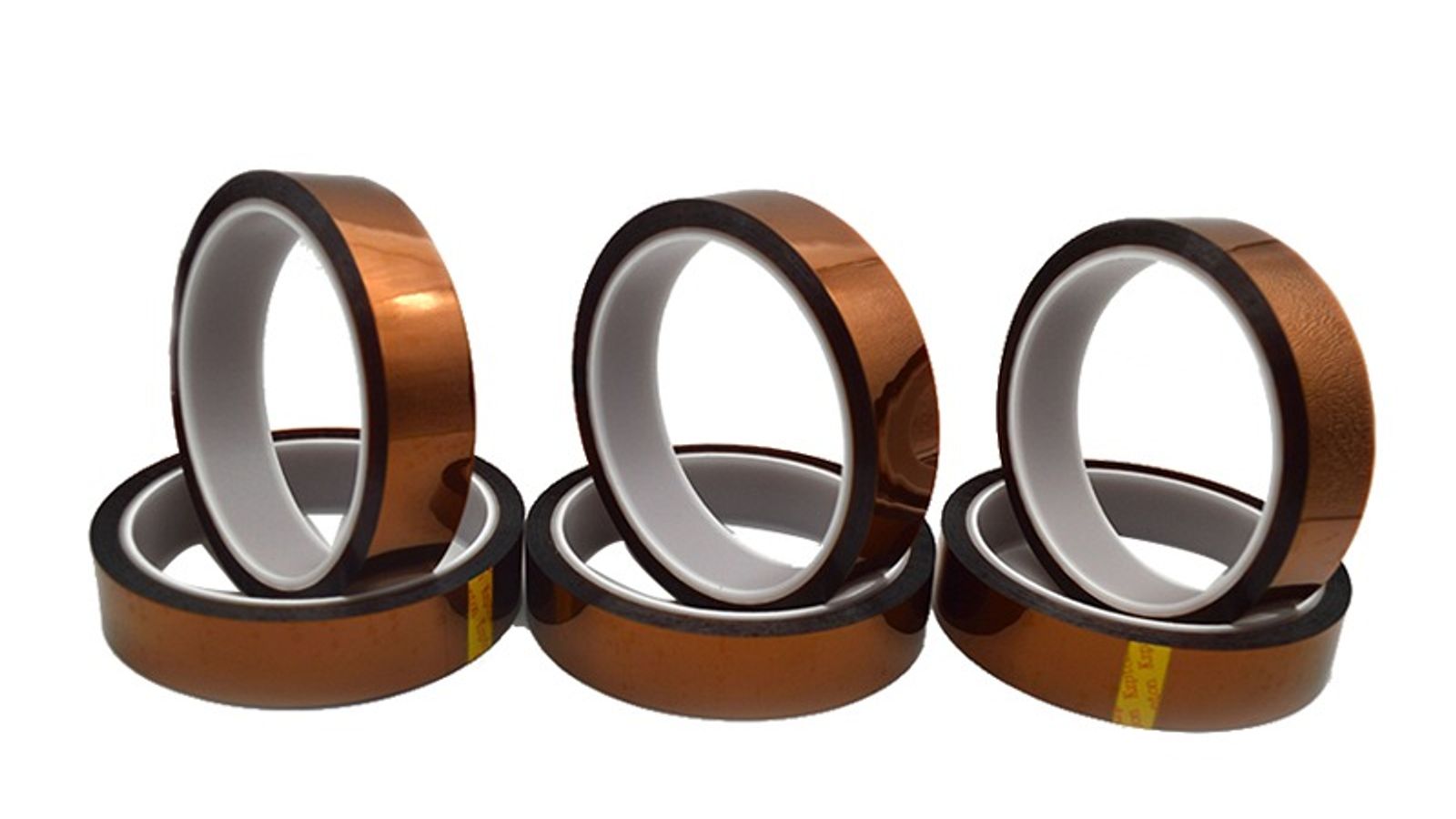
Polyimide masking tape — commonly called Kapton tape after the DuPont polyimide film brand that popularized it — is the high-temperature workhorse of the masking industry. In continuous service it withstands temperatures around 260°C (500°F), and it tolerates short-term peak exposure up to 400°C (752°F). These two anchors, 260°C continuous and 400°C peak, are the numbers engineers quote when they specify tape for wave soldering, powder coating cure ovens, and thermal spray operations. When someone asks, "Does Kapton tape withstand 260°C?" the answer is yes: a properly constructed polyimide tape remains dimensionally stable and masks cleanly at sustained 260°C exposure.
Polyimide masking tape is a two-layer construction: a polyimide film carrier coated on one side with a pressure-sensitive adhesive. The film is an aromatic polyimide polymer that does not melt or soften below roughly 400°C. Because it is a true high-temperature polymer rather than a thermoplastic that reflows, the film keeps its shape, tensile strength, and electrical insulation properties when ordinary tapes have already failed.
Kapton is a registered trademark of DuPont for its family of polyimide films, and the term has become generic in the masking world: "Kapton tape" now describes any amber polyimide tape regardless of the film supplier. What matters for the buyer is the specification — continuous temperature rating, adhesive system, and film thickness. Our polyimide film technical page covers dielectric strength, elongation, and chemical resistance; this guide focuses on the tape behavior that matters on the production floor.
The tape's usefulness comes from the combination of film and adhesive. The film supplies temperature resistance, dielectric strength, solvent resistance, and a clean release surface; the adhesive supplies anchorage. The adhesive is almost always the temperature-limiting component — a polyimide film rated at 400°C is only as good as the adhesive holding it in place.
The two numbers that define this high-temperature masking tape class are 260°C continuous service and 400°C short-term peak exposure.
Continuous service at 260°C means the tape can sit in a bake environment at that temperature for the duration of a process — a powder coating cure cycle of 20–40 minutes, a bondline cure, a conformal coating bake — without melting, shrinking excessively, embrittling, or fusing to the part. After the process the tape peels away cleanly, leaving the masked surface untouched. Polyimide's high glass transition temperature (well above 300°C) and low coefficient of thermal expansion keep the tape stable where thin-film thermoplastics would flow.
Peak exposure at 400°C covers the transient spikes that real processes throw at tape: the leading edge of a thermal spray pass, the brief furnace spike in a soldering profile, a flash cure. Polyimide film itself can survive excursions beyond 400°C for very short durations, but the tape system is rated to 400°C peak because the adhesive and the film/adhesive interface define the practical ceiling. Sustained exposure above 260°C gradually oxidizes the adhesive and reduces peelability; peak means minutes, not hours. Ratings are property-retention numbers, not failure absolutes — tape exposed to 280°C for a few minutes still performs.
| Tape class | Continuous rating | Short-term peak | Typical duty | Relative cost |
|---|---|---|---|---|
| Polyimide (Kapton) tape | 260°C | 400°C | Wave soldering; thermal spray; high-temp cure | High |
| High-temperature PET tape | 150–180°C | 200°C | Powder coating; low-temp electronics | Medium |
| Crepe / paper masking tape | 80–150°C | 175°C | General painting; light-duty masking | Low |
The tiered picture matters: polyimide is not always the right answer; it is the right answer when the process genuinely exceeds what PET can handle. Everything below roughly 180°C belongs to a cheaper tape class.
Printed circuit board assembly is the largest single application for polyimide tape. In wave soldering and selective soldering, boards pass through molten solder at 250–260°C for a few seconds per side, and nearby board areas must stay protected. Polyimide tape masks those areas — gold fingers, edge connectors, plated-through holes, and components that must not see solder — with a combination of heat resistance, dielectric strength, and a clean peel that no other tape class matches. When buyers search for a wave solder tape, polyimide is almost always the answer.
Two jobs dominate PCB masking tape use. The first is gold finger masking: tape protects gold-plated edge connectors before HASL or solder processes, then comes off after, leaving the gold untouched by flux and solder. The second is conformal coating protection: tape shields test points and components before the board goes through the coating line, holding up when the coating is cured at temperature.
The board surface is delicate, and the silicone adhesive on most polyimide tape has moderate adhesion and clean release: it holds through the solder wave but peels without pulling copper, solder mask, or legend inks. Dielectric strength keeps the tape safe where it crosses live traces. For a deeper look, see our PCB and electronics masking application guide.
Buyers see two color variants in the polyimide category: amber and gold. Both are genuine polyimide film tapes with the same 260°C continuous and 400°C peak ratings; the color is a property of the film grade, not a different temperature class.
Amber polyimide tape is the classic Kapton appearance: a translucent, deep orange-brown film. It is the industry default in most "Kapton tape" specifications. Gold polyimide tape uses a polyimide film with a brighter, more golden cast that suppliers produce by adjusting the imidization process or the film formulation. The gold variant is not metallic and not plated; it is still a dielectric polymer film.
In practice the color difference matters for three reasons. First, inspection: some shops prefer gold because masked areas are easier to spot against green solder mask or dark laminate. Second, traceability: a distinct gold color lets a line separate "masked" from "process complete" at a glance. Third, appearance in customer-facing work. Temperature performance is identical between the two, so choose on visibility and availability. The amber and gold polyimide masking tapes differ only in construction details; the decision is about color coding, not temperature.
The adhesive decides how polyimide tape behaves in your process. Two chemistries dominate: silicone and acrylic.
Silicone adhesive is the default on high-temperature polyimide tape. It is rated to match the film, staying stable well above 260°C, and it has the classic high-temperature release character: moderate initial tack, good anchorage during the bake, and a clean peel afterward with minimal residue. Silicone also survives the thermal cycling of soldering without hardening into a residue. Its weakness is contamination: silicones can migrate and interfere with subsequent bonding or conformal coating, and some electronics specifications require silicone-free tape.
Acrylic adhesive is chosen when silicone must be excluded. Acrylic offers strong initial adhesion and leaves no silicone contamination. The trade-off is temperature: most acrylic adhesives are rated to roughly 180°C continuous, below the polyimide film's ceiling. An acrylic polyimide tape still outperforms PET, but its continuous rating is adhesive-limited, so it is not the right choice for sustained 260°C duty. Acrylic polyimide tape is used where a silicone-free specification coincides with moderate temperatures.
Polyimide tape is supplied in a narrow range of film thicknesses, typically 0.06–0.09 mm for the film, with total caliper (film plus adhesive) slightly higher. The choice is a trade-off between conformability and durability.
Thinner films, around 0.06 mm, conform better to curved and irregular surfaces — connectors, component leads, board edges — and produce a lower-profile mask that shadows less in coating and plating. They are the default for intricate PCB work where the tape must hug tight geometry. Thicker films, around 0.09 mm, are stiffer and more tear-resistant; they stand up better to manual handling, large masking areas, and thermal spray impingement, where a thin film could erode or lift.
Thickness also affects edge definition. A thicker tape stands off the surface more, producing a harder coating line; where a crisp line is required, thinner film is better. Many shops keep a 0.06 mm tape for detail masking and a 0.09 mm tape for panels. Compare calipers across our high-temperature polyimide tape rolls.
This guide is about polyimide temperature capability, but buyers evaluating high-temperature tape will also see high-temperature PET. The short version: polyimide wins on temperature — 260°C continuous versus roughly 150–180°C for PET — and pays for that margin with a higher price. PET is the better value wherever the process stays under its rating, so polyimide earns its cost only when the oven or process exceeds PET's ceiling, or when the board's dielectric and release requirements demand it. We have covered the full head-to-head in PET vs polyimide tape temperature; the decision rule is simple: read the process temperature, add margin, then pick the cheapest tape class that clears it.
Polyimide masking is not limited to rolls of straight tape. The same film and adhesive construction is converted into die-cut shapes — discs, pads, dots, frames, and contoured covers — for masking round connector openings, drilled holes, and irregular pads. Die-cutting also makes reusable masks possible, because a precisely cut shape can be placed, removed, and repositioned across a production run instead of hand-torn tape.
Kiss-cut polyimide labels are the same material on a liner, cut through the film and adhesive but not the backing. They give operators a fast, consistent way to place the same mask on thousands of boards. In thermal spray work, a distinctive green polyimide tape is often specified so covered areas are obvious against the sprayed coating, and our green polyimide masking tape is a common pick for exactly that reason. Because polyimide survives the spray environment, the same die-cut mask can be reused across a run before it is discarded.
For every process that genuinely needs 260°C polyimide, there are several that do not. If the peak process temperature stays below roughly 180°C — typical painting, lower-end powder coating, light-duty electronics — high-temperature PET or even crepe tape clears the requirement at a fraction of the cost. Polyimide's price premium pays for itself only when the process exceeds PET's ceiling or when the specification (silicone-free, dielectric, clean release) forces the material choice. A disciplined buyer builds a masking matrix: crepe for painting and general shop masking, PET for powder coating and moderate electronics, polyimide for soldering, thermal spray, and cure cycles above 180°C. That keeps cost per part down while reserving the premium tape for the premium jobs.
Polyimide tape is specified partly for what happens after the process: it should come off cleanly, leaving no residue and no film delamination. Silicone adhesive is the key: it softens and releases during high-temperature exposure rather than hardening into the surface, so a cured tape peels with low force. Acrylic adhesives pushed past their rating can crosslink and tighten their bond, leaving residue that requires solvent removal.
Three practical rules:
On powder-coated or painted parts, polyimide tape typically leaves no ghosting because the film does not outgas volatiles at cure temperatures.
Polyimide tape is stable but not indestructible. Store rolls in a cool, dry place out of direct sunlight, ideally below 25°C and away from humidity. The main aging risk is the adhesive: over years, a silicone adhesive can lose tack or a liner can stick. Most suppliers rate shelf life at roughly two years from the date of manufacture under controlled storage; beyond that, test peel and adhesion before trusting it on a production board. Keep roll edges clean — a dusted edge causes poor wet-out and voids.
Yes. Polyimide masking tape is rated for continuous service around 260°C and short-term peak exposure up to 400°C. At 260°C the film remains stable and the tape peels cleanly after the process; the 400°C peak covers transient spikes such as a thermal spray pass or a soldering flash.
Both are genuine polyimide film tapes with identical temperature ratings. Amber is the classic translucent orange-brown appearance; gold has a brighter golden cast from a slightly different film grade. The color is a visibility and traceability choice, not a temperature difference.
The film contains no silicone, but the standard adhesive is silicone-based. If your specification requires silicone-free tape — common in electronics where silicone contamination affects conformal coating or bonding — choose a polyimide tape with an acrylic adhesive, understanding that its continuous temperature rating drops to roughly 180°C.
In controlled jobs, yes. Die-cut polyimide shapes and kiss-cut masks are frequently removed and reapplied across a production run because the film and silicone adhesive survive multiple thermal cycles. Straight roll tape is less convenient to reuse, but a mask that has not been baked to degradation can often be applied again.
The rating is continuous service, meaning the tape can sit at 260°C for the duration of a normal process cycle — tens of minutes to a few hours — without failing. Sustained exposure well beyond that window gradually oxidizes the adhesive and reduces peelability, so production lines should keep bake times within the process specification rather than treat 260°C as a 24-hour rating.
Ready to spec polyimide tape for your line? Start with our polyimide specialty tapes category to compare amber, gold, and green grades by caliper and adhesive, or request free samples before you commit a batch. If your part needs custom die-cut shapes or kiss-cut labels, contact our factory team with your drawing and process temperature, and we will recommend the right film thickness and adhesive system for the job.
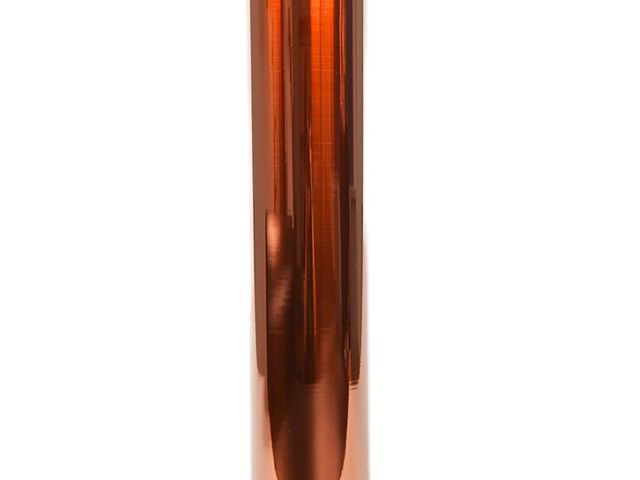
Polyimide & Specialty High-Temperature Tapes
Amber Polyimide Masking Tape for PCB masking and powder coating work, with thin profile and high heat resistance.
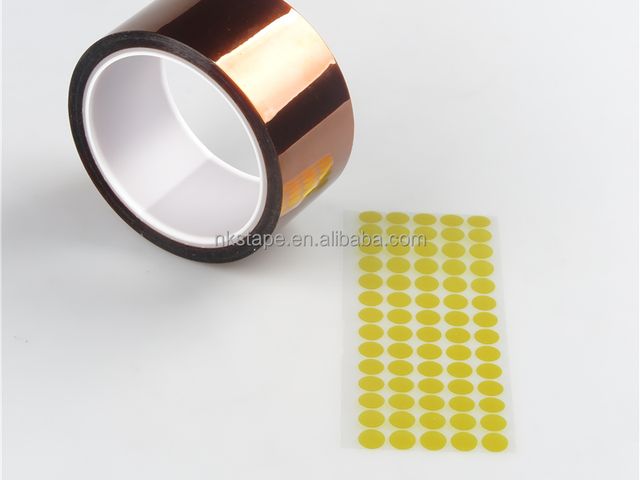
Polyimide & Specialty High-Temperature Tapes
Gold Polyimide Masking Tape for PCB & electronics masking lines - send your drawing for a matched quote.
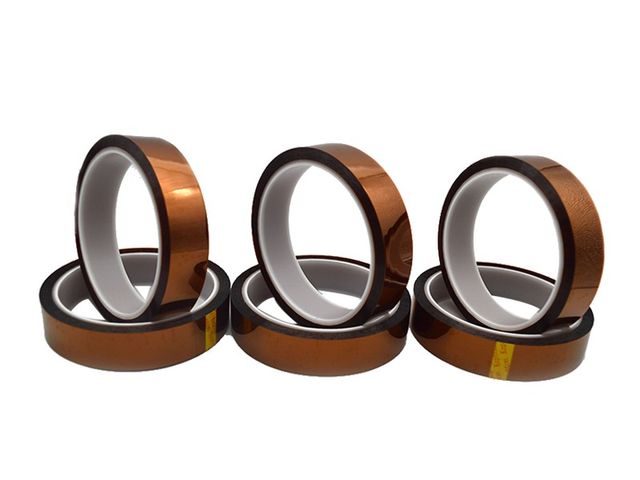
Polyimide & Specialty High-Temperature Tapes
High Temperature Polyimide Tape Rolls for electronics masking and solder masking work, with high heat stability and thin carrier.
Send drawings, dimensions, material, environment or operating conditions, and we will help confirm the right specification.
Uploaded reference files are included with the inquiry. For larger CAD packages, reply to the confirmation email or send them here:
Our team typically replies within 24 business hours.