Silicone and EPDM are the two most common rubber masking materials for industrial finishing, and the single difference that decides most purchasing decisions is temperature. Silicone masking plugs and caps are rated for continuous service at 260°C with short-term peaks to 315°C, while EPDM masking parts are rated for roughly 150°C continuous. That gap matters because a typical powder coating cure runs at 180–200°C and e-coat bake cycles run 160–200°C — both above EPDM's continuous ceiling but well inside silicone's operating range. The two materials also differ in chemical resistance: silicone resists dilute acids and alkalis but swells in mineral oils and hydrocarbon solvents, while EPDM has excellent resistance to water, steam, dilute acids and alkalis, and polar solvents but degrades in petroleum oils and fuels. Both are available in similar hardness ranges — masking plugs and caps typically run 20–70 Shore A in either material — yet silicone costs roughly two to three times more per piece on a price index basis. This guide compares the two across temperature, chemical resistance, mechanical behavior, and price so you can spec the material that fits your line without paying for capacity you do not need.
Temperature Limits Compared
Temperature is the first filter, because every masking part in a finishing line sees an oven. Silicone's silicone-oxygen backbone is thermally stable well beyond what any paint, powder, or e-coat bake will throw at it. Continuous service at 260°C is the standard engineering figure, and short-term exposure to 315°C is acceptable when a part spikes past its oven setpoint or a rack sits near a burner. EPDM, an ethylene-propylene-diene terpolymer with a hydrocarbon backbone, is not in the same class. Its continuous rating sits at roughly 150°C; some formulations tolerate brief excursions toward 175–180°C, but that is not a sustained bake rating, and repeated cycles at that level cause hardening, cracking, and parts that fuse to the surface they are supposed to protect.
Put those numbers against real process heat:
- Powder coating cure: most thermoset powder formulas cure at 180–200°C metal temperature, with some low-cure powders at 150–160°C. A part cured at 180°C is already 30°C above EPDM's continuous rating. EPDM caps and plugs will survive a single marginal pass in some cases, but they lose elasticity, distort, and are generally not reusable.
- E-coat (electrocoating) bake: automotive and industrial e-coat films typically bake at 160–200°C. The low end sits right at EPDM's limit; the top end is squarely in silicone territory.
- Liquid paint, low-bake systems, and air-dry finishing: if your highest temperature never exceeds 120–140°C, EPDM is comfortably within its range and becomes the cost-effective choice.
The practical rule is simple: if a masked part goes through a powder cure or an e-coat bake above 150°C, use silicone. If your process stays cooler, EPDM is worth evaluating. Our silicone material guide covers the full temperature and property range in more detail, and if you are masking with tape as well as plugs and caps, our high-temperature masking tapes guide explains how tape products behave under the same oven conditions.
One more temperature consideration: reuse. Silicone's low compression set at high temperature means it returns to shape after dozens of bake cycles and is routinely reused across shifts. EPDM held under 150°C can also be reused, but its compression set builds faster the hotter the service, so plan on more frequent replacement.
Chemical Resistance Comparison
Temperature decides whether a material survives the oven; chemistry decides whether it survives the bath. Finishing lines vary wildly here — a powder shop mostly sees alkaline pretreatment, while a plating job shop runs acid and alkaline baths, and both environments punish masking parts differently.
Silicone. Silicone is broadly compatible with dilute acids and alkalis, water, and steam, and it is essentially inert against ozone, UV, and weathering, which is why it holds up outdoors and in humid e-coat rinse lines. The weak point is non-polar chemistry: silicone swells and loses mechanical strength in mineral oils, gasoline, kerosene, aromatic solvents, and many hydrocarbon-based release agents. It is also not rated for prolonged contact with concentrated acids, which can attack the backbone.
EPDM. EPDM is the mirror image in a useful way. Because it is a non-polar hydrocarbon rubber, it is excellent against polar fluids: water, steam, diluted acids and alkalis, ketones (acetone, MEK), alcohols, and glycol-based brake fluid. It is also outstanding against ozone and UV. Its weakness is non-polar fluids: petroleum oils, diesel, gasoline, and aromatic hydrocarbons cause swelling and softening, so EPDM is a poor choice anywhere the part will contact oils or grease.
For masking buyers, the practical reading is this: in powder coating lines, the environment is mostly dry heat plus mild alkaline degreasing and iron/zinc phosphate pretreatment, and silicone handles all of it without question. In plating and anodizing, baths run near room temperature and are frequently acidic or alkaline — dilute sulfuric acid anodize solutions, chromic acid, nickel and zinc plating chemistries. EPDM's strong resistance to dilute acids and alkalis makes it a dependable, low-cost choice in these baths, which is exactly why EPDM venting caps are the workhorse in plating shops. Neither material is a safe choice for concentrated oxidizing acids such as hot sulfuric or nitric acid at high concentration — check the specific bath chemistry with your supplier before committing.
Mechanical Properties: Flexibility, Compression, and Sealing
Both materials are supplied in a similar hardness band — typically 20–70 Shore A for plugs, caps, and grommets — but they behave differently at the extremes.
Silicone stays flexible across an exceptionally wide range, from roughly −55°C up to its 260°C ceiling. That low-temperature flexibility is why silicone parts seal properly on cold lines and in winter shipping. Silicone also has one of the best high-temperature compression sets in the elastomer family: a plug wedged into a blind hole for hours at 200°C relaxes less than most rubbers, so it holds its seal and removes cleanly. The trade-off is tear strength. Silicone tears more readily than EPDM, so aggressive thread engagement or thin-wall caps need careful sizing, and soft 20–30 Shore A grades conform well to irregular holes but must not be over-stretched.
EPDM is tougher mechanically. It has better tear and abrasion resistance than silicone across most durometers, which matters for threaded studs and for caps that are pushed on and pulled off hundreds of times. Its compression set is good through roughly 120–150°C, which is fine for low-bake and plating work. Low-temperature flexibility is good to about −40 to −50°C, adequate for any indoor finishing line. In short: EPDM is the more mechanically rugged material at moderate temperature, and silicone is the more thermally durable one.
Sealing quality for either material depends less on the elastomer and more on the fit. A plug sized for the bore diameter seals against powder infiltration; a cap with a tapered or stepped wall grips threads without needing tape. Softer durometer silicone follows surface irregularities better, which is why the softest silicone grades are preferred for sealing over weld spatter, rivets, and rough cast holes.
Typical Applications for Each Material
The material usually follows the application, not the other way around.
Silicone is the standard for anything that sees a real bake:
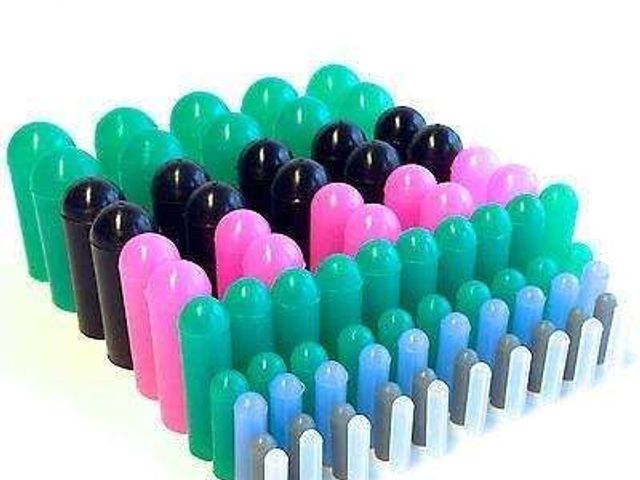
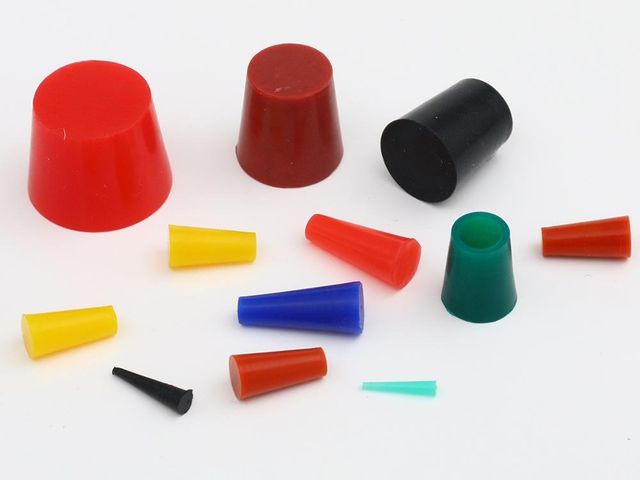
- Plugs for blind holes and threaded holes — motor mounts, cylinder bores, mounting holes that must stay thread-clean through powder coating. Our high-temperature silicone masking plugs are the go-to for holes on parts that will sit through a 180–200°C cure and then be pulled clean for reuse.
- Caps for studs, bolts, and threaded bosses — push-on caps that protect external threads and press-fit features through the entire oven cycle. See our high-temperature silicone masking caps for stud and thread protection in powder and e-coat lines.
- E-coat racking and masking — where the rack rides through pretreatment, dip tanks, and the 160–200°C bake, silicone holds shape and does not contaminate the bath.
EPDM is the value pick where heat stays moderate and chemistry or toughness dominates:
- Venting caps for plating and anodizing — venting caps let air and bath chemistry escape from blind holes so plating solution does not get trapped, and EPDM's dilute-acid and alkali resistance plus low price make it the standard choice. Browse the EPDM venting cap range for plating-hole venting.
- Rack grommets — grommets that hold parts on paint and e-coat racks take abrasion from wire and contact points; EPDM's tear resistance earns its place here. Our EPDM rubber grommets cover common rack and fixture sizes.
- Low-temperature masking — caps and plugs for powder coating on wood, plastic, or low-cure systems that stay under 150°C, and for thread protection during shipping and storage.
If you need a broader overview of how masking parts work inside a finishing line, our powder coating masking guide walks through hole, thread, and surface masking in order of process step.
When EPDM Is the Better Buy
Choose EPDM when your process temperature stays at or under roughly 150°C and one or more of these is true:
- Cost is the dominant factor at high volume. EPDM is typically priced at a fraction of silicone on a per-piece index — commonly around 30–50% of the silicone price for an equivalent part. On a line consuming thousands of caps per week, that difference is real money.
- The line is plating or anodizing, not baking. Bath temperatures rarely exceed 60°C, and EPDM's dilute acid/alkali resistance, steam resistance, and venting behavior are well matched to the job.
- The part sees mechanical abuse. Threaded caps and grommets that are pushed, pulled, and knocked against racks benefit from EPDM's higher tear and abrasion resistance.
- You are masking for a low-cure powder or liquid paint system that never approaches 150°C, so you pay only for the performance you actually use.
When Only Silicone Works
There are cases where EPDM simply does not qualify, and silicone is not a preference but a requirement:
- Powder coating at standard cure. Curing at 180–200°C puts the masked part above EPDM's continuous rating for the entire oven cycle. Silicone handles it, cycle after cycle.
- E-coat bakes above 160°C. The upper half of the typical e-coat bake window is outside EPDM's range.
- Repeated high-temperature reuse. If you expect a plug to survive hundreds of bake cycles and keep its shape, silicone's compression-set behavior is the deciding factor.
- Low-temperature flexibility or clean release. Silicone's release properties mean it separates cleanly from cured powder and paint without residue or surface contamination, and it seals cold.
If most of your production is standard powder cure, building your mask inventory around silicone plugs and caps — with EPDM reserved for venting and low-temp work — is the conventional and lowest-risk configuration.
Silicone vs EPDM: Quick Comparison Table
FAQ
What temperature can EPDM masking plugs withstand?
EPDM masking plugs are rated for roughly 150°C continuous service. Some formulations can take brief excursions to 175–180°C, but sustained or repeated exposure at that level causes hardening, cracking, and loss of elasticity, and the parts are usually not reusable after such cycles. If your oven runs above 150°C, switch to silicone.
Is silicone better than EPDM for powder coating?
Yes, for standard powder coating. Most thermoset powders cure at 180–200°C metal temperature, which is above EPDM's continuous rating. Silicone, rated for 260°C continuous with 315°C short-term peaks, is the dependable choice for powder coat plugs, caps, and grommets, and it can be reused across many bake cycles.
Can EPDM caps be reused?
Yes, within its temperature limits. EPDM caps reused at or below ~150°C will give multiple cycles before compression set, hardening, or cracking force replacement. At the top of its range the useful life shortens noticeably, so count on more frequent replacement than silicone, and inspect caps for cracks or loss of grip between runs.
What is the difference between silicone and EPDM rubber?
They have different polymer backbones. Silicone is built on a silicon–oxygen backbone, which gives it high thermal stability (260°C continuous, 315°C peak), broad-temperature flexibility, and low compression set. EPDM is an ethylene-propylene-diene hydrocarbon rubber that is tougher and cheaper but only rated to about 150°C continuous. Chemically, silicone swells in oils and hydrocarbon solvents while EPDM excels against water, steam, dilute acids and alkalis, and polar solvents.
Which masking material is cheaper: silicone or EPDM?
EPDM is the cheaper material, typically around 30–50% of the silicone price for an equivalent part. Silicone costs more because the raw polymer and processing are more expensive. The right question is whether your process temperature lets you use EPDM — if it does, you save on every piece; if you bake at 180–200°C, the cheaper material will fail and the silicone part pays for itself.
Choose the Right Material for Your Line
Match the material to the process: silicone for anything that bakes above 150°C, EPDM for plating, venting, grommets, and low-temperature work — and you will not overpay for capacity you do not need, nor under-spec a part that has to survive a 200°C cure. Browse our high-temperature silicone masking plugs and silicone masking caps for oven work, or the EPDM venting caps and rubber grommets for plating and low-temp lines. Not sure which material fits your process temperature and bath chemistry? Contact LeaderMasking for free samples of both materials — run them through your own oven and bath, and confirm the fit before you commit to a full order.