Selection Guide
Tube Plugs and End Caps for Masking: A Complete Sizing Guide
Tube plugs, end caps, and dust caps sized for powder coating, e-coating, and plating. Learn ID/OD, fit, and temperature limits. Download a free sizing chart.
Tube plugs, end caps, and dust caps sized for powder coating, e-coating, and plating. Learn ID/OD, fit, and temperature limits. Download a free sizing chart.
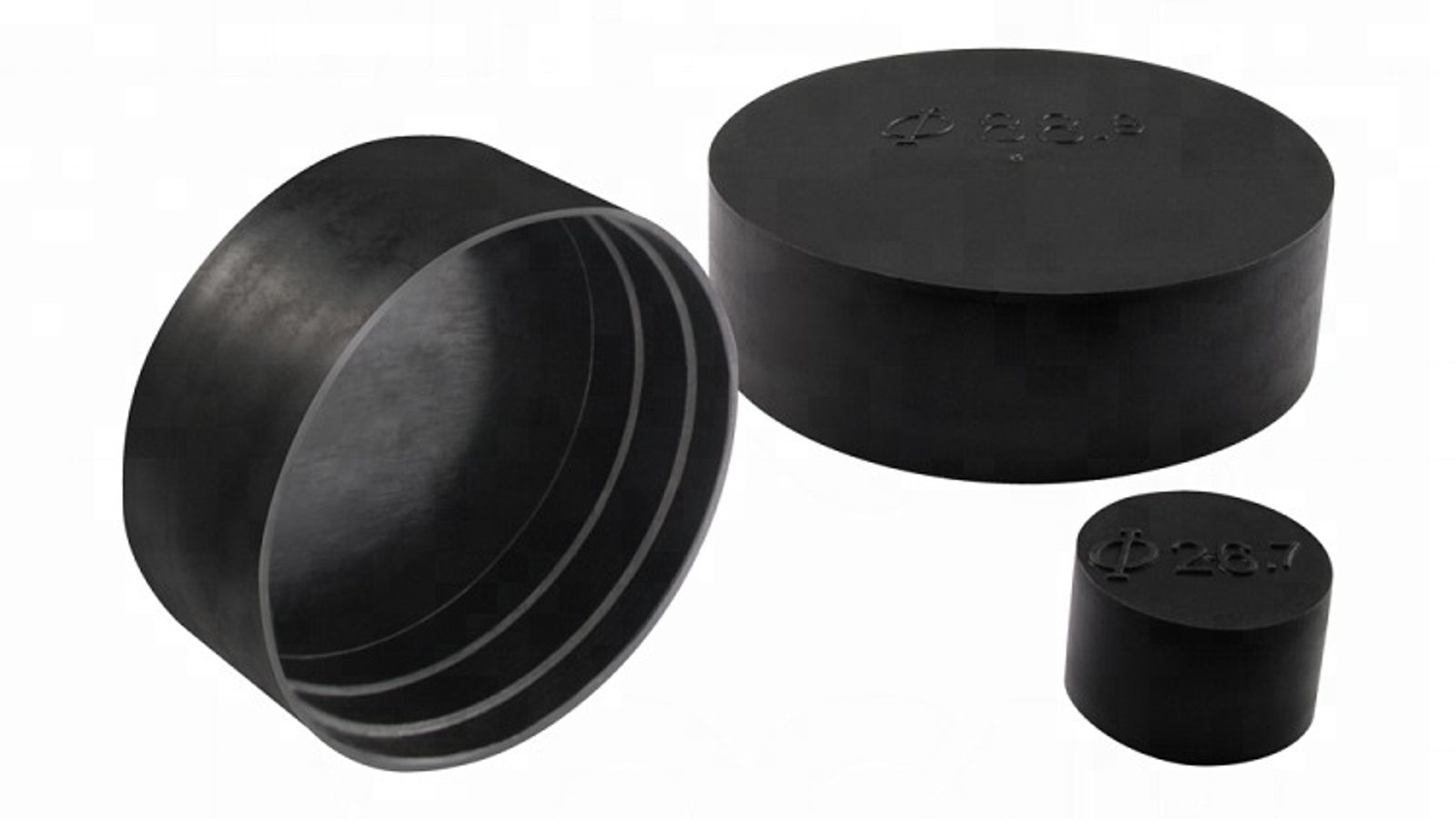
Tube plugs and end caps are small protective inserts that seal or shield the open ends of tubes, pipes, fittings, and threaded ports during powder coating, e-coating, plating, anodizing, and liquid painting. A plug presses into a bore to protect the internal diameter (ID), while a cap slides over the external diameter (OD) to protect an outside surface or thread; both keep coating and process chemicals out of areas that must remain bare. Service temperature is the deciding selection factor, and the three mainstream materials sit far apart: soft vinyl is rated for roughly 60-80°C, HDPE for about 90°C, and silicone for 260°C continuous use, which is why silicone is effectively the only option when parts run through a 180-200°C powder coating cure oven.
Choosing the wrong size is one of the most common masking failures in job shops. A cap that is a fraction of a millimeter too large pops off in the oven; one that is a fraction too small is painful to install on every rack, part after part. This guide covers the measurements, fit calculations, materials, and process temperatures you need to size tube plugs, end caps, dust caps, and pipe end caps correctly the first time.
Before measuring anything, decide which category of protection your part needs. Caps, plugs, and tape solve different problems, and the wrong choice wastes time even when the size is right.
| Option | What It Protects | How It Fits | Temperature Limit | Reusability |
|---|---|---|---|---|
| Tube plug (push-in) | Internal bore; ID; blind holes; internal threads | Pressed into the opening; interference fit on the inside wall | Vinyl ~60-80°C · HDPE ~90°C · silicone ~260°C | Silicone reusable; vinyl/HDPE semi-reusable |
| End cap / dust cap (snap-on) | Tube end; OD; rolled rims; male threads; chamfered edges | Pushed over the outside; grip from elastic recovery | Vinyl ~60-80°C · HDPE ~90°C · silicone ~260°C | Silicone reusable; vinyl/HDPE semi-reusable |
| Masking tape | Open faces; flanges; oversized openings; irregular shapes | Adhesive contact with the surface | Quality powder-coating tape ~200-220°C; polyimide ~260°C | Single-use |
The rule that drives every other decision: if the surface that must stay clean is on the inside, use a plug. If it is on the outside, use a cap. Tape is a fallback for large, flat, or oddly shaped openings where no standard molded part fits, and it always costs more labor per part than a plug or cap. Both caps and plugs are available across a wide range of materials and size families — you can browse the full range of protective caps and tube plugs to see the diameters and thread sizes covered.
Sizing starts with two numbers taken from the actual part, not the drawing you think you remember. Tubes are made to tolerances, and a drawing may show a nominal size while the delivered part runs a few tenths of a millimeter different. Always measure the production part.
If you are buying an end cap or dust cap, measure the tube's outside diameter with digital calipers, holding them perpendicular to the tube axis and taking two or three readings at different rotations. Standard cap sizes are stocked in both imperial and metric steps, typically from 1/8" (3.2 mm) up to 6" (152 mm), with the most common metric increments at 5, 6, 8, 10, 12, 15, 20, 25, 32, 40, and 50 mm. A cap is specified by the OD it fits over, not by its own outer size.
If you need a plug, measure the inside diameter of the bore. For a plain tube, place the caliper jaws inside the opening and take the widest reading. For a threaded bore, measure the minor diameter (the root of the thread, not the crest) — a plug sized to the crest will never seat, and one sized to the nominal thread size will rattle loose. Plug families are organized the same way as caps: choose the plug whose working diameter matches your measured ID.
Threaded components complicate both measurements. For a female thread, the plug must clear the thread crest while still gripping the root or the smooth counterbore behind it. For a male thread, a cap must cover the full thread length, so you need the OD of the thread and the thread length, not just the tube OD. Note also that wall thickness matters for plugs: a thin-walled tube distorts when you force in an oversized plug, and a plug that bottoms out on an internal shoulder can crack or eject the tube from your rack.
The fit is what holds the part in place, and it is expressed as a percentage of the tube diameter. For a cap, choose one whose inner diameter is roughly 5-10% smaller than the tube OD. For a plug, choose one whose outer diameter is roughly 5-10% larger than the bore ID. Vinyl and silicone compress easily and tolerate the top of that range; HDPE is stiffer and works best at the lower end. If the tube you are masking has a heavy weld seam or a deformed rim, measure at the worst point and add a little extra interference rather than designing for the average.
Within the cap-and-plug family there are three fit styles, and each maps to a specific geometry.
Push-in plugs are pressed into an opening and held by the friction of the interference fit. They are the right choice for protecting IDs, blind holes, hydraulic ports, and internal threads during finishing. Depth of insertion matters: a plug seated just at the rim protects the opening but leaves the deeper bore exposed, while one driven too far is hard to extract without damaging the fresh coating. For short-run dust protection and thread protection on parts that never see an oven, soft vinyl push-in end caps are the most economical option — but keep them away from heat above roughly 80°C.
Snap-on caps and dust caps stretch over the outside of a tube end and grip the OD through elastic recovery. They protect the tube end itself, the rolled rim, the chamfer, and any male threads on the end, and they double as shields for the areas where a part rests on a rack. For the majority of tube ends and male threaded ends, snap-on dust caps and plugs are faster to install and remove than tape and leave no adhesive residue. The tradeoff is that a snap-on cap is only as good as its grip: with the wrong interference fit it either falls off in the oven or binds hard enough to leave a witness mark.
When the thread itself is the critical surface, a plain cap or plug may not be enough. Threaded plastic pipe end caps screw onto the component so that thread engagement protects the flanks, not just the opening. This matters for pipe ends, threaded fittings, and ports where coating or plating bleed along the helix would ruin the thread. To size a threaded cap correctly you need the thread type and size (for example, 1/4" BSP, 1/2" NPT, or an M16 x 1.5 metric thread), the thread pitch, and the thread length — the tube OD alone is not enough. When in doubt, use a threaded cap on a threaded part; a push-in plug on a thread is a compromise that leaks process chemicals and coating along the roots.
Material selection is where most sizing mistakes turn into scrap parts, because the three standard materials fail at completely different temperatures.
| Material | Continuous Rating | Flexibility | Chemical Resistance | Oven-Safe (180-200°C Cure)? |
|---|---|---|---|---|
| Vinyl (PVC) | ~60-80°C | High | Moderate | No — melts and deforms |
| HDPE | ~90°C | Low to moderate | High | No — softens and sags |
| Silicone | ~260°C | High | High | Yes — designed for cure ovens |
Soft vinyl is the default dust-protection material. It is cheap, flexible, and easy to press over or into a part, which makes it ideal for caps and plugs used during storage, shipping, and room-temperature processes. The hard limit is heat: vinyl softens and deforms well below powder coating cure temperatures, so a vinyl cap pulled out of a 200°C oven is melted, discolored, and frequently stuck to the part. Use vinyl for thread protection in plating racks and for dust caps on finished goods, not for anything that enters a bake oven.
High-density polyethylene is stiffer than vinyl and more resistant to process chemicals, which makes it the better choice for plating and anodizing baths where vinyl would swell or leach plasticizer. Its continuous rating sits around 90°C, so it survives warm degreasers and some hot seal baths, but it still softens in a powder coating oven. HDPE is a strong choice for threaded caps on fittings that go through wet processes and short warm cycles — just verify the bath temperature stays under its rating before committing.
Silicone is the only standard masking material rated for powder coating, e-coating, and other high-temperature cure processes. It is flexible enough to seal irregular openings, chemically inert enough for plating and anodizing lines, and reusable across many cycles, which offsets its higher unit cost. Silicone as a masking material is rated for continuous service at 260°C, comfortably above the 180-200°C cure profiles used by most powder coaters, and it releases cleanly from cured coating so parts are ready for inspection immediately. If any part on your rack will exceed 100°C, silicone is the safe default.
Temperature ratings are the single most-cited reason for masking failure, so translate your process into numbers before you buy. A typical powder coating cure runs 180-200°C for 10-20 minutes; some low-cure powders work at 160°C, but the metal and the rack still heat through, and thermal mass keeps the parts hot well after the oven door closes. E-coat bakes follow a similar curve at roughly 160-200°C. Anodizing adds a hot seal step at about 95-100°C, which is already above vinyl's rating and at the edge of HDPE's. Plating baths generally run cooler, around 60-70°C, which is why vinyl and HDPE appear so often in plating masking — but the chemicals, not the heat, are the constraint there.
Against that backdrop: high-temperature silicone masking caps are rated for 260°C continuous and handle the full cure cycle of any commercial powder or e-coat line. Standard silicone plugs carry the same rating. Vinyl and HDPE have no business in a cure oven; use them only for wet processes, room-temperature storage, and short warm cycles that stay below their ratings. When a buyer asks why a silicone plug costs more than a vinyl one, the answer is the 180-260°C gap — that gap is the difference between a reusable plug and a melted one.
The inside/outside rule covers most cases, but a few situations deserve explicit attention:
The classic failure. A cap creates a sealed air pocket inside the tube; heating that pocket from 25°C to 200°C raises the trapped-air pressure by roughly 60%, and the pressure pops the cap off mid-cure, exposing the exact surface you were protecting. Fixes, in order of preference: use a vented plug or cap that lets air escape, leave the tube slightly unsealed on one end, or choose a plug long enough that the pressure must fight the full grip length. This is also why "it fit fine at room temperature" is not proof of a good fit.
Two failure modes at the same nominal size. If the cap is too large, it seats loosely, falls off in the oven, and coating creeps under the edge; if it is too small, it is slow to install, distorts the tube, leaves witness marks in the cured finish, and tears during removal. Stay inside the 5-10% interference window, and when the tube has a weld seam, a flared end, or a dent, size to the largest actual dimension rather than the nominal one.
A recurring and expensive mistake: using the cap that is already in the drawer because it is cheap. Vinyl deforms above roughly 60-80°C and HDPE softens above about 90°C; both ruin the part and the masking in a single cure cycle. If any step of your line exceeds 100°C, standardize on silicone and stop stocking meltable sizes for oven work.
Ordering a plug from the tube's OD, or a cap from the bore's ID, is more common than it should be. The two are different numbers on the same part, often by two or more millimeters. Write the intended direction on the purchase request: "cap for 25 mm OD" or "plug for 19 mm ID." And for threaded components, measure the root and the thread form, never the nominal size printed on the fitting.
A part gains 60-100 microns (0.06-0.10 mm) of powder per coat, and a cap that fit perfectly on bare metal can become impossible to remove once coating flows under its edge. Order caps and plugs slightly looser when the protected area is adjacent to a coated surface, and test the removal on a coated sample before committing to a full production run.
Threads are the most common masking failure point across wet processes because chemicals wick along the helix. Male threads need a cap or threaded cap; female threads need a plug or threaded plug; and the fit must be tight enough to stop capillary action, not just debris. For plating lines that run at 60-70°C, vinyl and HDPE offer a low-cost balance of chemical resistance and adequate heat rating. For anodizing with a hot seal step at 95-100°C, HDPE sits right at its limit and silicone is safer. For any e-coat or powder line that bakes at 160-200°C, the material decision is already made for you: silicone, with its 260°C continuous rating, is the only standard option that survives.
Measure the part with calipers, then apply the 5-10% interference rule. For a cap, the cap's inner diameter should be 5-10% smaller than the tube OD; for a plug, the plug's outer diameter should be 5-10% larger than the bore ID. For threaded components, match the thread type, size, and pitch rather than relying on the tube diameter.
Use digital calipers perpendicular to the tube axis and take two or three readings. Measure the OD for caps and the ID for plugs. For threaded bores, measure the minor (root) diameter, not the thread crest, and record the thread pitch and length for threaded caps.
Vinyl is rated for roughly 60-80°C continuous, HDPE for about 90°C, and silicone for 260°C continuous. Powder coating and e-coat cure ovens typically run 160-200°C, which eliminates vinyl and HDPE entirely — silicone is the only standard material rated for those cycles.
Trapped air expands when a sealed tube is heated — from 25°C to 200°C, the pressure inside a sealed cavity rises about 60%. Switch to vented plugs or caps, leave one end of long tubes unsealed, or use a plug with enough grip length to resist the pressure. A cap that fits perfectly at room temperature can still pop at cure temperature.
Silicone plugs and caps are reusable across many cycles — clean them, inspect for damage, and they run again. Vinyl and HDPE are semi-reusable: fine for repeated wet-process cycles below their temperature ratings, but they degrade faster, especially if they contact hot parts, solvents, or repeated bath chemistry. Tape is always single-use.
Sizing masking correctly comes down to three numbers: the measured diameter, the interference fit, and the process temperature. If you are unsure whether a part needs a plug or a cap, or whether your line temperature pushes you from vinyl to silicone, request a quote with your tube dimensions, thread details, and process temperatures and we will recommend the right part and size. You can also download the free sizing chart to keep the ID/OD rules and temperature limits next to your calipers — it is the fastest way to turn "this one looks about right" into a repeatable, documented fit.
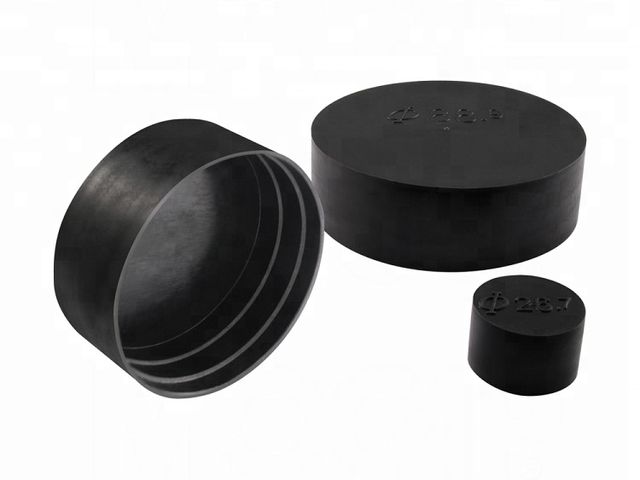
Protective Caps & Tube Plugs
Threaded Plastic Pipe End Caps for thread protection and pipe-end coverage work, with threaded fit and secure retention.
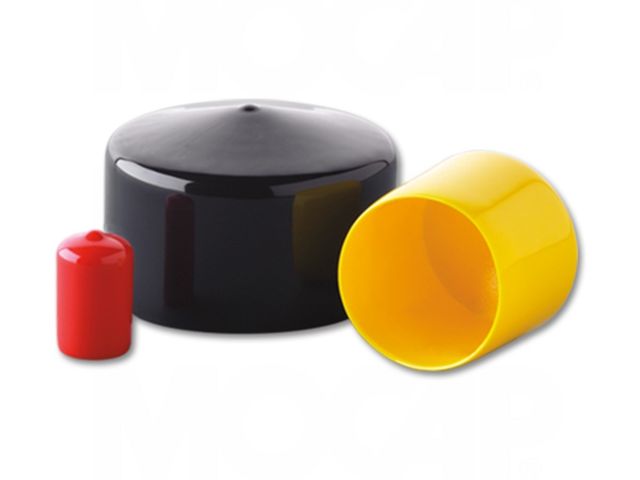
Protective Caps & Tube Plugs
PVC Open End Caps for pipe-end protection and tube protection work, with quick fit and dust shielding.
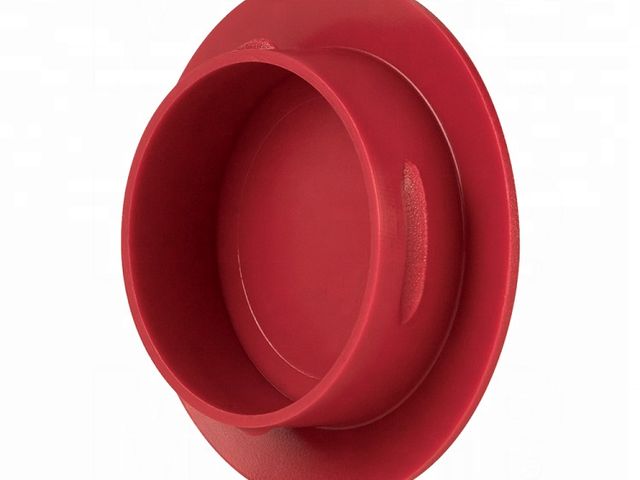
Protective Caps & Tube Plugs
Snap-On Dust Cap Plugs for dust protection and port coverage work, with snap-on fit and small-port protection.
Send drawings, dimensions, material, environment or operating conditions, and we will help confirm the right specification.
Uploaded reference files are included with the inquiry. For larger CAD packages, reply to the confirmation email or send them here:
Our team typically replies within 24 business hours.