Technical
Vent Plugs for Powder Coating: Stop Outgassing Bubbles
Vented silicone plugs stop outgassing bubbles at bolt holes and vents in powder coating and e-coating. Rated to 260°C. Browse vent plugs and order online.
Vented silicone plugs stop outgassing bubbles at bolt holes and vents in powder coating and e-coating. Rated to 260°C. Browse vent plugs and order online.
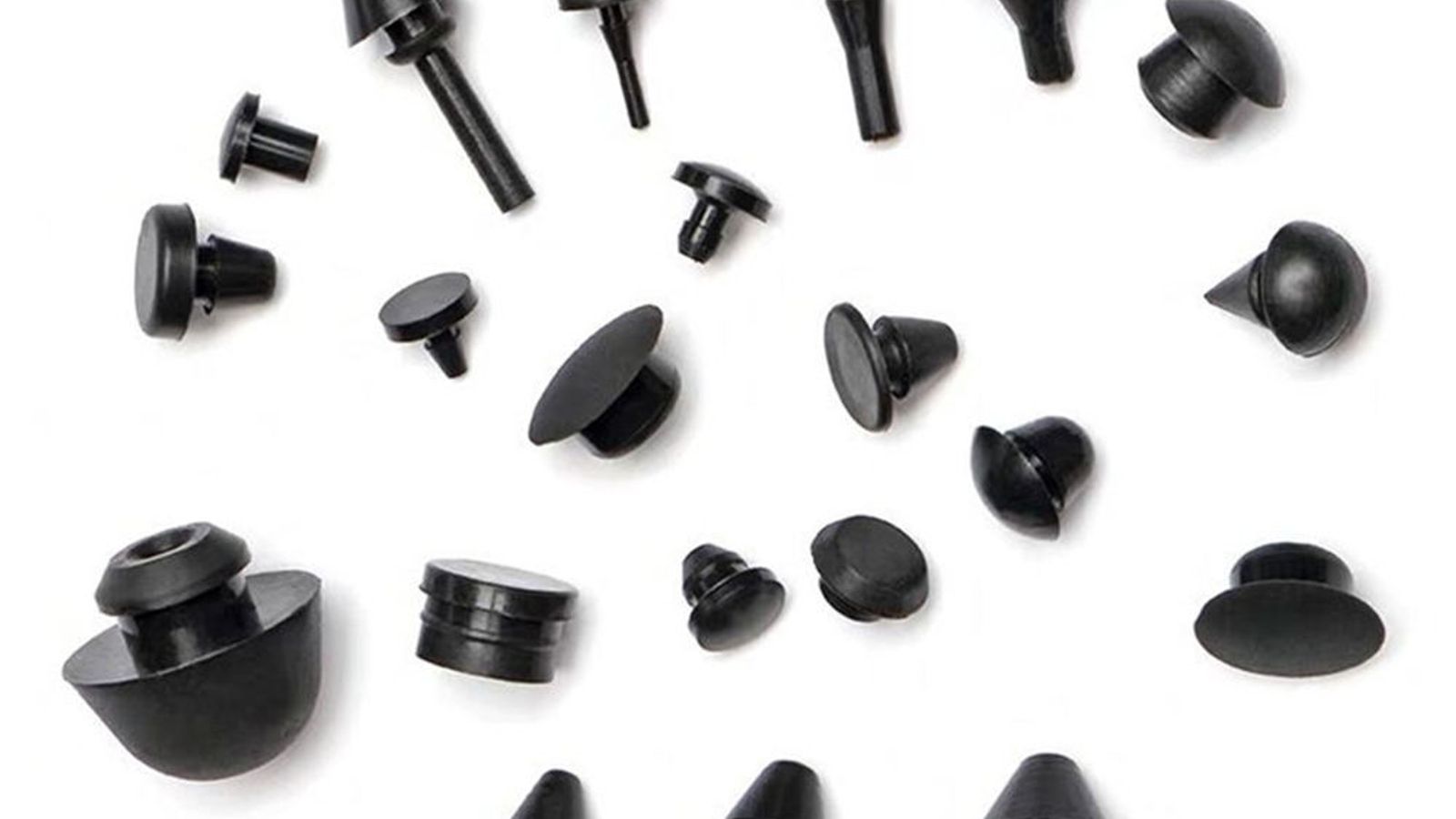
Vent plugs for powder coating are masking plugs with an engineered air-release channel that let gas escape from a sealed cavity while the part is in the oven, preventing the pressure-driven coating defects known as outgassing bubbles. When a hollow or welded part is masked with a solid plug and baked at powder coat cure temperatures (typically 180–200°C for 10–20 minutes at metal temperature), the air, moisture, and volatiles trapped inside expand and must escape somewhere. Gas that cannot leave through the vent channel pushes against the still-molten powder film, inflating it into a blister, pinhole, or crater around the masked feature. A vented silicone plug opens a controlled escape path for this gas while keeping powder, abrasive media, and chemicals out of the hole. The same mechanism applies in e-coating, where parts bake at 160–190°C after the paint bath, and in anodizing, where sealed threads and air pockets can trap acid and cause bleed-out during sealing. In every case the physics is identical: heating a sealed volume from roughly 20°C to 200°C increases the pressure of trapped gas by a factor of about 1.6 even before moisture or volatiles contribute their own expansion, and 1 mL of trapped water expands to roughly 1.7 L of steam at 100°C. A vent plug rated for continuous service at 260°C gives that expanding gas a 0.3–1.0 mm escape groove and turns a guaranteed rejection into a clean, finished part.
Outgassing is the most common cause of bubbles, pinholes, and craters in powder-coated parts, and it almost always appears at the same locations: bolt holes, threaded inserts, weld seams, tube ends, and blind cavities. The defect chain has three inputs.
Trapped air. A sealed cavity filled with air at ambient temperature and roughly 1 bar of pressure expands when the part reaches cure temperature. From a 20°C shop floor to a 200°C oven, ideal-gas expansion alone raises cavity pressure by about 60% before any other gas is added. The film is still molten during the first minutes of cure, so this overpressure inflates the powder into a dome that later collapses into a pinhole or leaves a crater.
Moisture. This is the single biggest contributor. Water in weld seams, casting pores, machining coolant residues, or absorbed into the metal surface vaporizes at 100°C and expands roughly 1,700 times in volume. One millilitre of residual water produces over a litre of steam, and the phase change is so violent that it can eject the plug itself or blow a bubble several millimetres wide.
Volatiles. Machining oils, drawing compounds, degreaser residue, and the flux or gas trapped inside weld seams volatilize between 150°C and 250°C. These organic vapours evolve slowly through the curing window, which is why bubbles often continue to appear late in the bake cycle rather than all at once.
The result is that a part which looks perfect at the powder gun develops defects only in the oven. That is why vented masking is a line-side fix: it addresses the pressure itself instead of trying to repair the symptom after cure.
Choosing between a solid and a vented plug comes down to whether the feature you are masking opens into a sealed cavity or a through-hole. The table below compares them directly.
| Criterion | Solid Plug | Vented Plug |
|---|---|---|
| Gas escape path | None — fully sealed | Grooved vent channel; 0.3–1.0 mm wide |
| Trapped air; moisture; volatiles | Trapped; pressure rises ~1.6x on heating | Released continuously during bake |
| Outgassing bubbles around the hole | Common failure | Eliminated |
| Suitability for sealed cavities; blind holes; welded tubes | Poor | Excellent |
| Suitability for simple through-holes with open airflow | Good | Good (channel is harmless) |
| Powder/media ingress protection | Complete | Complete — channel is sized below powder particle cut-off |
| Temperature range (silicone) | Up to 260°C continuous | Up to 260°C continuous |
| Typical use | Threaded studs; plain bores on open parts | Weld nuts; box sections; tube ends; e-coat cavities |
The practical rule used by coating shops is simple: if the masked hole leads into a volume of air that cannot freely escape, use a vented plug. If the part is a flat plate or the hole is through a thin wall with free airflow on both sides, a solid plug is usually sufficient. When in doubt, vented plugs cost the same as solids and remove the entire defect class, so many lines standardize on them.
A vented silicone plug looks like a standard tapered plug, but its tapered body carries a precision-moulded groove running from the tip to the base. When the plug is seated, this groove becomes a continuous channel between the cavity inside the part and the outside atmosphere.
This dual function — gas out, nothing in — is why vented plugs are specified for weld-nut seatings, threaded inserts, hydraulic port openings, and other features that are masked and then cured. The vent channel must be placed to face the highest point of the cavity where gas accumulates, which is one of the few installation details that actually affects results.
Hole geometry drives the choice of plug style and size. The general guide used across powder coating, e-coating, and anodizing lines is below.
| Hole Feature | Typical Sizes | Recommended Plug |
|---|---|---|
| Metric threaded hole; blind | M4–M16 | Vented taper plug; groove aligned upward |
| Welded nut / weld-in insert | M6–M12 | Vented plug sized to the seat bore |
| Plain through-hole | 3–30 mm dia. | Vented or solid taper plug |
| Tube or box-section end | 10–100 mm | Vent cap or larger plug |
| Unusual or oversized cavity | Custom | Custom vent plug; groove width matched to gas volume |
Two sizing rules prevent most field failures. First, choose a plug whose widest diameter is 1–2 mm larger than the hole so the taper seats firmly; an undersized plug either falls out in the e-coat bath or lets gas vent around the body, defeating the mask. Second, for large sealed volumes — a long tube, a gearbox housing, a fuel tank shell — increase the vent groove width or use multiple vent points, because a single 0.5 mm channel may not release the steam fast enough to prevent a blister. If you are standardizing across multiple jobs, the vent plug category page is organized by hole diameter so you can match sizes to your fastener list.
E-coating (electrophoretic coating) puts a very different set of demands on masking, and vented plugs are often the only practical solution for sealed parts.
Shops running sealed parts through an e-coat line should treat venting as mandatory rather than optional. Because the cavity fills with liquid, the volume of material that must escape during bake is orders of magnitude larger than the dry-air case, and the failure mode — a ballooned film or a plug launched across the oven — is expensive. See the e-coating application notes for process-specific guidance on bath chemistry compatibility and racking.
Two materials dominate venting cap production: silicone and EPDM. Both can be moulded with vent channels, but their temperature envelopes and chemical resistance differ, so material choice depends on the highest temperature your line reaches.
| Property | Silicone | EPDM |
|---|---|---|
| Continuous service temperature | Up to 260°C | Up to 150–160°C |
| Intermittent peak temperature | ~315°C | ~180°C |
| Powder coat cure at 180–200°C | Fully rated | Marginal — use only for low-cure lines |
| E-coat bake at 160–190°C | Fully rated | Suitable at the lower end |
| Resistance to pre-treat chemicals | Good | Excellent |
| Flexibility / seal at low temperature | Excellent | Good |
| Reuse cycles | High | Moderate |
For powder coating lines that cure at the standard 180–200°C, silicone is the safe choice, and high-temperature silicone vent plugs are the workhorse option. EPDM venting caps make economic sense on low-cure lines, on anodizing racks where the maximum temperature is the 96–100°C hot-water seal step, or where the part never exceeds roughly 150°C. If your line profile is close to a material's limit, always move up a grade: a plug that degrades mid-cure both fails as a mask and leaves silicone or EPDM residue in the hole, which is a quality problem that outlives the batch. The EPDM venting cap range covers the lower-temperature jobs, while the individual vent plug pages list the continuous-service rating for each size.
Vented plugs are not limited to powder coating. Anodizers mask threaded holes to keep them from being coated, and a solid plug on a blind tapped hole can trap acid in the cavity. During the hot-water or mid-temperature sealing step (90–100°C), the trapped solution expands, bleeds out around the plug, and stains the anodized surface with the familiar "acid bleed" mark. A vented plug gives the expanding liquid a controlled exit path while keeping the sealing bath out of the threads. The same logic applies in chemical conversion coating, acid washing, and any wet process followed by a heated stage. For masking needs beyond venting — thread protection, cap protection, and die-cut shapes — the powder coating masking guide covers the full product family, and the anodizing application page details the process-specific chemistry concerns.
Vented plugs deliver their benefit only when installed correctly, and the common mistakes are cheap to eliminate.
Standardizing on vented plugs also simplifies the masking kit: one product family covers sealed and through features, and the purchasing team buys fewer part numbers. For a full rundown of how these products integrate into a complete masking system — tapes, caps, die-cuts, and hooks — the powder coating application page is the best starting point.
Bubbling at bolt holes is outgassing. The hole opens into a sealed cavity; when the part is baked at 180–200°C, the trapped air expands by roughly 60% and any residual water vaporizes into steam at 1,700x its liquid volume. The expanding gas inflates the molten powder film into a blister that collapses into a pinhole or crater. A vented plug gives the gas a controlled escape path so internal pressure never exceeds ambient.
Yes. Vented silicone plugs are rated for the full e-coat cycle, including pre-treatment baths and the 160–190°C bake. In fact, sealed parts in an e-coat line are a stronger case for venting than powder coating, because the interior fills with bath water that must drain and then evaporate through the vent channel during bake. EPDM venting caps are also suitable at the lower end of the e-coat temperature range.
High-temperature silicone vent plugs are rated for continuous service up to 260°C and intermittent peaks around 315°C, which covers every standard powder coat cure (180–200°C) and e-coat bake (160–190°C). EPDM venting caps are rated to roughly 150–160°C continuous, which suits low-cure lines and anodizing seal baths but not standard powder coat ovens.
The plug body seals the hole through its tapered fit, and the vent is a precision groove typically 0.3–1.0 mm wide. Powder particles are 20–80 µm and grit blast media are far larger, so neither can pass through the channel. Gas can escape through it, but particulate and liquid cannot, so the threads stay clean.
Yes. Silicone vent plugs are designed for repeated use across many cycles. After each bake, check the plug for a blocked vent channel, a scorched tip, or embedded burrs, and retire it if the channel is damaged. With basic inspection, a single plug set can last hundreds of parts.
Outgassing defects are preventable at the masking stage, and vented silicone plugs are the lowest-cost fix for the most common rejection in sealed-part coating. To match vent plugs to your hole sizes, thread pitches, and process temperatures, review the vent plug product range, check the continuous-service rating for each size, and order samples to validate against your own oven profile before committing to a line kit.
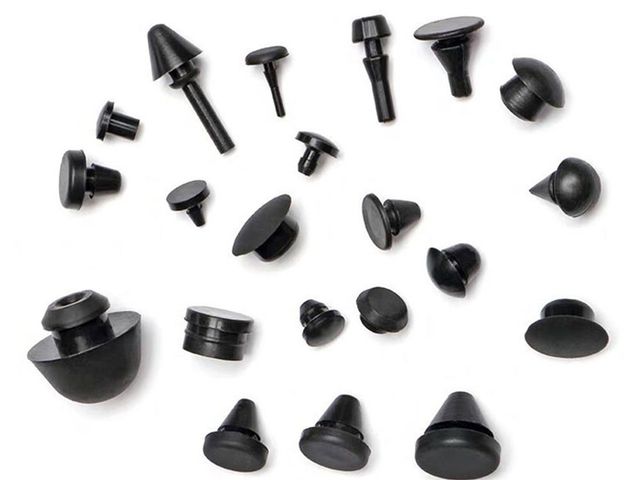
Vent Plugs & Venting Caps
Vent Plug for Powder coating lines - send your drawing for a matched quote.
Vent Plugs & Venting Caps
Reusable vent plug preventing pressure buildup in sealed cavities.
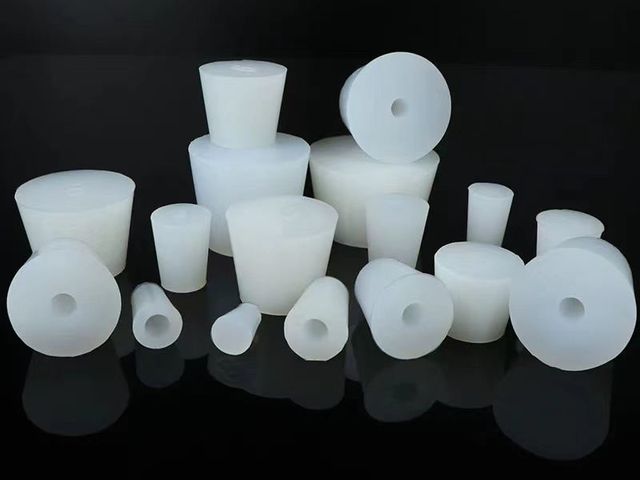
Vent Plugs & Venting Caps
High-Temperature Red Vent Plug for Powder coating lines - send your drawing for a matched quote.
Send drawings, dimensions, material, environment or operating conditions, and we will help confirm the right specification.
Uploaded reference files are included with the inquiry. For larger CAD packages, reply to the confirmation email or send them here:
Our team typically replies within 24 business hours.