Selection Guide
Silicone Masking Plugs for Powder Coating: Sizing, Temperature Limits, and Reuse Guide
Silicone masking plugs for powder coating: how to size holes, choose temperature grades, and plan reuse. Send hole dimensions for free samples.
Silicone masking plugs for powder coating: how to size holes, choose temperature grades, and plan reuse. Send hole dimensions for free samples.

A silicone masking plug is a molded, reusable protective insert that seals a hole, thread, bore or recess during powder coating, anodizing, plating and other finishing processes. Made from heat-stable silicone rubber, a typical plug withstands continuous service at 260°C with short-term peaks up to 315°C, and survives 50–100 finishing cycles before replacement, depending on grade, duty and handling. Silicone plugs are molded across a hardness range of roughly 30–70 Shore A: softer compounds deform easily into awkward bores and seal on rough surfaces, while harder compounds hold their shape in large holes and stand up to repeated insertion. Between the temperature ceiling and the cycle life sits the entire value proposition — a plug is tooling, not a consumable, and the cost question is per cycle, not per unit.
A silicone masking plug is, in the simplest terms, a molded silicone body that you push into a hole to keep coating out. Its job is to seal the full depth of the feature — not just its opening — and to release cleanly after the oven. Four material properties make silicone the default choice for this duty, rather than natural rubber, EPDM or a plastic cap:
Heat stability. Silicone is rated for continuous service at 260°C with short peaks to 315°C, which covers standard powder cure at 180–200°C with generous headroom. Rubber compounds and plastics either harden, melt or take a compression set that destroys their seal.
Elasticity. A plug seals by compression, not by adhesion. Because it is elastic, it presses outward against the walls of the hole, accommodating machining tolerances, slightly worn threads and imperfect bores that a rigid part could never match.
Clean release. Silicone does not stick to cured powder, does not leave adhesive residue, and parts from bare metal cleanly. That clean release is what makes reuse possible and what keeps the masked surface ready for its fastener without a cleanup step.
Reusable life. Across the hardness range of roughly 30–70 Shore A, a well-handled plug returns to its original shape after every cycle. The soft end of the range seals on irregular and lightly damaged surfaces; the firm end holds up to frequent insertion and removal in high-volume lines.
The style you choose follows the hole. Straight-sided plugs seal uniform bores, tapered plugs cover a small range of thread sizes by seating deeper, and pull plugs add a stem or tab so the line can remove them in one motion. The full range of styles and diameters is covered in the silicone masking plugs category, and the choice between them usually comes down to the hole type and how fast the line moves. For parts that run at the top of the thermal envelope — continuous 260°C duty or processes that flirt with 300°C — the high temperature silicone masking plug uses a formulation with additional thermal stability and lower compression set, so the plug holds its seal cycle after cycle instead of relaxing.
Sizing a plug is the difference between a mask that seals for a hundred cycles and one that leaks on the first part. The rule is simple: the plug must be slightly larger than the hole it seals, so that it works in compression rather than just sitting in it. Measure carefully, because a plug that is too small leaks, and one that is too large is difficult to insert and wears out quickly.
Start with a caliper, not a guess. For a threaded hole, measure the thread's outer diameter — the nominal thread size is usually close enough, but tapping wear, plating build-up and tolerance all move the real number, so check the actual thread on a sample part. For a through hole, measure the actual bore diameter at its narrowest point. For a blind hole, measure the bore and the depth, because the plug must have enough depth to seat fully without bottoming out and leaving an air pocket.
As a working rule, choose a plug that is 0.5–1.5 mm larger than the hole diameter. Tapered plugs are forgiving here, because a single plug seats progressively deeper to cover a small range of diameters — that is what makes them the default for threaded holes, where the taper lets one plug handle, say, M6 through M8 cleanly. Straight-sided plugs need a closer size match. For through holes and any feature where the plug must come out quickly on a moving line, chamfered silicone pull plugs add a molded tab and a lead-in chamfer that self-centres the plug in the bore, so the operator pushes it in square and pulls it out in one motion.
A typical sizing reference for powder-coating plugs looks like this:
| Hole diameter (mm) | Recommended plug type | Notes |
|---|---|---|
| 1.5 – 3 | Straight-sided mini plug | Small bores; use an insertion tool in tight spots |
| 3 – 6 | Tapered plug | Seats by depth; good for small threaded holes |
| 6 – 10 | Chamfered pull plug | Through holes; tab for fast line removal |
| 10 – 16 | Standard pull plug | Through and threaded holes; check thread OD |
| 16 – 25 | Large tapered plug | Blind holes; confirm depth for full seating |
| 25 – 40+ | Oversize / custom | Send the drawing; engineering will confirm the grade |
When you insert a plug, push it in square and use a slight twist to help it seat; a plug that goes in crooked will seal at an angle and leak on one side. For blind holes, seat the plug fully but confirm it has not trapped air in a way that will build pressure in the oven — that is exactly the case where a vented style is the safer choice.
The headline numbers are 260°C continuous and 315°C short-term, and both refer to the part's temperature during the process, not the oven's air temperature. A plug that reaches 300°C for a short peak — a thin aluminium part that tracks the oven air closely, or a rework cycle — is inside its window. A part that genuinely runs at or above 300°C continuously is outside it, and that is where a higher-grade compound earns its keep.
Reading a rating correctly matters. A temperature rating is a promise about the plug's sealing behaviour and clean release across the cycle, not just a survival threshold. The failure mode at the edge of the envelope is compression set: the silicone relaxes and stops pressing outward, and the plug starts leaking quietly before it shows any visible damage. That is why the standard grade for most powder lines is the black silicone masking plug: it carries the same 260°C rating with a slightly firmer compound that seats firmly in worn or oversized threads, and the dark colour makes it easy to spot on the rack before the line fires.
If your process sits comfortably inside the standard window — as the vast majority of powder schedules do — a standard 260°C grade is all you need. Reserve the premium high-temperature compounds for processes that push past 300°C, unusual long-dwell schedules, or parts that run repeated rework cycles. When in doubt, tell your supplier the actual part temperature and the dwell time; confirming the grade against the real cycle is a five-minute conversation that prevents a very annoying afternoon.
A silicone plug is bought for its cycle life, and the honest planning number is 50–100 cycles for a well-handled plug in standard powder duty. The spread is wide because three factors move the real number, and they are all within your control.
Temperature duty. A plug run at 180–200°C with headroom to spare will outlast one pushed to its ceiling on every cycle. Compression set accumulates faster near the temperature limit, so parts that run hot shorten plug life proportionally.
Handling. How the plug goes in and comes out determines its lifespan more than any other factor. Pull it out by the tab, never with pliers or a screwdriver. Pushed in square and removed by hand, a plug flexes within its design and returns to shape for hundreds of cycles; pried, twisted or dropped onto a concrete floor, it develops nicks and tears that become leak paths.
Storage. Silicone degrades under prolonged UV, ozone and solvent exposure. Plugs stored in a bin on a sunny shelf or beside the oven age faster than their cycle count suggests. Keep them in covered bins, out of direct light and away from heat, and they will reach their rated life.
Because the useful life is a range rather than a guarantee, plan a retirement system. The cheapest control is a bin-per-size system with a simple rule: retire a plug at the first sign of compression set — when it no longer feels firm when seated — or at visible cracking or a torn tab. Waiting for the first leaking part to discover a worn plug costs a rework that is worth many plugs.
The economics follow the cycles directly. A plug that lasts 100 cycles costs a fraction of its unit price per masked part, and the labour of pushing it in is measured in seconds. The full cost-per-cycle calculation — including the labour term that most shops forget — is worked through with a real example in Reusable Silicone Masking: Calculating Cost per Cycle.
Every rule about sealing has one exception, and it is a blind hole. A plug that seals a blind hole completely traps the air inside the cavity. When the part enters the oven, that trapped air expands as it heats — 180–200°C is a lot of expansion — and the pressure has nowhere to go. The plug pops out, seats crooked, or vents around its edge and lets powder into the thread. The fix is a vent plug.
A vent plug does the same sealing job as a standard plug but includes a small moulded channel or pinhole that lets trapped air escape as the part heats, equalizing pressure without letting powder in. The channel is far too small for powder to enter, but it is large enough to release air continuously through the cycle, so the plug holds its seat and its seal.
Use a vented style whenever the feature is a blind hole, a sealed tube, or a hollow section that traps air: hydraulic fittings, threaded blind bores, castings with internal cavities, and any part where a standard plug would have to fight expanding air. For these features, a high temperature silicone vent plug is not an option — it is the correct specification. If you are not sure whether a feature is sealed, test it: if the plug seats fully and the cavity has no other opening, the part needs a vent.
Silicone plugs are not the only way to mask a hole, and they are not always the right way. Two alternatives come up constantly — masking tape and EPDM plugs — and the honest comparison is about temperature, reuse and chemical resistance.
| Property | Silicone plug | Masking tape | EPDM plug |
|---|---|---|---|
| Temperature | 260°C cont. / 315°C peak | 150–180°C (PET) to 400°C (polyimide) | ~120°C; not for oven cure |
| Reuse | 50–100 cycles | Single use | Single use; sometimes a few |
| Chemical resistance | Good; broad | Limited by adhesive | Excellent for acids; alkalis |
| Seals full thread depth | Yes | No — seals the opening | Yes; in holes it fits |
| Removal | Pull by tab; clean | Peel; residue risk if over-rated | Pull; stiffer feel |
| Best for | Holes and threads in oven processes | Flat faces; edges; large areas | Plating and anodizing baths |
The geometry rule is the same one that governs every masking decision: holes and threads get a plug, faces get tape. Silicone wins wherever the process is hot and the feature repeats, because only silicone combines 260°C heat resistance with a hundred-cycle life. EPDM wins in chemical processes — plating and anodizing tanks, where its acid and alkali resistance is the point and where it is also far cheaper — but its temperature ceiling rules it out of the cure oven. The full head-to-head on geometry versus surface masking is in Silicone Plugs vs Masking Tape for Powder Coating, and the summary fits in one line: choose the material by the feature and the process, then let the cost per part settle the argument.
How do I choose the right plug size?
Measure the hole with a caliper. For threaded holes, use the thread's outer diameter; for through holes, the actual bore at its narrowest point. Choose a plug 0.5–1.5 mm larger than the hole so it seals in compression, and use the sizing table above as a starting reference. Tapered plugs cover a small diameter range by seating deeper.
What temperature can silicone plugs withstand?
Continuous service at 260°C, with short-term peaks to 315°C. Rate against the part temperature during the actual cycle — not the oven's air temperature — and step up to a high-temperature compound if the process genuinely runs at or above 300°C.
How many times can silicone plugs be reused?
Plan for 50–100 cycles with careful handling and proper storage. Pull by the tab, keep plugs in covered bins away from heat and UV, and retire each plug at the first sign of compression set, cracking, or a torn tab.
When do I need vent plugs?
Whenever a plug seals a cavity that traps air — blind holes, sealed tubes, hollow sections, castings with internal cavities. Without a vent, expanding air in the oven pushes the plug out or breaks its seal. If the feature has no other opening, specify a vent plug.
Will silicone contaminate a liquid paint line?
Silicone oils can migrate and cause wetting defects — fisheyes, craters — in liquid paint, so plugs used in a line that alternates between powder and liquid coating should be degreased after removal or reserved for powder work. In powder coating the sensitivity is far lower, which is why silicone is the default there. For liquid-only lines, an EPDM or non-silicone material is often the safer specification.
Every plug decision starts with a dimension. Send us the hole sizes, thread specs and depths from your parts — through holes, blind holes, threads, whatever you mask — and our engineering team will confirm the right plug style, size and grade, and ship samples to test in your own line. Send your dimensions through the Contact LeaderMasking page and we will respond with a recommendation and a sample plan.
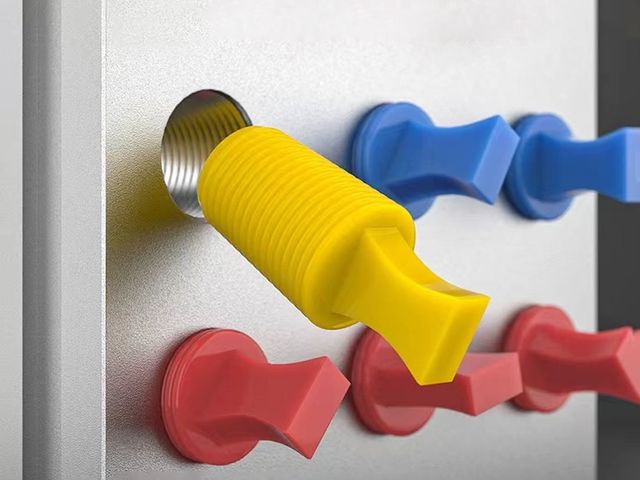
Silicone Masking Plugs
High-Temperature Silicone Masking Plug for Powder coating lines - send your drawing for a matched quote.
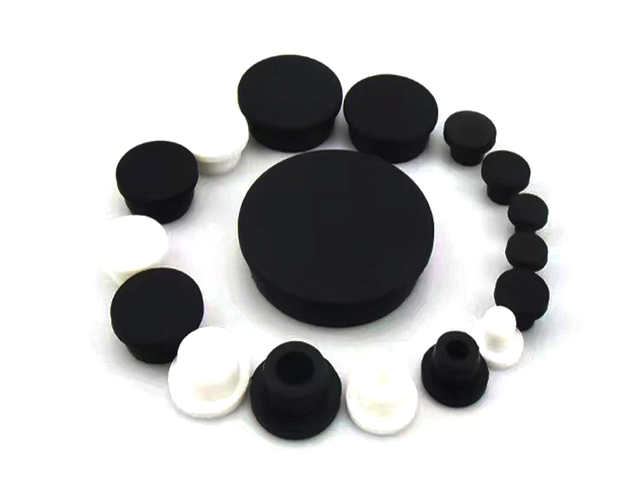
Silicone Masking Plugs
Black Silicone Masking Plug for Powder coating lines - send your drawing for a matched quote.
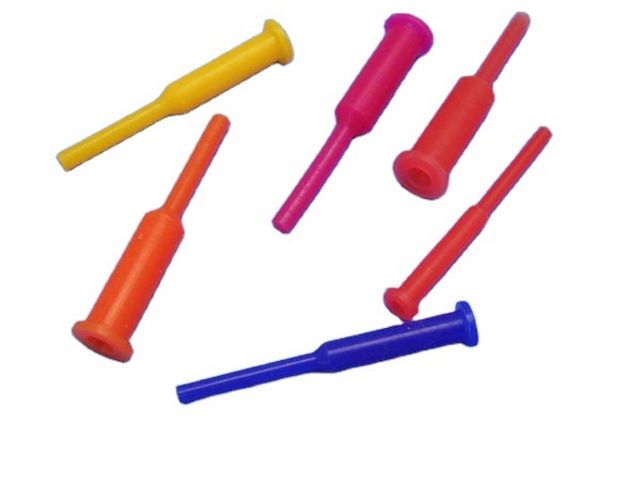
Silicone Masking Plugs
Chamfered Silicone Pull Plugs for powder coating and paint line masking work, with easier insertion and pull-tab removal.
Send drawings, dimensions, material, environment or operating conditions, and we will help confirm the right specification.
Uploaded reference files are included with the inquiry. For larger CAD packages, reply to the confirmation email or send them here:
Our team typically replies within 24 business hours.