Thermal spray masking is the process of protecting the uncoated surfaces of a workpiece during HVOF, flame spray, or plasma spray coating by covering them with heat-resistant tape, plugs, and shields. It is a demanding masking application because the process attacks the mask from every direction at once: an HVOF combustion flame reaches 2,500–3,000°C, the abrasive particles that form the coating strike the part at high velocity, and the substrate itself heats to 150–250°C over the course of the coating pass. A thermal spray mask must survive all three conditions simultaneously — and still peel away cleanly at the end of the job.
Choose the wrong tape and you pay for it twice: once in rework from coating bleed, and again in hours spent grinding residue off masked surfaces. This guide covers what thermal spray masking actually demands of a tape, the material tiers that survive it, and a proven step-by-step workflow for HVOF jobs.
What Is Thermal Spray, and Why Is Masking So Brutal?
Thermal spray is a family of coating processes that melt metal, ceramic, or cermet feedstock and accelerate it onto a prepared substrate. The three processes that matter most for masking selection are:
- HVOF (High-Velocity Oxygen Fuel). Fuel and oxygen burn in a combustion chamber at 2,500–3,000°C, and the hot gas propels coating particles at 500–800 m/s. HVOF produces the densest, most erosion-resistant coatings — and the most punishing blast to hit a mask.
- Flame spray. An oxy-acetylene flame in the 2,000–3,000°C range melts wire or powder feedstock that is then atomized and sprayed at moderate velocity. It is cheaper than HVOF but produces more porous coatings and a hotter, longer flame envelope around the mask.
- Plasma spray. An electric arc (up to 15,000°C internally) ionizes a gas into a plasma jet that melts and propels ceramic and refractory powders. The plasma core temperature is extreme, though the substrate surface still typically stays in the 150–250°C range.
What makes masking difficult is not just one stressor but four acting together. First, radiant and convective heat from the flame or plasma jet can exceed the rated limit of ordinary tapes. Second, abrasive particle impingement physically erodes the tape surface and undercuts its edges. Third, substrate heat soak — that sustained 150–250°C — drives heat into the adhesive bond line over minutes, not seconds. Fourth, thermal cycling as the gun passes back and forth fatigues the mask and can cause edge lift. A masking tape must be engineered against all four, which is why standard packaging tapes fail quickly.
Why Standard Masking Tapes Fail
If you reach for a PET, polypropylene, or washi/kraft paper tape on a thermal spray job, you will see the same failure sequence every time:
- Melting and burning. PET film melts in the 230–250°C range, and washi paper chars under direct flame contact. Once the film melts, it loses all dimensional integrity and coating bleed is guaranteed.
- Adhesive breakdown. Acrylic and rubber adhesives depolymerize, soften, or cross-link when held at substrate temperature. The bond fails at the edges, and the tape lifts mid-coat.
- Edge lifting from particle blast. The high-velocity particle stream acts like a sandblaster on the tape edge. A thin tape with a weak adhesive gets undercut in seconds, allowing coating to sneak under the mask.
- Residue and cross-linked adhesive. Heat cures many adhesives into a brittle film that fuses to the substrate, requiring abrasive blasting or chemical stripping to remove — often damaging the surface you were protecting.
The practical lesson: masking for thermal spray is not a job for commodity tape. It requires tapes with a high-temperature film or foil carrier, a silicone adhesive rated for sustained heat, and a bond strength that resists particle undercutting. For a full rundown of the product families involved, see our high-temperature masking tapes guide.
Thermal Spray Masking Tape Options by Material
There is no single "best" thermal spray tape. Each process and part geometry favors a different carrier and adhesive combination. These are the tiers that hold up in production.
Aluminum Foil Thermal Spray Tape
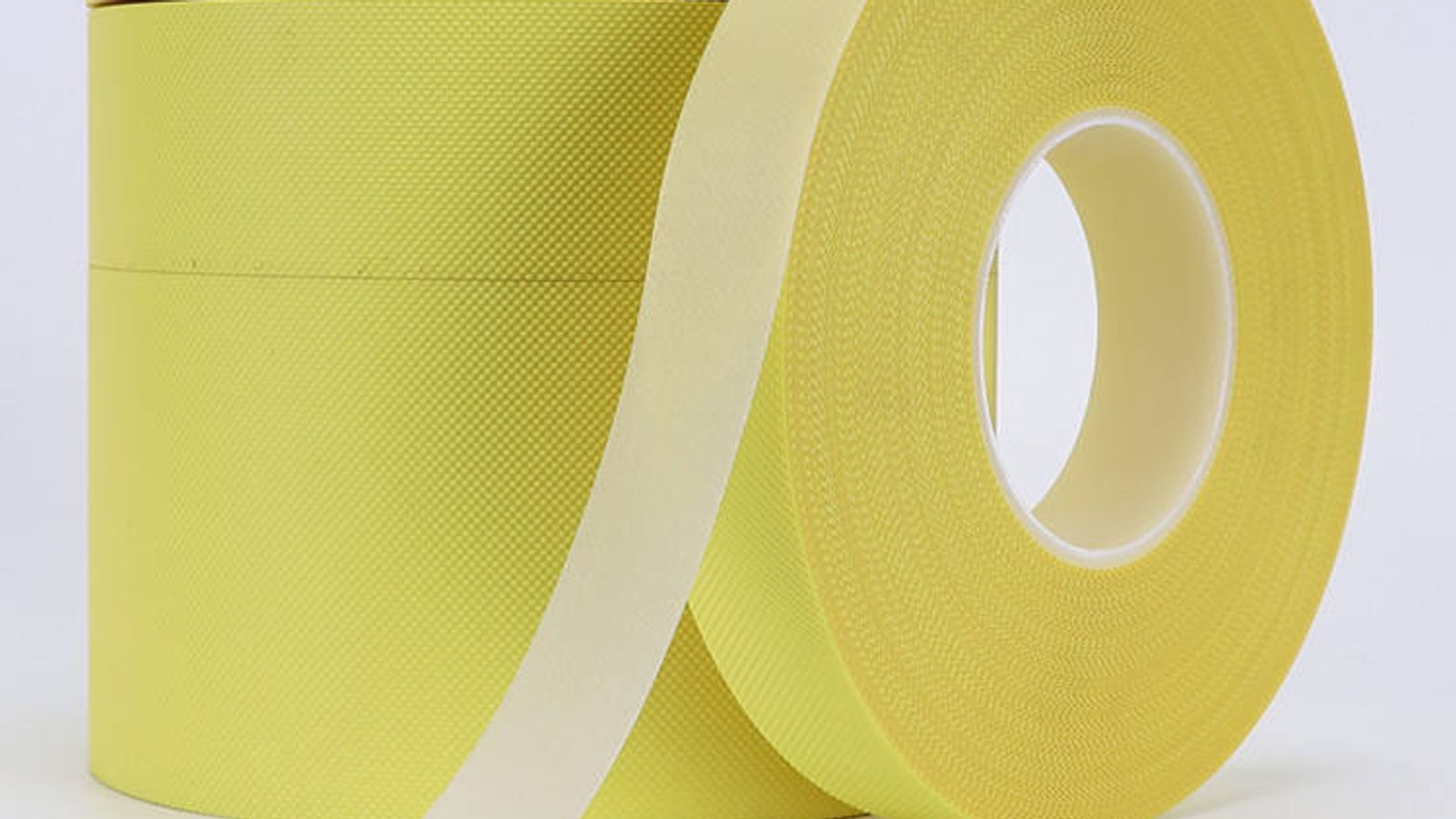
Aluminum foil tape is the workhorse of HVOF and flame spray masking. The foil face performs two jobs: it reflects radiant heat away from the adhesive bond line, and it resists particle erosion far better than any polymer film. The foil surface itself withstands continuous exposure above 400°C, while the silicone adhesive underneath is rated to roughly 260°C — a combination that comfortably outlasts standard polymer tapes on most jobs.
Aluminum foil tape is the right first choice for HVOF overspray protection, broad-area coverage, and anywhere the mask will take direct particle blast. It conforms acceptably over simple contours and strips cleanly because silicone adhesive does not cross-link the way acrylic adhesives do. See the aluminum foil thermal spray tape product page for temperature ratings and roll widths.
Fiberglass / Glass-Cloth Tape
Glass-cloth tapes use a woven fiberglass carrier that resists both heat and mechanical abrasion far better than polymer films. Continuous ratings of 300°C and above are typical, and the woven structure resists tearing at edges under particle impact. Fiberglass tapes are frequently specified for plasma spray shielding, where coating cut-off and edge definition are critical and the tape must survive repeated passes without degrading.
The tradeoff is conformability: glass cloth is stiffer than foil or film, so it suits flat and gently curved areas more than tight inside radii. For plasma spray masking applications specifically, the fiberglass cloth plasma masking tape is engineered for that duty, while the high-temperature fiberglass cloth polyimide masking tape adds polyimide chemistry where extra heat margin is needed.
Polyimide (Kapton®-Type) Tape
Polyimide film tape — widely known by the brand name Kapton® — is the standard for thin, precise edge definition. It is rated for 260°C continuous service and up to 400°C on a peak or intermittent basis, which covers almost every thermal spray substrate condition. Because the film is thin and dimensionally stable, it produces clean, crisp coating cut-off lines — critical on sealing faces, machined surfaces, and dimensions with tight tolerances.
Polyimide tape is the default where edge sharpness matters more than abrasion resistance. It erodes faster than foil or glass cloth under direct heavy blast, so reserve it for edges, cut-offs, and lighter-duty shielding. Explore high-temperature polyimide tape rolls for thickness and width options.
High-Temperature Crepe Paper Thermal Spray Tape
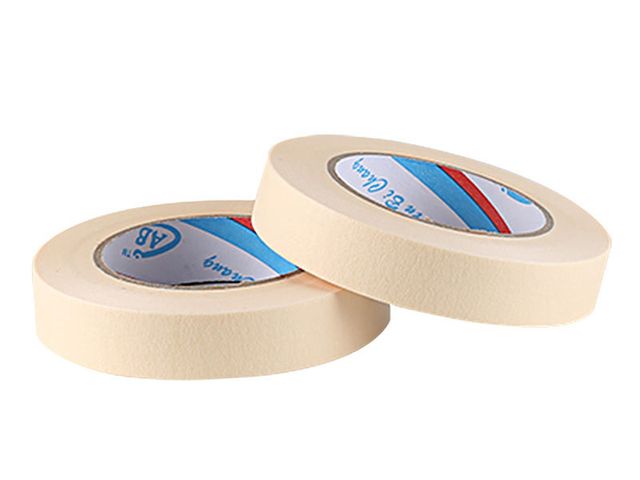
Crepe-paper-based thermal spray tape occupies the economical middle tier. The creped paper carrier is coated with a high-temperature adhesive and sometimes a reinforcing treatment, giving moderate heat resistance and better conformability around contours than foil or glass cloth. It is best suited to lower-abrasion jobs — flame spray overspray, short HVOF cycles, and areas away from the direct particle stream.
Crepe tape is not the right call for heavy blast zones, but it is a cost-effective choice for large-area coverage where you need clean removal without the expense of foil or fiberglass. See the high-temperature crepe paper thermal spray tape for its rating range and typical applications.
Rubber-Backed Cloth Tape
Rubber-backed cloth tape (often a cotton or synthetic fabric carrier with a rubber adhesive) delivers the best abrasion resistance per dollar of any masking tape. The cloth face shrugs off particle impact that would shred a film tape. The catch is temperature: the rubber adhesive is typically rated to only about 150°C, so cloth tape is limited to cooler substrate conditions and lighter thermal spray duty.
Use rubber-backed cloth tape where you need hard-wearing protection but the substrate temperature stays modest — for example, early flame spray passes or masking on sections of a part that stay cool. At higher temperatures, step up to foil or glass cloth.
Specialty High-Temperature Film Tapes
Beyond the main tiers, specialty films — PTFE (polytetrafluoroethylene), silicone-coated substrates, and reinforced composites — handle niche duty. PTFE film tapes combine high heat resistance with release properties that make them nearly impossible for coating to stick to, useful for repeated cycles or where residue-free removal is mandatory. Their abrasion resistance is lower than foil or glass, so use them where heat and clean release, not blast, are the binding constraints.
Masking vs. Shielding: Choose the Right Defense
"Masking" and "shielding" are often used interchangeably, but they solve different problems — and selecting the wrong approach is a common source of rework.
Masking with tape is about defining the coating cut-off line: a crisp, controlled edge where the coating must stop. Tape thickness, edge quality, and adhesive hold-down all determine how straight that line is. For HVOF and flame spray overspray protection over large areas, tape is the primary tool.
Shielding with plugs and caps protects features tape cannot cover well. Threads, tapped holes, bores, and chamfers are masked with silicone plugs and caps, which push-fit into place and are removed by hand after coating. Silicone withstands the sustained substrate temperatures on most HVOF and flame spray jobs, and its flexibility lets it seal against irregular hole geometries that tape would bridge imperfectly.
Liquid maskant fills the remaining gap. For complex geometry — castings, internal passages, weld details — brush-on or dip-applied liquid maskants provide a conformal coating that tape and plugs cannot match. They are applied before coating, cure to a peelable film, and are stripped afterward. Liquid maskant is slower to apply and remove than tape, so reserve it for overspray on intricate shapes and use tape for anything flat enough to cover.
A practical rule of thumb: tape for edges and broad areas, plugs for holes and threads, liquid maskant for complexity. Most production jobs use all three.
Step-by-Step: How to Mask a Part for HVOF Coating
A repeatable masking workflow prevents the majority of coating bleed and residue problems. Here is the sequence that works on production HVOF lines.
Step 1: Clean and Grit-Blast the Surface
Masking starts before the tape does. Degrease the part, then grit-blast every surface that will receive coating. Blasting both cleans and anchors the coating — but it also removes any pre-existing oils that would otherwise contaminate the tape bond. Mask after blasting, never before, so the tape adheres to a clean, stable surface.
Step 2: Select Tape by Substrate Temperature and Abrasion Load
Match the tape to the actual conditions at the bond line. If the substrate will hold at 150–250°C under sustained HVOF passes, choose a silicone-adhesive tape rated above that — aluminum foil for heavy blast, polyimide for precision edges, fiberglass for plasma shielding. Confirm the adhesive rating against the substrate temperature you measured, not the flame temperature. The thermal spray tape range is organized around these decisions.
Step 3: Apply Tape with Controlled, Burnished Edges
Apply tape to clean, dry surfaces, working from the center of each strip outward to avoid trapping air. Press the edges down hard — a burnishing tool or thumbnail along the cut-off line prevents the particle blast from undercutting the edge. For edge-critical features, use a second strip half-overlapped, or switch to polyimide for a thinner, sharper cut-off.
Step 4: Protect Threads, Holes, and Complex Geometry
Plug every thread and hole with a correctly sized silicone plug or cap, pressing it fully home. Coat plug heads with masking compound or tape if they sit in the overspray path. Apply liquid maskant to any complex internal or contoured geometry that tape cannot conform to cleanly. Walk the part once, checking for exposed unmasked areas and loose edges, before it reaches the gun.
Step 5: Coat, Then Strip While the Part Is Still Warm
After coating, remove masks as soon as the part is safe to handle — residual warmth keeps silicone adhesive pliable and makes tape release far cleaner than cold stripping. Pull tape back on itself at a sharp angle, not straight up. Remove plugs with pliers or a plug puller. Inspect the cut-off lines immediately; if coating bled under an edge, that area can often be repaired before the coating cures rather than after.
Thermal Spray Tape Comparison Table
Cost and Removal Tips
Masking cost is dominated by removal time and rework, not the price of the tape. Spend on the right tape once and you save hours per part:
- Buy tape rated for the substrate temperature, not the flame temperature. A polyimide or foil tape rated 260°C+ costs more per roll but removes in minutes; a cheaper tape that leaves residue can cost an hour of grinding.
- Strip warm. Silicone adhesive releases cleanly at 40–80°C. Cold stripping tears tapes and leaves adhesive smears.
- Pull back on itself. Peel tape at a 180° angle parallel to the surface to break the bond progressively instead of ripping the carrier.
- Use release-friendly carriers where residue is critical. PTFE and silicone-coated surfaces shed coating and adhesive better than bare films, protecting polished and ground faces.
- Standardize widths. Using a small set of tape widths for a family of parts reduces changeover time and leftover-trim waste.
Common Masking Mistakes to Avoid
- Choosing a tape rated below actual substrate temperature. Rating against flame temperature sounds logical, but it is the 150–250°C substrate that drives adhesive failure. Verify with a contact thermocouple on your fixture.
- Ignoring edge burnishing. Unburnished tape edges are the #1 source of HVOF coating bleed. If coating is sneaking under your mask, press the edges harder.
- Using PET or commodity tape in the blast zone. It melts or erodes mid-coat and contaminates the surface with residue.
- Masking before grit blasting. Blasting destroys the tape bond and undermines edge definition.
- Removing masks cold. Adhesive residue and torn carriers multiply when the part cools below the release-friendly range.
- Assuming one tape covers the whole part. Mix foil, polyimide, plugs, and liquid maskant to match each feature's exposure.
Thermal Spray Masking FAQ
What temperature does HVOF reach? The HVOF combustion flame reaches roughly 2,500–3,000°C. The coating particles that strike the surface are hot and fast (500–800 m/s), but the substrate surface itself typically holds at a much lower 150–250°C during coating. Masking tapes should be selected for that substrate temperature plus the erosive blast, not the flame temperature.
Can aluminum foil tape withstand thermal spray? Yes. Aluminum foil thermal spray tape is one of the most reliable choices for HVOF and flame spray masking. The foil face reflects radiant heat and resists particle erosion at temperatures above 400°C, while its silicone adhesive is rated to roughly 260°C — well above the substrate temperatures seen on most jobs.
What tape do you use for HVOF masking? Most production HVOF masking uses aluminum foil tape for broad-area overspray protection and particle-blast zones, polyimide tape where crisp edge definition is required, and silicone plugs for threads and holes. Crepe-paper thermal spray tape is a cost-effective alternative on lighter-duty passes.
Does polyimide tape work for plasma spray? Yes. Polyimide tape is rated for 260°C continuous and up to 400°C peak, which covers plasma spray substrate conditions, and its thin, stable film produces excellent coating cut-off lines. For areas that take heavier direct blast, fiberglass cloth tape is the more erosion-resistant complement.
How do you remove thermal spray tape? Strip the tape while the part is still warm (roughly 40–80°C), pulling back on itself at a sharp angle. Warm silicone adhesive releases cleanly without tearing or leaving residue. If residue does form, it is best removed before it fully cools and hardens.
Get the Right Thermal Spray Masking Tape for Your Coating Line
Thermal spray masking comes down to matching the tape to the real conditions at the substrate: sustained heat, abrasive blast, and edge quality. Aluminum foil, fiberglass, polyimide, and crepe tape each have a role, and the right mix cuts rework, shortens removal time, and protects the machined surfaces your coating process is meant to enhance.
If you are setting up a new HVOF, flame spray, or plasma spray line — or troubleshooting bleed and residue on an existing one — we will help you select the right material grade, width, and adhesive for your part family. Request a quote or a sample roll and we will send matched product samples and technical data sheets within 24 hours.