Selection Guide
Rubber Grommets and Seals for Industrial Masking: The Complete Guide
Rubber grommets for e-coating and powder coating: silicone vs EPDM limits, ID/OD sizing, chemical resistance, and install tips. Request a quote.
Rubber grommets for e-coating and powder coating: silicone vs EPDM limits, ID/OD sizing, chemical resistance, and install tips. Request a quote.
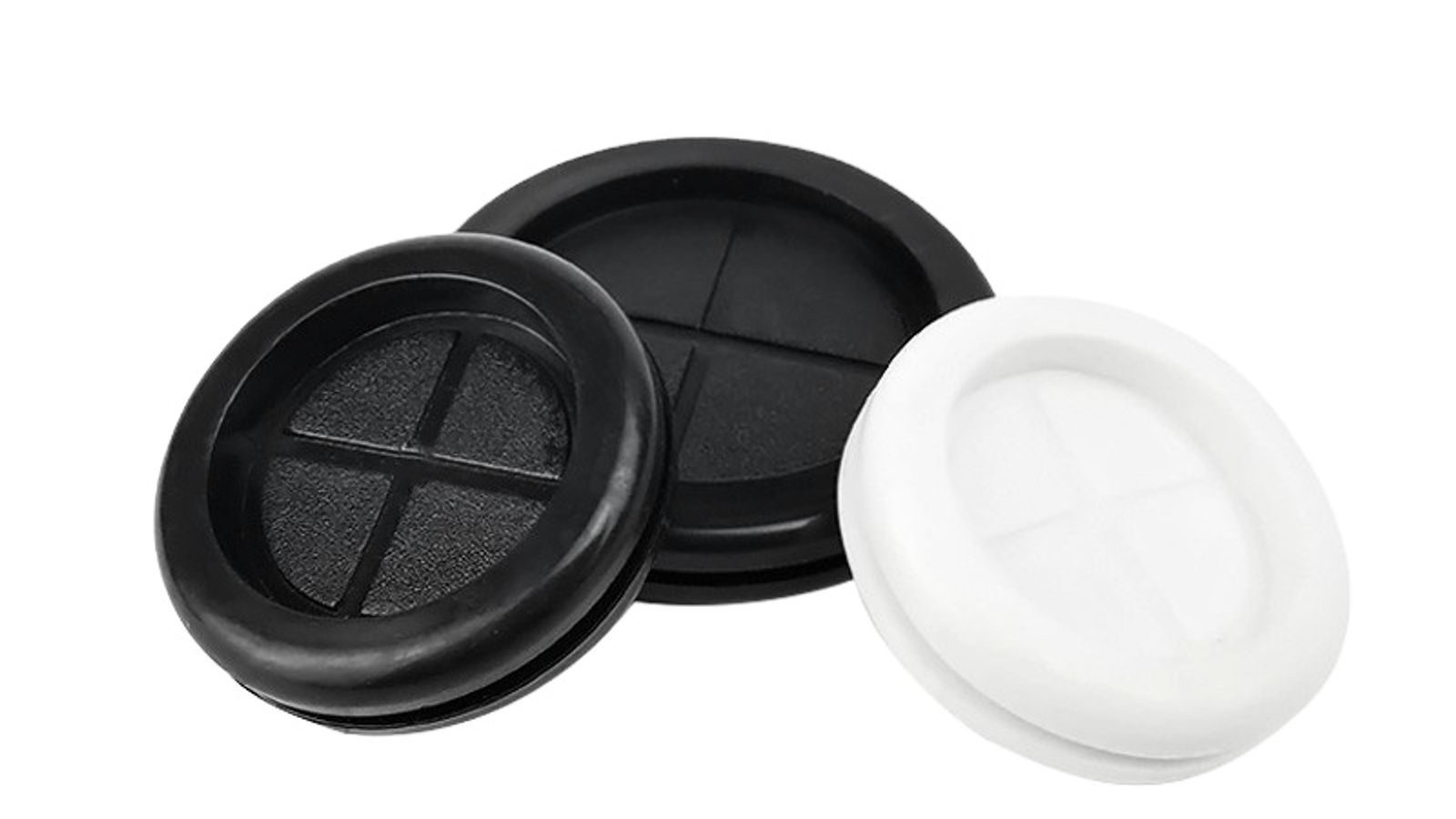
A rubber grommet is a ring-shaped elastomer seal that lines the edge of a hole so that the component, wire, cable, or stud passing through that hole is protected from the surrounding process — and, just as importantly for finishers, so the hole itself is sealed against coating ingress. In industrial masking, rubber grommets and seals perform a dual role that is easy to underestimate: they shield wire feed-throughs, mounting holes, and panel openings from e-coat, powder, paint, and plating chemistry, while also protecting the wire's insulation from abrasion against the sharp metal edge of a stamped or punched panel. The practical operating window of these parts is wide — a high-temperature silicone rubber grommet can survive continuous service at 230°C and short excursions toward 260–300°C, while an EPDM grommet is generally rated for continuous use up to 150°C and peaks near 175°C, which comfortably covers a typical e-coat bake cure of 160–200°C or a powder coat cure of 180–200°C. That temperature data is the first thing to check before you pick a material, and it is the reason most finishing lines that run a hard bake will standardize on silicone rather than general-purpose rubber.
A grommet is fundamentally a donut of elastomer — a hollow ring with a defined inside diameter (ID) that grips the wire or cable, and an outside diameter (OD) with a groove or lip that seats into the panel hole. The same geometry that stops a cable from chafing against a bare metal edge also stops liquid from running down the wire and into the opening. Grommets are molded, extruded, or die-cut, and in industrial masking applications they are supplied either as separate annular parts or as assembled components of a larger masking kit.
What separates an industrial masking grommet from the generic rubber grommet you find at an electrical supply house is engineering specification. Masking grommets are designed against a process envelope: the oven temperature, the bath chemistry, the immersion time, and the number of cycles the part must survive. A general-purpose neoprene grommet rated for 100°C is fine for a paint booth, but it will degrade after a handful of e-coat bakes. That is why rubber grommets and seals sold for finishing lines are typically produced from compounds that are held to a documented continuous-service temperature and are batch-traceable.
Every finishing process has a failure mode that a grommet exists to prevent. In e-coating, the bath is an aqueous, electrically charged emulsion; the charged particles will deposit onto any conductive surface that is not masked, including the threads of a mounting stud and the inner edge of a wire feed-through hole. If a cable passes through a panel and the opening is not sealed, e-coat film forms on the wire insulation and inside the hole, leaving a hard, cracked deposit that can short a harness or foul a later assembly step. In powder coating, an unsealed hole acts as a Faraday cage trap where powder clings unevenly or, worse, where the film bridges and locks a cable in place. In plating baths, the chemistry does not stop at the surface — solution wicks into gaps and threads and deposits metal where it is not wanted.
Because these failures show up only after the finish is applied and cured, the cost of a missing grommet is a rejected part, a rework trip, or a field failure. Grommets are cheap, reusable, and quick to install, which makes them the highest-leverage masking component on most lines. If you are new to designing masking for a finishing process, our guide on masking for e-coating lines walks through the full set of components a typical line uses.
Material selection is the single most important decision when choosing rubber grommets and seals. The three materials that cover the overwhelming majority of industrial masking work are silicone, EPDM, and general-purpose rubber compounds (usually neoprene or natural-rubber blends). They differ sharply in temperature capability, chemical resistance, and price, and choosing on price alone is the most common source of field failures.
Silicone rubber grommets are the workhorse of finishing lines because they handle the heat. A silicone rubber grommet offers continuous service from about −60°C to 230°C, with short-term peaks to 260°C and, for premium formulations, up to 300°C. Silicone also shrugs off the mild acid and alkaline chemistry found in most e-coat and powder pre-treatment stages. Its compression set is higher than EPDM, meaning it does not spring back quite as well under constant clamping force, but for masking purposes — where the seal is driven by the OD seating in the panel and the ID gripping the cable — that rarely matters. Silicone is also non-marking, which is valuable when a grommet sits against a visible coated surface.
EPDM rubber grommets are the choice when chemical resistance matters more than peak temperature. An EPDM rubber grommet is rated for continuous service around −50°C to 150°C, with intermittent peaks near 175°C. That covers most e-coat and powder cure cycles, but with less safety margin than silicone for a hard, long bake. What EPDM beats silicone on is resistance to polar fluids — water, steam, dilute acids, alkalis, and phosphate pre-treatment chemistries — and its outstanding weathering and ozone resistance. EPDM is the standard choice for applications that cycle through wet pre-treatment tanks and see elevated humidity.
General-purpose rubber grommets, typically neoprene (polychloroprene) or natural rubber blends, sit at the bottom of the temperature chart. Continuous service is roughly −40°C to 100°C for neoprene and −50°C to 80°C for natural rubber. These are perfectly adequate for solvent-borne paint masking, short ambient-temperature plating dips, and assembly-protection duties, and they are the most economical option at volume. But they will not survive repeated e-coat or powder bake cycles, and they are the wrong answer for any process that runs above 110°C for more than a few minutes.
| Property | Silicone | EPDM | General-purpose rubber (neoprene/NR) |
|---|---|---|---|
| Continuous service temperature | −60°C to 230°C | −50°C to 150°C | −50°C to 100°C |
| Peak / short-term temperature | 260–300°C | ~175°C | ~110°C |
| Hot water / steam resistance | Good | Excellent | Fair |
| Acid & alkali resistance | Good | Excellent | Fair |
| Weathering / ozone resistance | Good | Excellent | Poor |
| Compression set | Higher | Lower | Moderate |
| Non-marking on coated surfaces | Excellent | Good | Fair |
| Typical cost | Highest | Mid | Lowest |
| Best-fit finishing processes | E-coat bake; powder cure; high-temp paint | E-coat & plating with wet pre-treatment | Paint; ambient plating; assembly |
For a deeper head-to-head on the two most common materials, our silicone vs EPDM masking comparison covers the trade-offs line by line.
The geometry of a grommet is what does the sealing, and understanding it explains why sizing matters. A standard annular grommet has a groove around its circumference. When you seat the grommet in the panel hole, the outer lip snaps past the edge and the groove holds the grommet in place — the OD must be slightly larger than the hole so that the lip creates a circumferential interference fit. The ID, meanwhile, is sized smaller than the cable or wire it grips, so the inner lip presses against the cable circumference with radial force. The result is two sealing lines: one at the grommet-to-panel interface and one at the grommet-to-cable interface. Liquid coating and plating chemistry cannot get past either line, and the cable is simultaneously cushioned so it cannot abrade against the panel edge.
For a single wire entering a panel, a plain annular grommet is the standard answer. For a bundle of wires, or a harness that must pass through with connectors attached, a cable entry rubber grommet with a split or slotted design lets you open the grommet, slip it around the harness, and close it — without threading the whole length of cable through the center. Where the panel opening has to accept both a mechanical mount and a feed-through, a top-hat rubber grommet provides a raised flange that shields the shoulder of the hole and gives the seal a longer contact path. The top-hat profile also handles thicker panels, where a flat annular grommet would not have enough wall to grip.
Getting the dimensions right is a two-part measurement. Measure the hole with a calibrated pin or caliper, then measure the wire or cable across its widest point, including the insulation. The grommet OD should be 5–10% larger than the hole diameter so the outer lip seats with positive interference; if the OD is too close to the hole size, the grommet falls through or floats and the seal line is lost. The grommet ID should be 10–20% smaller than the cable diameter so the inner lip grips firmly. A grommet that is loose on the cable is worse than no grommet at all, because the capillary gap between cable and grommet will actively wick liquid into the opening during immersion.
Wall thickness is the dimension most often overlooked. The wall — the distance between ID and OD — must be thick enough to hold a full groove profile. Standard grommets work for panels up to roughly 2–3 mm thick; beyond that, a top-hat or a custom-profile grommet with a longer body is needed to span the panel and still keep the lip geometry intact. When you are ordering in volume, it is worth sending the actual hole and cable dimensions to the supplier rather than picking from a generic size chart, because stock grommets are molded to nominal sizes and the fit tolerance is what determines whether your line gets a true seal or a wick path.
Grommets, plugs, and caps are complementary components, and choosing between them is really a question of what the opening is for during the process.
Use a grommet when something must pass through the opening — a wire, a cable, a hose, or a stud — and that something must stay accessible or attached during the process. The grommet seals the annulus between the passing component and the panel edge.
Use a plug when the hole is empty and must simply be sealed. A tapered or push-in plug blocks the opening completely and is the cheapest way to keep powder, e-coat, and plating chemistry out of a threaded hole, a blind bore, or a mounting hole that is not yet in service. A molded silicone rubber seal stopper is the go-to for holes that need a tighter, more robust seal than a simple tapered plug, especially where a slight taper mismatch would otherwise leak.
Use a cap when the part is a protrusion rather than a hole — a threaded stud, a fitting, a tube end. Caps push over the outside of the feature and protect the external threads or the bore opening.
In practice, a single part often needs two of these. A wire feed-through in an e-coat tank is a grommet job; the same panel with an empty threaded boss is a plug job; and the stud the harness connects to is a cap job. Selecting the right type for each feature is the core of a well-designed masking plan, and it is where a supplier's engineering input saves the most money — an over-specified grommet where a plug would do is wasted cost, and a plug where a grommet is required is a rejected part.
Plating lines are the harshest environment for masking elastomers, because the chemistry is active at the surface and the process often involves immersion, agitation, and elevated bath temperature. The chemical resistance you need depends on the bath: alkaline soak cleaners, acid etchants, zinc, nickel, and anodize baths each present a different chemical load. EPDM is the most broadly resistant of the three materials to aqueous plating chemistry — it holds up well against dilute acids, alkalis, and phosphate treatments, and it is largely unaffected by the wetting agents and brighteners in common plating solutions. Silicone also performs well in most plating baths and adds the temperature margin for lines that run hot cleaners. Neoprene and natural rubber are more vulnerable to swelling and surface attack in aggressive acid baths, and their temperature ceiling limits them to ambient-temperature processes.
A second plating-specific consideration is drag-out and carry-over. When a grommet comes out of a plating bath, it carries solution in its groove and against the cable it grips. If the grommet is left on through rinsing and drying, the trapped chemistry can concentrate and attack the part underneath. For plating duty, plan to remove and rinse grommets promptly, or specify a material known to tolerate the specific bath and dry the assembly before storage.
Masking grommets are reusable, and their cycle life is one of the strongest arguments for spending on a quality material. A silicone grommet on a powder coating line typically survives dozens to hundreds of bake cycles before the surface hardens, discolors, or the lip loses its spring. EPDM lasts comparably in wet, low-temperature service but degrades faster if the bake pushes past 160°C repeatedly. The limiting factor in both cases is not catastrophic failure but progressive hardening — a hardened lip stops conforming to the cable, and a small gap appears where the next process finds it.
Inspection discipline is the real driver of reuse economics. A 30-second visual check at the masking station — looking for cracks at the inner lip, discoloration, or loss of grip — catches a grommet before it fails on a part. Most finishers keep three sets in rotation so grommets can air-dry and fully release absorbed moisture between uses. When a grommet's ID no longer grips the cable, it is done: retire it, because a loose grommet is a contamination path, not a mask.
The most common installation failure is a grommet that is forced in dry and pinched. Lubricate the grommet and the hole with a thin film of soap-and-water solution or a silicone-safe release agent — never petroleum grease, which softens many elastomers — then press the edge in evenly. Work the lip into the hole rather than pushing the center, using a blunt tool or your thumbs around the circumference. For split and slotted designs, open the grommet with the slot aligned to the harness, slide it over the wires, and rotate it so the slot is not pointing at the highest coating-pressure direction.
Seat the grommet fully flush with the panel surface before the part enters the line. A grommet that sits proud of the panel leaves a recess where powder can pile or where e-coat can pool and form a film bridge. After seating, verify that the cable is centered and that the inner lip is fully turned in — a folded lip is a hidden leak path. For high-vibration or high-throughput lines, consider a grommet with a thicker flange, which is easier to seat correctly and more forgiving of panel tolerance variation. If you are spec'ing a new product, our e-coating application page lists the grommet and companion mask selections finishers standardize on.
A silicone rubber grommet offers continuous service from approximately −60°C to 230°C, with short-term peaks toward 260°C and premium compounds up to 300°C. This covers e-coat bake cures (typically 160–200°C) and powder coating cure cycles (typically 180–200°C) with comfortable margin.
A grommet lines a hole that a wire, cable, hose, or stud passes through, sealing the gap around it. A plug blocks an empty hole completely. A cap fits over a protruding feature such as a threaded stud or tube end. Choose based on what the opening contains during the process.
Silicone wins on temperature (230°C continuous vs 150°C for EPDM) and is the standard choice for hard bake cycles. EPDM wins on water, steam, and dilute acid/alkali resistance, making it the better pick for wet pre-treatment and plating lines that run cooler than 150°C.
Yes. Silicone grommets typically survive dozens to hundreds of bake cycles before hardening. Reuse is safe with regular visual inspection for cracks, discoloration, and loss of grip, plus full drying between cycles. Retire any grommet whose ID no longer grips its cable.
Measure the hole diameter and the cable diameter over its insulation. Choose an OD 5–10% larger than the hole and an ID 10–20% smaller than the cable so both lips seat with interference. Wall thickness must be enough to hold a full groove profile for the panel thickness.
EPDM offers the broadest resistance to aqueous plating chemistry — dilute acids, alkalis, and phosphate treatments — and is largely unaffected by common bath additives. Silicone adds temperature margin for hot cleaner stages. Avoid general-purpose rubber in aggressive acid baths.
The right grommet is the cheapest insurance your finishing line can buy, but only when the material, dimensions, and profile match your process. Send us your part drawings, hole and cable dimensions, bake temperature, and bath chemistry, and our engineers will specify the right rubber grommets and seals for your application — including material recommendation, sizing verification, and cycle-life guidance. Contact our sales team today for a quote, or request samples to validate the fit on your own line before you commit to production volume.
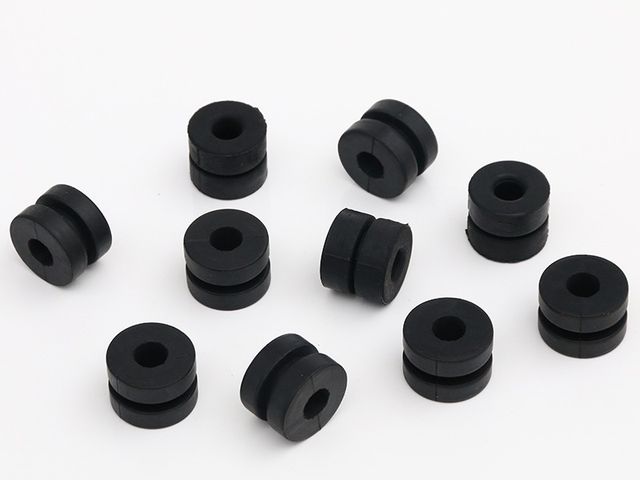
Rubber Grommets & Seals
Cable Entry Rubber Grommets for cable pass-through and panel hole finishing work, with cable protection and edge cushioning.
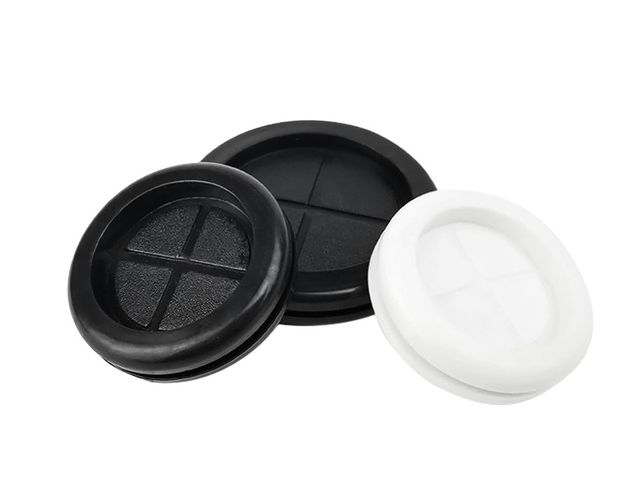
Rubber Grommets & Seals
EPDM Rubber Grommet for Aerospace & general metal fabrication lines - send your drawing for a matched quote.
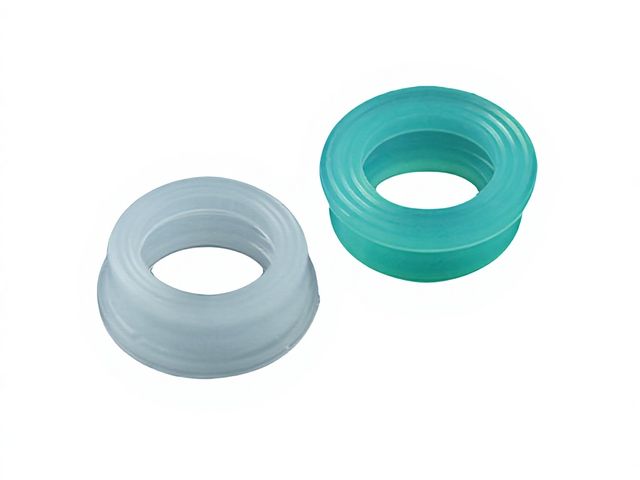
Rubber Grommets & Seals
Silicone Rubber Grommet for Aerospace & general metal fabrication lines - send your drawing for a matched quote.
Send drawings, dimensions, material, environment or operating conditions, and we will help confirm the right specification.
Uploaded reference files are included with the inquiry. For larger CAD packages, reply to the confirmation email or send them here:
Our team typically replies within 24 business hours.